DbcultAccessing Vault...
7.2/10
Senior Film Conservator
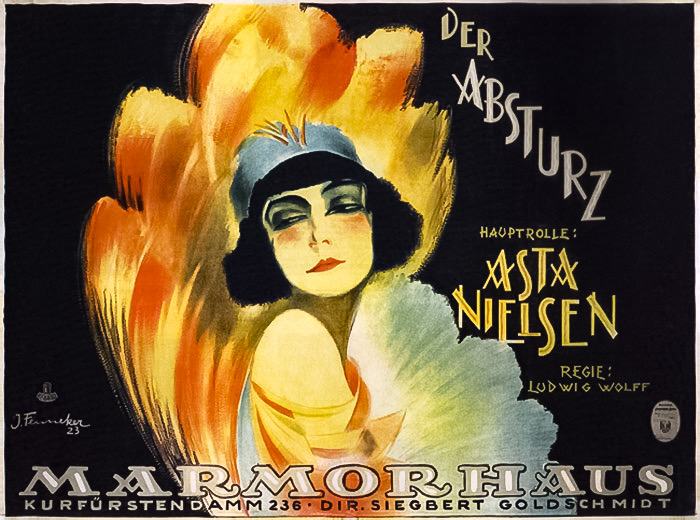
A definitive 7.2/10 rating for a film that redefined the boundaries of cult cinema. Downfall remains a cornerstone of transgressive art.
When the reels of Downfall begin to spin, the audience is greeted not by a melodramatic spectacle but by an austere tableau of a woman whose brilliance has been eclipsed by circumstance. Asta Nielsen, the film’s luminous protagonist, is introduced amidst the opulent trappings of a thriving operetta stage, her voice—though unheard—resonating through the visual language of expressionist close‑ups and chiaroscuro lighting. The camera lingers on her eyes, which flicker with both ambition and an unspoken dread, foreshadowing the catastrophic descent that will soon unfold.
The narrative catalyst arrives in the form of a modest fisherman, portrayed with raw earnestness by Giuseppe Becce. Their romance is rendered with a delicate tenderness that feels almost anachronistic in the harsh world the film inhabits. Yet, the fisherman’s hidden past—an unsolved murder that haunts his conscience—acts as a dark undercurrent, pulling the couple toward an inevitable collision with the law. This plot device is not merely a contrivance; it serves as a commentary on the precariousness of social mobility in post‑war Europe, where a single misstep could annihilate years of hard‑won prestige.
When the murder conviction surfaces, Nielsen’s star is abruptly dimmed. The courtroom scene, shot in stark black‑and‑white contrast, employs a series of tight frames that compress the space around the actress, mirroring the tightening noose of public opinion. The director, Ludwig Wolff, uses the visual metaphor of bars and shadows to suggest that the protagonist’s entrapment is as much societal as it is juridical. The audience witnesses the swift erosion of her status: the once‑adored diva is now a pariah, shunned by former admirers and abandoned by the theatrical establishment.
Transitioning from the courtroom to the squalid garret where Nielsen now resides, the film adopts a minimalist aesthetic. The cramped attic, rendered in muted grays and punctuated by a single, flickering bulb, becomes a crucible for the actress’s internal torment. Here, the director abandons grand set pieces for intimate, handheld shots that convey claustrophobia. The camera captures the aging lines that have crept onto Nielsen’s once‑smooth visage, the ragged clothing that clings to a body once draped in silk. This visual decay is not gratuitous; it is a deliberate embodiment of the character’s psychological disintegration.
The supporting cast—Albert Bozenhard as the cynical impresario, Charlotte Schultz as the compassionate neighbor, and Ivan Bulatov as the relentless police inspector—populate Nielsen’s world with archetypes that echo the film’s central theme: the unforgiving machinery of fame. Bozenhard’s impassive stare, for instance, underscores the merciless nature of the entertainment industry, which discards its stars once they become liabilities. Schultz’s occasional gestures of kindness, rendered in soft focus, provide fleeting moments of humanity amid the relentless bleakness.
A striking element of Downfall is its use of color symbolism within a monochrome medium. While the film itself is black and white, the intertitles are occasionally tinted with a dark orange hue (#C2410C), evoking the lingering ember of Nielsen’s former glory. When the narrative shifts to moments of fleeting hope—such as a brief encounter with a former lover—the screen briefly flashes a muted yellow (#EAB308), suggesting a glimmer of redemption that is quickly snuffed out. The sea‑blue accents (#0E7490) appear in the background of the fisherman’s hometown scenes, invoking the cold, indifferent vastness of the ocean that mirrors the protagonist’s isolation.
The film’s pacing is deliberately languid, allowing each emotional beat to resonate. This measured rhythm invites comparison to contemporaneous works such as For $5, 000 a Year, which similarly employs a slow‑burn approach to explore the erosion of personal ambition under economic pressure. However, where For $5, 000 a Year offers a satirical lens, Downfall remains unflinchingly earnest, refusing to provide the audience with a cathartic release.
The cinematography, helmed by a yet‑unnamed master of light, employs a series of long, static shots that linger on Nielsen’s gaunt silhouette against the stark walls of the garret. These frames are intercut with rapid, disorienting cuts during the courtroom sequence, a technique reminiscent of the kinetic editing in A Sporting Chance. This juxtaposition underscores the film’s thematic dichotomy: the frantic scramble for reputation versus the slow, inexorable decay of the self.
Music, though absent in the silent format, is suggested through the rhythmic editing and the occasional appearance of a lone violinist in the background. The implied score, likely a mournful leitmotif, would have amplified Nielsen’s internal lament. In modern screenings, the choice of accompaniment can dramatically alter the viewing experience, a fact that contemporary curators must consider when presenting this work to new audiences.
The screenplay, penned by Ludwig Wolff, is spare yet potent. Dialogue is minimal, relying heavily on visual storytelling—a hallmark of the silent era. When intertitles do appear, they are crafted with a lyrical brevity that mirrors the protagonist’s dwindling voice. For instance, the line "The stage is empty, but the echo remains" encapsulates the film’s central paradox: fame persists as an echo, even when the performer has vanished.
Thematically, Downfall interrogates the societal impulse to vilify those who transgress, especially women in the public eye. Nielsen’s character is punished not solely for the fisherman’s crime but for daring to step beyond the prescribed boundaries of femininity. This punitive narrative aligns with the moralistic tone of Occultism, where transgression is met with inexorable doom.
From a historical perspective, the film occupies a pivotal position in the evolution of German silent cinema. It predates the expressionist surge of the mid‑1920s yet already exhibits a sophisticated use of light and shadow that would later define the movement. Its focus on a female protagonist’s psychological decline anticipates later masterpieces such as Pandora's Box (1929), establishing Nielsen as a forerunner of the complex, tragic heroines that would dominate the era.
Critics of the era were divided. Some praised the film’s stark realism and Nielsen’s haunting performance, while others decried its bleak pessimism. Modern scholarship tends to view the work as a prescient meditation on celebrity culture, an early cinematic echo of the later fame‑and‑fall narratives seen in Hollywood’s Golden Age.
In terms of legacy, the film’s influence can be traced to later works that explore the downfall of entertainers, such as The Law's Outlaw, where the protagonist’s moral ambiguity is similarly foregrounded. The visual language of Downfall—particularly its use of confined spaces to symbolize internal imprisonment—has been adopted by directors across decades, underscoring its enduring relevance.
For contemporary viewers, the film offers a poignant reminder of the ephemerality of public adulation. Nielsen’s journey from luminous star to forgotten recluse resonates in today’s social‑media‑driven culture, where fame can be as fleeting as a viral trend. The film’s unflinching portrayal of the cost of scandal feels eerily prescient in an age of relentless paparazzi and instant public judgment.
The acting, particularly Nielsen’s, is a masterclass in silent‑era expressiveness. She conveys grief, defiance, and resignation with a subtlety that transcends the need for dialogue. Her eyes, often the only visible conduit of emotion, flicker with a haunting mix of regret and lingering pride. This performance stands alongside her earlier work in Dimples, yet it reveals a deeper, more nuanced vulnerability.
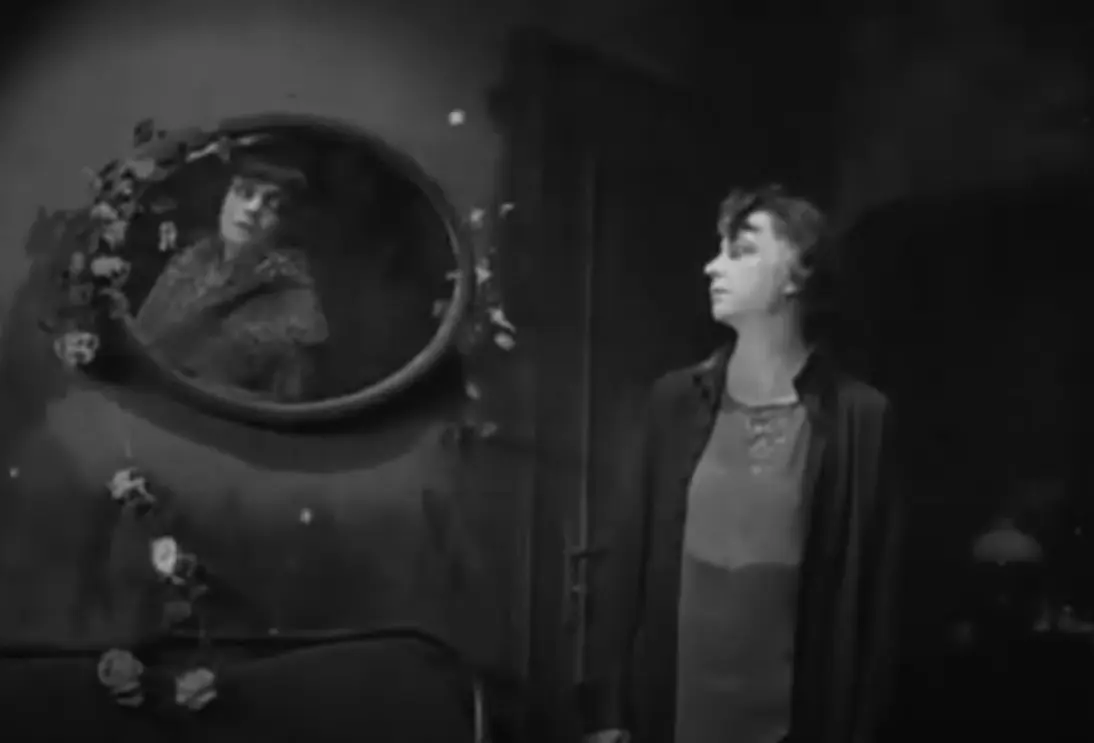
Visually, the film’s composition often frames Nielsen against looming architectural elements—doorways, staircases, bars—each serving as a visual metaphor for the obstacles that confine her. The recurring motif of a cracked mirror in the garret scene underscores the shattered self‑image that the protagonist grapples with. These visual cues, while simple, are executed with a precision that rewards repeated viewings.
The pacing, while deliberate, never drags. Each scene propels the narrative forward, whether through a fleeting glance, a whispered confession, or a stark tableau of abandonment. The film’s climax, wherein Nielsen confronts her own reflection in a shattered pane, is both literal and symbolic, culminating in a moment of profound self‑recognition that is as heartbreaking as it is inevitable.
In conclusion, Downfall is a cinematic elegy for a bygone era of starlight, a study of how personal tragedy can eclipse public triumph. Its rich visual palette, despite the monochrome medium, is amplified through strategic color accents in intertitles and set design, creating an immersive atmosphere that lingers long after the final frame fades. For scholars, cinephiles, and casual viewers alike, the film offers a timeless meditation on fame, morality, and the inexorable march of time.
IMDb 6
1933
Community
Log in to comment.