DbcultAccessing Vault...
Cult Review
Senior Film Conservator
A parlour the colour of gossip.
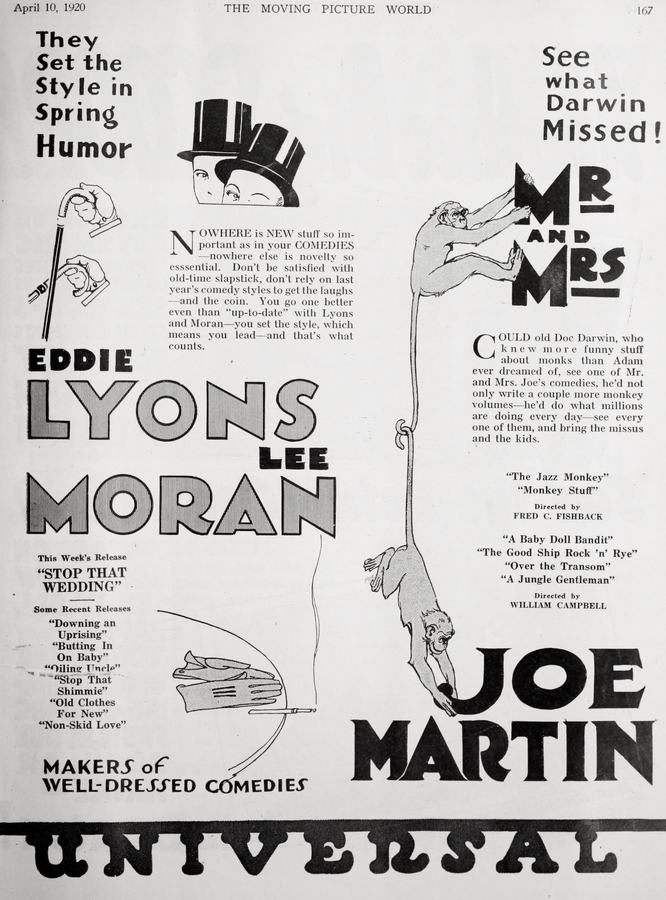
In the lacquered hush of a post-war drawing room, where chandeliers shiver at every tremor of fashion, Downing an Uprising stages its miniature revolution. The picture is a one-reel grenade: light, compact, yet packed with enough shrapnel to shred the pretensions of 1920 America. Bolshevism—flavour of the month among the satin set—has become a parlour trinket, a cause célèbre for women who sip China tea from porcelain thinner than their politics. Into this crimson carnival strides Eddie Lyons, a boulevardier with the smile of a card-sharp and the patience of a sniper. His objective: disinfect the mansion of his sweetheart, whose head has been turned by slogans she can’t spell.
The plan is exquisite in its cruelty.
Rather than argue theory—an indulgence he deems equal to champagne flat—Eddie contracts a travelling diorama of destitution. Lee Moran, perennial tramp with the timing of a metronome, leads this regiment of the unwashed. They are billed to the hostesses as “the real Bolsheviki,” a living diorama of class struggle. In truth they are vaudeville ghosts, whiskers glued, pockets rattling with bottle-caps instead of kopeks. Their arrival detonates the soirée: one hobo perches on a Louis XVI chair as though it’s a hay-bale; another gnaws a drumstick with the solemnity of a priest at communion. The camera, starved of dialogue, relishes these micro-blithes: a white glove retracting from a soot-smudged lapel, a flapper’s cigarette holder drooping like a wilted calla lily.
Satire, here, is not a scalpel but a bludgeon wrapped in chiffon.
The film understands that the quickest way to demolish a pose is to exaggerate it until it ruptures. When the hobos refuse to leave—having discovered the larder and the latent power of simply staying put—the hostesses swoon in perfect synchrony, fans fluttering like dying hummingbirds. Yet the invaders are not ideologues; they are pragmatists. At the mere whisper of soap, hot water, delousing, they scatter faster than you can say Comrade. The bath, that bourgeois sacrament, becomes the counter-revolution. The fad is literally washed down the drain, leaving only a ring of scum as historical evidence.
Lee Moran, also the scenarist, plays the chief tramp with the elastic physicality of a man who has tumbled off a thousand boxcars. His eyebrows—two circumflex accents of perpetual surprise—negotiate every beat: menace, appetite, sudden cowardice. Watch him inspect a silver platter of devilled eggs as though it were the Winter Palace. Eddie Lyons, opposite, is the still centre; his smirk never broadens into guffaw, letting the audience complete the sarcasm. Edith Roberts, as the sweetheart, has less screen time than the cuckoo clock, but her pivot from red fervour to hygienic horror is a miniature master-class in silent reaction. The iris-in on her widened eyes—two perfect silent screams—could be spliced into a Poe adaptation without seam.
Photographed against a backdrop that gleams like wet varnish, the hobos’ rags read as negative space—walking voids amidst brocade. Intertitles, scarce and acidic, arrive like paper cuts: “The vanguard of the proletariat—fresh from the freight yard.” Director Lyons blocks his mayhem in depth; a single tableau stages three planes of action: maids recoiling foreground, tramps pillaging mid-ground, debutantes fainting in geometric array beyond. The camera seldom moves—economy of means, purity of jest—but when it does, it dollies back to admit a geyser of suds, a white flag of soap flakes signalling capitulation.
Released months after the Palmer Raids, the short is both safety-valve and snarl. America, still jittery from bombs in post-boxes, needed its Bolshevik boogeymen defanged. What better disinfectant than ridicule? Compare it to It’s a Great Life (1920), where class tension dissolves into pie-fight, or Smashing the Plot, which treats sedition as thriller fodder. Downing an Uprising opts for burlesque: it turns the red spectre into a tramp who flees pumice. The strategy is equal parts escapism and propaganda, a celluloid editorial cartoon you can laugh at without reading.
Yet the laughter is double-edged.
By equating radical politics with body odour, the film flatters the bourgeois conviction that ideology is merely fashion—donned, discarded, laundered. The bathhouse exit implies that social change, too, can be scrubbed away with enough hot water and carbolic soap. A modern viewer, alert to history’s ironies, may shiver: within two decades the joke would return as tragedy, the freight-yard vagrants replaced by refugees fleeing actual purges. The reel’s breezy cynicism now feels like whistling past a graveyard still un-dug.
Silent comedy lives or dies on rhythm. Moran and Lyons structure their sequence like a Rondo: introduction of threat, escalation, absurd crescendo, abrupt deflation. Notice the lull before the bath: tramps slump, bloated, picking teeth with hatpins—an oasis of sluggishness that primes the finale sprint. When the maids reappear wielding tubs and brushes, the editing accelerates, staccato cuts matching the hobos’ panic. The payoff is not a pratfall but a vanishing act: one moment the drawing room is overrun, the next it is pristine, as though revolution were merely a spill to be mopped.
Modern prints ride on a cushion of library music—ragtime, usually—but try screening it mute. Without piano punctuation you hear the rustle of dresses, the clack of heels, the faint wheeze of hand-crank. That vacuum amplifies every visual insult: a hobo blowing noodle soup at a fresco becomes a trumpet blast. The film reminds us that comedy is not what we hear but what we imagine hearing—the creak of a corset as a dowager bends to inspect a flea.
The women here are not damsels but trend-addicts, their politics as interchangeable as hat-plumes. Eddie’s cure is to confront them with consequence—the unwashed reality beneath their red rosettes. There is a sly chauvinism: the belief that female conviction collapses at the first whiff of body odour. Yet the satire lands on men too; Eddie’s own ideology is nothing grander than maintaining property value. Everyone, regardless of sex, is slave to appearances.
To bathe the tramp is to restore the hierarchy.
Note the final tableau: ladies re-seated, hair re-pinned, the carpet pristine, the clock ticking as though nothing occurred. The status quo resumes with the inevitability of sunrise, proving that in this universe revolutions are indigestion, not apocalypse.
Like many shorts of its era, the film survived by accident—an incomplete print mis-filed under Educational in a Kansas vault, rediscovered when a projectionist mistook the label for hygiene propaganda. Restoration removed mold blooms that looked like lunar maps, yet scratches remain, and rightly so; those scars testify to a century of mishandling, much like the politics it lampoons. You can now stream it in 2K, count every soot fleck on Lee Moran’s cheek, glimpse Edith Roberts’ dental fillings when she gasps. High resolution does not dim the gag; it sharpens the contempt.
Place it beside Don Juan’s baroque debauchery and you see how brevity can trump spectacle; both films titillate the bourgeoisie then shame them, but one needs four reels of orgiastic murals while the other needs only a tramp’s armpit. Contrast it with Leben heisst kämpfen, where struggle is Wagnerian, operatic; here struggle is a parlour game overturned by soap bubbles. Even The Bells shares the same moral: guilt festers not in the soul but on the skin, and can be scrubbed if one scrubs hard enough.
Historians cite the film as proto-sitcom, the first flicker in which political fervour is defeated by domestic inconvenience. Its DNA re-emerges in Depression-era two-reelers, in Cold-War sitcoms where beatniks are chased off by lawn sprinklers, in post-9/11 ads where terrorists flee perfume. Whenever pop culture needs to neuter an -ism without debating it, the ghost of Lee’s tramp shambles on, searching for the next bath.
Verdict: a champagne cocktail laced with ipecac.
It sparkles, you sip, you gag, you laugh, you realise the glass is etched with your own reflection. Ninety years haven’t blunted its insult, only sharpened the joke until it cuts the hand that applauds.
IMDb 5.8
1930
Community
Log in to comment.