DbcultAccessing Vault...
Cult Review
Senior Film Conservator

A glimmer of gaslight, a tremble of lace, and suddenly the screen exhales 1926: the year when flappers stubbed cigarettes on social contracts and cameras dared to interrogate class like never before.
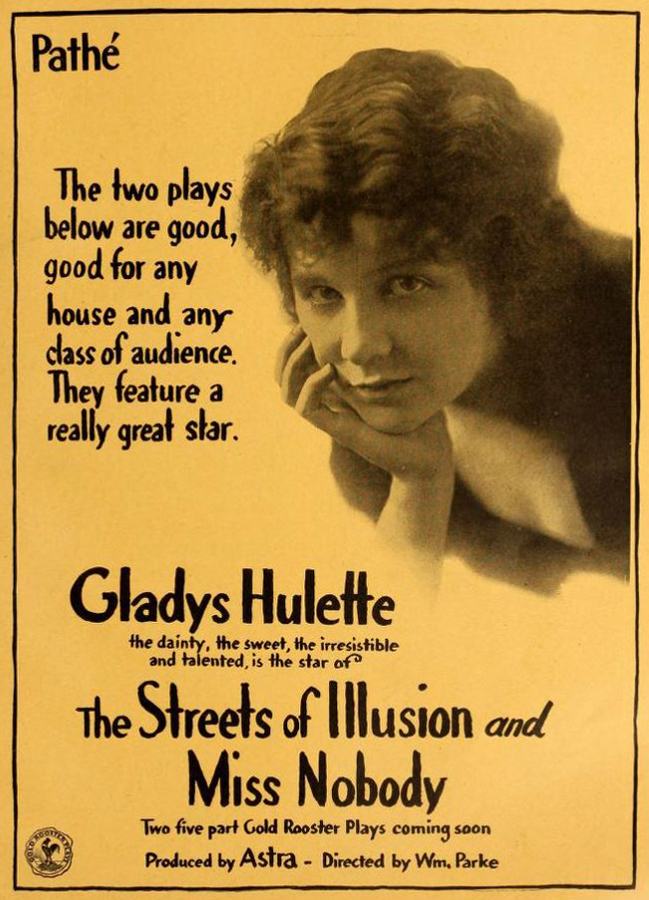
Miss Nobody arrives as a ghost in a sapphire gown, yet its pulse is ferociously modern. Director Lambert Hillyer, usually tethered to western dust and crime pulps, swaps six-shooters for stilettos of wit, orchestrating a chamber piece that feels like Wilde whispered to O. Henry during a police lineup.
Roma’s transformation from pariah to faux-patrician is no mere Pygmalion refurb. Instead, the film stages identity as a liquid asset, seeping through cracked porcelain and staining every white glove it brushes. Gladys Hulette—her eyes wide as camera lenses—plays the lie with a tremor that betrays both ecstasy and nausea. Watch her fingertips flutter when the forged coat-of-arms is unveiled: she strokes the parchment as though it might sprout thorns.
Hulette’s silent eloquence deserves a throne beside A Child of the Paris Streets, yet where that heroine is abandoned by the city’s indifference, Roma weaponizes imagination, turning absence into heraldry.
Cinematographer William Marshall bathes drawing rooms in honeyed amber, then jolts us with cavernous blues during the uncle’s interrogations. The palette itself confesses: yellow for the lie, indigo for the looming truth. Shadows fall across faces like inkblot tests; we read our own bias into every cheekbone.
Compare this to the monochrome sobriety of The Money Master, where capital, not caste, is the fetish. Miss Nobody understands that wealth is only the wallpaper; pedigree is the load-bearing beam.
A.J. Andrews imbues Uncle Basil with the reptilian patience of a chessmaster who’s already glimpsed the final board. He circles Roma not with malice but with scholarly appetite, as though she were a misprinted stamp. His suspicion is less moral outrage than antiquarian sport, giving the film a rare villain who dismantles illusion without twirling a proverbial mustache.
In the film’s bravura sequence—an after-dinner tour through the family portrait gallery—Basil’s monocle catches the candleflare, turning each ancestral gaze into a jury. The camera dollies backward, shrinking Roma within frames inside frames, a nesting doll of diminishing legitimacy.
Silent cinema rarely lacked corseted performances of femininity, yet Miss Nobody dares to ask: what if the corset itself is the performance? Roma’s borrowed title is simply a gaudier whalebone; she tight-laces her narrative until breath becomes optional. When she finally exhales the lie, the film lets the air hiss out through intertitles that fracture like cracked crystal: “I am nobody—perhaps that makes me free.”
Take a detour through A Florida Enchantment for another carnival of gender-code switchery, but note how that tale hinges on magical transformation whereas Hillyer’s fable locates sorcery in social consensus. Change the audience, change the woman.
Howard Irving Young’s scenario, lean as a fencing foil, wastes no title card on superfluous etiquette. Instead, he weaponizes ellipses: a fade-out after Roma’s tear-streaked confession implies exile, yet the next scene reveals her scrubbing steps, liberated from gilt but branded by shame. The audience becomes co-author, filling gaps with personal dread.
Such narrative austerity contrasts with the baroque moralizing of Romeo and Juliet (1916), where lovers die for the crime of existing. Here, Roma lives by committing existential patricide—murdering the very myth she birthed.
Gravina’s butler, a stooped maestro of side-eye, supplies burlesque relief without capsizing the tone. Watch him dust a nonexistent speck from Roma’s phantom coat-of-arms, his duster flicking with the precision of a metronome counting down her doom. These micro-gestures earn laughs that catch in the throat, because we recognize our own complicity in pageants of puffery.
That tonal tightrope—hilarity skewered on horror—recalls the acerbic aftertaste of The Bait, though that film laces arsenic through noir cynicism rather than society satire.

Miss Nobody arrived in theaters while auction houses trafficked in forged family trees for nouveau-riche Americans thirsty for duke-dust. The film cannily mirrors its cultural moment: a post-war economy where titles, like tulip bulbs, could bloom or wilt overnight. Roma’s guardians aren’t villains; they’re entrepreneurs of the intangible, gambling on the last commodity that can’t be counterfeited—belief.
Curiously, the same year saw The Soul Market trafficking in spiritual, not hereditary, credit. Together they form diptych testaments to an era bartering in currencies unseen.
At a trim 63 minutes, the picture’s rhythm—courtesy of editor William Hamilton—feels like a staccato heartbeat. Jump-shifts from soirée laughter to street urchin silence expose the grotesque proximity of champagne and sewage in Jazz-Age urbanity. One cut, bridging a ballroom’s revolving door to an orphanage gate, slaps us with the Empire’s caste contiguity.
Though originally released with cue sheets for theater musicians, modern festivals often pair the film with new compositions. I caught a 2022 Brooklyn print scored by Sufjan-esque strings punctuated by typewriter clacks—each keystroke a reminder that identity here is drafted, not decreed. The effect is seismic; you hear Roma’s lie being typed in real time.
Stacked against The Tangle, another 1926 tale of social labyrinths, Miss Nobody feels surgical where the former is sprawling. Likewise, Jim the Penman may share themes of forgery, yet its masculine swashbuckling dilutes the intimacy of Roma’s self-forgery.
Even Dostoevskian echoes reverberate if you screen Prestuplenie i nakazanie as a double feature: both works probe punishment’s necessity when the crime is metaphysical. But while Raskolnikov wades through blood, Roma merely walks through paper—equally damning in a world woven of parchment myths.
Great art doesn’t answer whether Roma deserves forgiveness; it leaves us stranded in the gallery between portraits that blink first. Miss Nobody survives not because it moralizes about false lineage but because it exposes the fragility of every lineage we cling to—surnames, nationalities, follower counts. Underneath the flicker of nitrate, the film whispers a dare: take off your escutcheon, and see who still recognizes the shape of your silhouette.
Verdict: A subversive little miracle—part comedy of manners, part existential heist—Miss Nobody pickpockets your certainties then vanishes into the crowd before you can cry constable. Seek it, preferably on a rainy afternoon when your own reflection feels slightly forged.
IMDb 7.1
1935
Community
Log in to comment.