DbcultAccessing Vault...
5.8/10
Senior Film Conservator
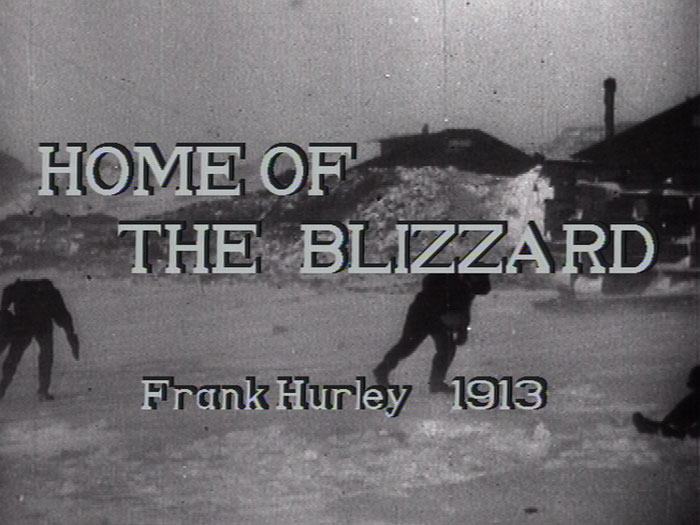
A definitive 5.8/10 rating for a film that redefined the boundaries of cult cinema. Dr. Mawson in the Antarctic remains a cornerstone of transgressive art.
A cathedral of ice, a congregation of bones
Frank Hurley’s Dr. Mawson in the Antarctic is not a film—it is a 77-minute block of glacial breath you exhale in sub-zero shivers. Shot on the Australasian Expedition of 1911–14, released patchwork-style to stunned audiences in 1913, the reels feel as if someone carved cinema directly from permafrost. There are no sets, no actors in greasepaint; instead, the mise-en-scène is an entire continent hell-bent on erasing mammalian presence. Hurley’s hand-cranked Éclair and Debrie cameras become pocket-sized metaphysics: each frame asks whether humans deserve verticality when the planet itself sprawls horizontal and indifferent.
The first act—sun-dazzled arrival—seduces like a siren. Icebergs the size of cathedrals drift in Kodak-cyan, their cliffs banded like Neapolitan sediment. Men parade on deck in cable-knit, sled dogs bark in baritone, and the horizon promises a blank canvas for empire. Hurley cross-cuts between officers scribbling meteorological logs and the dogsled ballet on the sea ice, forging a visual overture that whispers: record, revel, but do not trust.
Then the continent strips the palette. Blizzard whites obliterate blues, blacks erode into grays, and faces become parchment maps of burst capillaries. The cinematographer—equal parts Shackleton and Caravaggio—paints chiaroscuro with carbide lamplight inside snow-block huts. Frost feathers across the lens, creating accidental vignettes; emulsion cracks propagate like star-fields, turning defect into cosmology. You are not merely watching—you are ingesting atmosphere.
Seventy minutes in, the film detonates. Explorer Belgrave Ninnis slips into a hidden bergschrund, his sledge—laden with tent, reindeer-skin sleeping bags, and six weeks’ food—vanishing into blue-black esophagus. The camera does not dramatize with dolly or zoom; Hurley simply keeps rolling as the remaining men peer into abyssal jaws. The absence of soundtrack amplifies the moment: you hear your own heart ricochet off ribs. From here, Dr. Mawson pivots from expeditionary postcard to survivalist crucifixion.
Mawson and Xavier Mertz commence the most masochistic footnote in polar history: 300 miles of haggard return, rationing a miserly pound of provisions per day. The film stock itself seems to lose weight—frames jitter, exposure throbs, perforations warp like wet seaweed. When Mertz succumbs to hypervitaminosis A (his own sled dogs become final supper), Hurley records the burial under quartz-hard stars. The sequence is mercifully discreet: a gloved hand closes the dead man’s eyelids, snow folds over like counterpane. Yet the restraint annihilates louder than gore.
What astonishes most is structure. Hurley eschews chronological shackles. He re-stitches time like a frost-numb surgeon: crevasses appear before we learn cartography; scurvy blooms prior to vitamin theory. Such fragmentation mirrors the cognitive fog of starvation. Viewers lurch between temporal shards, experiencing the same disorientation as the explorers. Cinema becomes symptom.
Compare this to contemporaneous epics like Quo Vadis? or Cleopatra, whose lavish sets and theatrical blocking reassure audiences that history is a pageant. Hurley offers no such comfort. His history is a splinter lodged in the ball of your foot—intimate, festering, impossible to theatricalize.
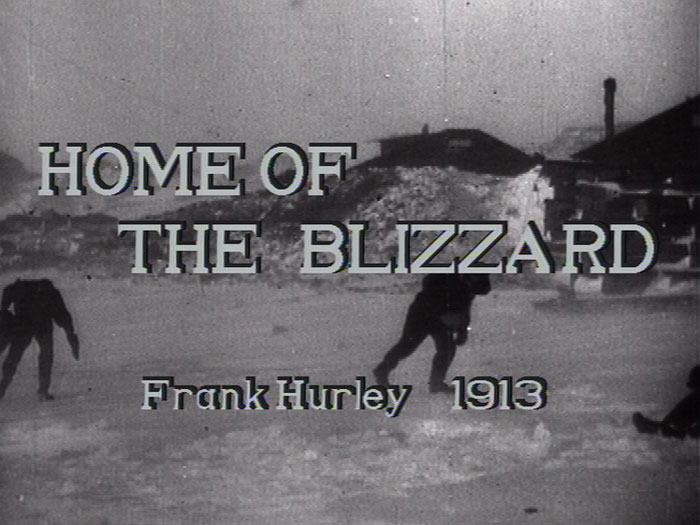
Because nitrate and cold are nemeses, the surviving 35 mm is pockmarked. Scrits and scuffs flicker like St. Elmo’s fire; emulsion reticulation resembles dried lakebeds. Purists might call these flaws, yet they function as autograph—Antarctica signing its name across every inch. Each defect evidences temperature, chemical volatility, human perseverance. The film ages symbiotically with its subject, something no digital remaster can simulate. To scrub these blemishes would be to cosmetically alter a survivor’s scar map.
Hurley’s tinting strategy intensifies affect. Daylight scenes glow with arsenic-blue tones that suggest razor-sharp clarity. Interior tent shots carry umber-amber warmth, the color of meager hope. The final reel—Mawson staggering toward Cape Denison hut only to watch the relief ship steam away—drowns in desaturated slate, as if the world itself has given up pigment. You taste metal in your mouth.
Some critics fault the film for its masculine monoculture, yet that absence is precisely the critique. Antarctica becomes a laboratory where Edwardian certitudes—empire, hierarchy, corporeal invulnerability—dissolve. The camera records the psychological unmooring of men who named mountains after monarchs but now eat their own huskies. There is no flag-planting triumphalism, only the mute admission that cartography is a fleeting tattoo on planetary skin.
Contrast this with With Our King and Queen Through India, a 1912 pageant drunk on colonial spectacle. Where that film anoints empire as destiny, Dr. Mawson stages empire’s impotence. The Antarctic plateau does not belong; it tolerates until patience snaps.
Modern exhibitors often pair the film with minimalist scores—piano, glass harmonica, analog synth. Do yourself a favor: insist on absolute silence, save for the projector’s mechanical respiration. The absence amplifies diegetic ghosts—canvas flapping, crampons biting, wind ululating like Tibetan throat song. In that vacuum, you become an eighth expedition member, your popcorn a frivolity you will later resent.
Place Hurley’s work beside Paul J. Rainey’s African Hunt (1912), where big-game bravado luxuriates in domination, or The Alaska-Siberian Expedition, whose travelogue vistas soothe. None achieve the ontological rupture of Dr. Mawson, where survival is not narrative garnish but the film’s fundamental substrate. Even later expeditionary classics—Nankyoku Tanken Katsudô Shashin (Japanese re-enactments of the ’10s)—cannot replicate the existential nakedness of Hurley’s actuality.
Does the camera exploit catastrophe? Hurley’s answer is radical transparency: he films his own deprivation. When he captures the crevasse tragedy, the wobbling horizon reveals his trembling grip. The viewer is not a voyeur perched safely in velvet seat; we are complicit, because the very act of recording consumes precious calories. The film strip itself bears hunger pangs.
Centennial restorations by the National Film and Sound Archive have stabilized the print without digital cosplay. The result is a palimpsest you can plunge your fingers into. Film societies from Tromsø to Hobart project it during polar nights, audiences wrapped in reindeer pelts, thermoses of glögg circulating like hot antifreeze. Each screening mutates into communal endurance, a tacit pact that no one shall leave until the last frame shivers through the gate.
If you seek comfort, look elsewhere. Dr. Mawson in the Antarctic is a glacier that crawled into the projector, a necropolis of ice crystals and human resolve. It redefines cinema as meteorological event. Watch it on the largest screen you can find, let the bulb’s heat collide with the film’s cold, and feel your cheeks chap in sympathy. Long after the credits—yes, archivists appended titles for context—you will sense frostbite ghosting your fingertips, a reminder that some stories do not conclude; they merely calve into bergs and drift, forever, inside your blood.
IMDb 4
1919
Community
Log in to comment.