DbcultAccessing Vault...
Cult Review
Senior Film Conservator
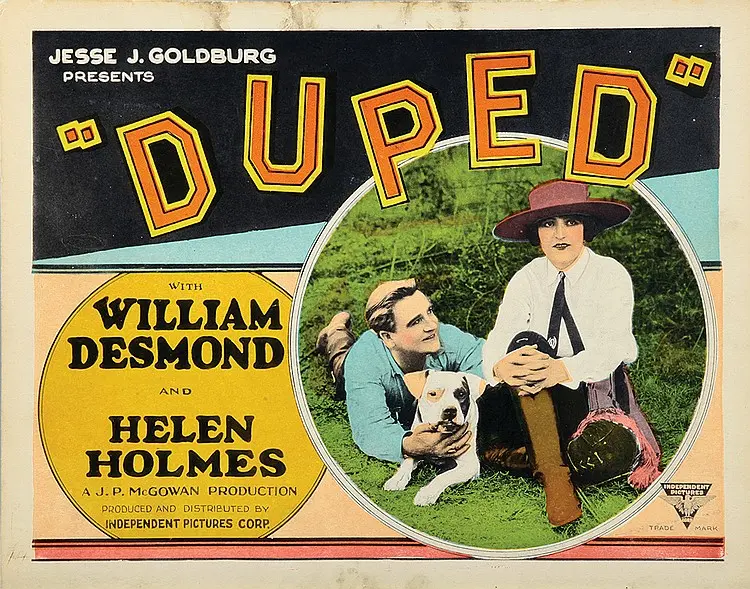
Is the silent Western Duped worth unearthing from the cinematic archives today? Short answer: yes, but with significant caveats that demand a specific viewing palate. This film is a fascinating watch for enthusiasts of early cinema, particularly those who appreciate the foundational tropes of the Western genre and the silent era's unique storytelling rhythm. However, if you seek rapid pacing, complex character arcs, or modern narrative sophistication, Duped will likely test your patience.
It’s a historical artifact that still offers glimpses of effective storytelling, even if its narrative mechanics feel quaint by contemporary standards. For those willing to adjust their expectations, it provides a valuable window into the origins of a beloved genre.
This film works because of its earnest commitment to a classic good-versus-evil narrative, bolstered by surprisingly effective silent performances that convey emotion without a single spoken word. It fails because its plotting, while functional, often relies on convenient coincidences and lacks the layered complexity modern audiences expect, leading to a somewhat predictable journey.
You should watch it if you are a film historian, a silent cinema enthusiast, or someone curious about the formative years of the Western genre’s visual language. If you’re looking for a fast-paced, action-heavy, or psychologically deep cinematic experience, you might find its charms elusive.
Yes, Duped is worth watching for specific audiences. It’s a foundational piece for silent film lovers and Western genre historians. The movie offers a straightforward, engaging plot typical of its era, showcasing early cinematic techniques. It won't appeal to everyone, especially those accustomed to modern film pacing and narrative complexity. But for those interested in film's evolution, it's a valuable viewing experience.
At its core, Duped is a tale of reclamation, both financial and personal, set against the rugged backdrop of the American West. John Holmes, portrayed with a certain East Coast gravitas by William Desmond, is no stranger to the cutthroat world of finance. His transition from the polished boardrooms of Wall Street to the dusty, lawless plains of California is abrupt, driven by the alarming news that his gold mine — a symbol of his expansive ambition — is under threat.
The film cleverly establishes the stakes early, grounding Holmes’s journey in a tangible loss. It’s not just about money; it’s about his acumen, his trust, and his very identity as a successful man. The antagonist, a crooked foreman, embodies the classic Western archetype of the internal threat – the wolf in sheep’s clothing, operating from within the trust bestowed upon him.
The introduction of Dolores Verdiego, played by Helen Holmes, adds a crucial layer of human consequence to the foreman’s villainy. She is not merely a damsel in distress, though the film certainly leans into that trope. Instead, she is an unwitting pawn, a victim of circumstance coerced into a fraudulent claim that could strip John of his legitimate earnings. This entanglement elevates the conflict beyond a simple property dispute, imbuing it with moral urgency and personal betrayal.
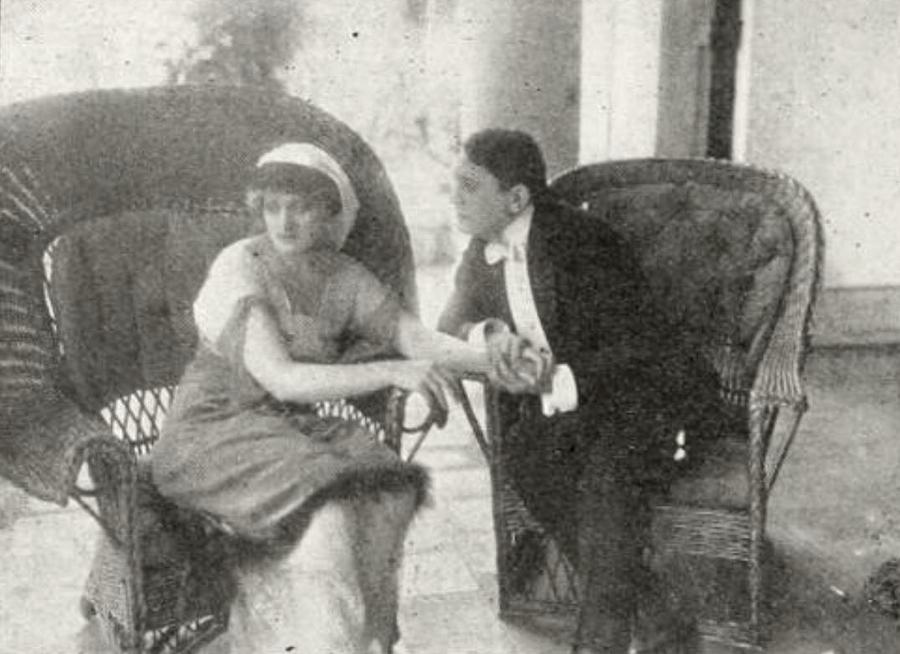
The budding romance between John and Dolores, while somewhat swift, serves as a powerful narrative engine. Their shared plight against a common enemy forges a bond that feels both inevitable and earned within the confines of silent film storytelling. It’s a classic narrative arc: the sophisticated outsider finds love and purpose in the wild, simultaneously fighting for justice and for a newfound connection.
The plot’s progression, though occasionally reliant on expositional intertitles and convenient reveals, maintains a steady, engaging pace. The unmasking of the thieves and the eventual proving of the charter’s forgery are handled with a satisfying, if uncomplicated, sense of resolution. It’s a testament to John B. Clymer’s writing that even with predictable beats, the narrative tension holds, pulling the viewer along with John and Dolores’s quest for truth.
In the silent era, an actor's face and physicality were their most potent tools, and the cast of Duped largely rises to this challenge. William Desmond, as John Holmes, exudes a quiet determination. His stoicism, often conveyed through a steady gaze and a firm jawline, effectively communicates his character’s resolve without resorting to melodramatics. There’s a scene where he first learns of the mine’s peril; his initial shock quickly hardens into a focused resolve, a subtle shift that speaks volumes about his character’s inner strength. It’s a less flamboyant performance than, say, Charlie Chaplin’s physical comedy in Tillie's Punctured Romance, but equally effective in its dramatic context.
Helen Holmes, as Dolores Verdiego, brings a delicate vulnerability to her role. Her wide, expressive eyes and hesitant gestures paint a vivid picture of an innocent caught in a ruthless scheme. When she is coerced into signing the false claim, her internal conflict is palpable; you can almost hear her anguish through her pained expressions and trembling hands. It’s a performance that transcends mere prettiness, hinting at a deeper emotional reservoir. My unconventional observation here is that Helen Holmes, despite the limitations of the medium, manages to infuse Dolores with a surprising amount of agency, even when she’s ostensibly a victim. She isn't just acted upon; her reactions often drive John's protective instincts, making her more than a mere plot device.
J.P. McGowan, as the treacherous foreman, is the quintessential silent film villain. His sneering expressions, shifty eyes, and aggressive body language leave no doubt as to his nefarious intentions. There’s a particularly memorable sequence where he subtly intimidates Dolores, his shadow looming over her, a clear visual cue that instantly establishes his dominance and her fear. He’s not a nuanced antagonist, but he doesn’t need to be. His role is to provide a clear, unambiguous obstacle, and he delivers with relish.
The supporting cast, including Dorothea Wolbert, George Magrill, and James Thompson, contribute to the film’s atmosphere, each playing their part in populating this early Western world. While their roles are smaller, their contributions help ground the narrative, adding texture to the bustling, often chaotic environment of the gold rush era. The collective effort of the cast ensures that even without dialogue, the story’s emotional beats land with considerable impact.
John B. Clymer’s direction in Duped is characterized by a pragmatic, straightforward approach to storytelling, typical of early genre films. He prioritizes clarity and narrative momentum, ensuring that the audience can follow the intricacies of the plot despite the absence of spoken dialogue. The film’s pacing is deliberate, building tension through a series of reveals and confrontations rather than relying on rapid-fire action sequences, which were still evolving in cinematic language.
Clymer effectively uses intertitles not just for dialogue, but also to advance the plot, explain motivations, and even offer occasional expository insights into the characters’ thoughts. While this can feel somewhat clunky by today’s standards, it was a vital tool for narrative coherence in the silent era. For instance, the intertitle revealing the foreman’s larceny sets the stage for John’s journey, efficiently communicating the inciting incident.
The director demonstrates a keen understanding of visual storytelling within the limitations of the period. He often employs clear, wide shots to establish the setting, contrasting the urban sophistication of New York with the rugged expansiveness of the Californian landscape. Close-ups are reserved for moments of intense emotion or significant plot points, such as the moment Dolores is forced to sign the fraudulent document, allowing the audience to focus on her internal struggle.
One debatable opinion I hold is that Clymer's reliance on 'convenient' coincidences, while a common trope of the era, occasionally strains credulity. The ease with which John and Dolores's paths converge, and the sudden appearance of crucial evidence, sometimes feels less like organic plot development and more like narrative shorthand. However, in the context of early cinema, this was often a necessary device to keep the story moving without overly complex exposition.
The film’s action sequences, though not as explosive as later Westerns, are competently staged. A particular scene involving a chase or confrontation, while perhaps lacking dynamic camera movement, effectively conveys the urgency through rapid cuts and exaggerated physical actions. Clymer understands that for a silent film, clear visual cues are paramount, and he delivers them consistently, guiding the audience through the moral maze of deception and discovery.
The cinematography in Duped offers a fascinating snapshot of early 20th-century filmmaking. While lacking the sophisticated camera work of later decades, the visuals are clear, functional, and surprisingly evocative. The film benefits immensely from its Californian setting, capturing the raw, untamed beauty of the West. Shots of dusty trails, sun-drenched landscapes, and rudimentary mining operations provide an authentic backdrop that grounds the narrative.
Lighting, primarily natural, lends a stark realism to many scenes. Indoor sequences, often lit with a combination of practical and artificial sources, create a sense of intimacy or, conversely, a shadowy atmosphere for the villainous machinations. There’s a distinct visual contrast between the brighter, open spaces of the mine and the darker, more confined interiors where much of the scheming occurs, subtly reinforcing the moral divide.
The tone of Duped is largely earnest and dramatic, with a clear moral compass. It’s a classic tale of good triumphing over evil, imbued with a sense of adventure and burgeoning romance. There’s little room for ambiguity or cynicism, which, for its time, was a strength. The film never wavers from its mission to deliver a satisfying resolution, even if the journey is straightforward.
One notable aspect is how the film uses visual cues to establish character and mood. For instance, the foreman's dark clothing and shifty glances immediately mark him as untrustworthy, while Dolores’s lighter attire and open expressions denote her innocence. These visual shorthand techniques were crucial in silent cinema, and Duped employs them effectively.
It works. But it’s flawed. The film’s visual language, while effective for its era, might feel somewhat static to modern eyes, lacking the dynamic movement and complex compositions that would become hallmarks of later cinema. However, for a film of its age, the visual storytelling holds up, providing a clear and engaging narrative.
Duped, while not a towering classic in the vein of Griffith’s epics, holds an important place in the lineage of the American Western. It’s a testament to the genre’s early appeal, showcasing many of the conventions that would define it for decades to come: the resourceful hero, the damsel in distress, the treacherous villain, and the untamed frontier as a crucible for justice. Films like California or Bust and Way Out West would follow, building on these narrative foundations, but Duped provides an excellent example of the genre in its nascent stage.
Its simplicity, often perceived as a drawback by modern viewers, is arguably its greatest strength when viewed historically. It distills the Western to its fundamental elements, focusing on clear motivations and straightforward conflicts. This clarity allowed early audiences to easily grasp the narrative without the need for complex intertitles or elaborate character development.
The film also highlights the economic anxieties of the era, where quick fortunes could be made and lost in the burgeoning industries of the West. John Holmes, the Wall Street magnate, represents the East’s capital flowing into the West’s raw potential, a narrative thread common in many early Westerns. This interplay between old money and new frontiers adds a layer of social commentary, however unintentional.
Furthermore, Duped serves as a valuable document of early cinematic acting styles. The reliance on exaggerated facial expressions and gestures, while sometimes bordering on theatrical, provides a unique insight into how emotions were conveyed before the advent of synchronized sound. It’s a different kind of performance, one that demands a different kind of appreciation.
My second strong, debatable opinion is that the film's almost naive optimism about justice prevailing, even against overwhelming odds, is both charming and, in a way, more profound than many cynical modern narratives. It offers a clear moral universe that, while perhaps simplistic, provides a comforting sense of order. It's a reminder of a time when cinema often sought to reassure rather than provoke, making its enduring appeal more about comfort than challenging norms.
"The film’s almost naive optimism about justice prevailing, even against overwhelming odds, is both charming and, in a way, more profound than many cynical modern narratives."
While it may not revolutionize your understanding of cinema, Duped offers a solid, engaging example of a silent Western done right, preserving a piece of film history that continues to inform and entertain those willing to look back.
Duped is a charming, if somewhat rudimentary, silent Western that delivers exactly what it promises: a clear-cut tale of justice, love, and reclamation on the American frontier. It’s a film that demands a certain appreciation for its historical context, rewarding patient viewers with earnest performances and a foundational understanding of a beloved genre. While it won't redefine your cinematic palate, it offers a sturdy, engaging experience for those willing to step back in time.
It’s not a masterpiece, nor is it without its flaws, but its historical significance and unpretentious storytelling make it a worthwhile watch for specific audiences. If you're a student of film history or simply curious about the roots of the Western, Duped will not leave you feeling entirely, well, duped.
IMDb —
1921
Community
Log in to comment.