DbcultAccessing Vault...
Cult Review
Senior Film Conservator
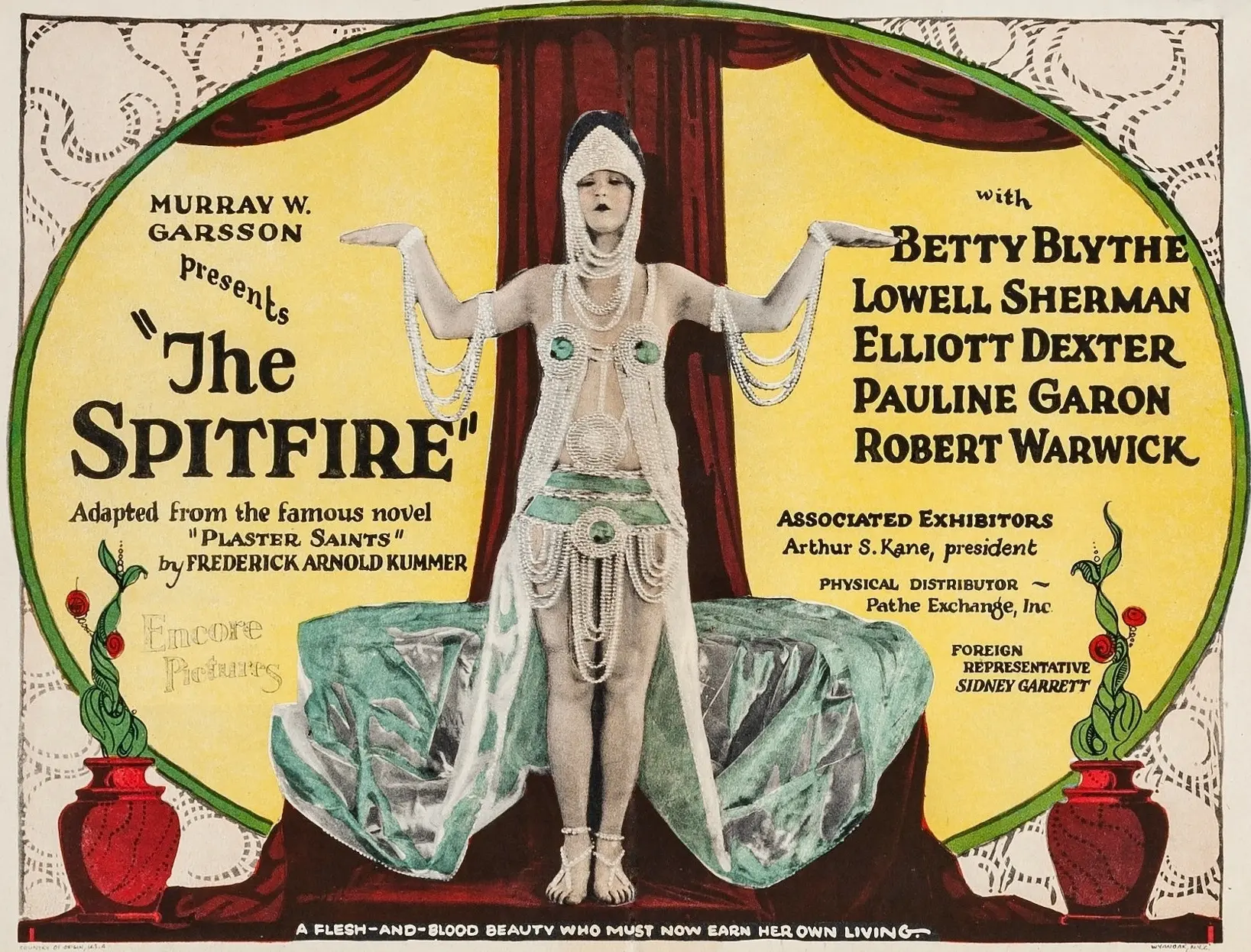
The 1924 cinematic landscape was a fertile ground for exploring the friction between inherited morality and the encroaching modernity of the urban sprawl. In The Spitfire, directed with a keen eye for social stratification, we are treated to a narrative that is as much a critique of institutional hypocrisy as it is a standard melodrama. The film opens not with a whimper, but with the clatter of poker chips—a sequence that immediately establishes the precarious nature of male reputation in the post-war boom. Robert Warwick, portraying Douglas Kenyon, anchors the film with a performance that balances the stoicism of a banker with the burgeoning desperation of a man caught in a cultural crossfire.
The central conceit—the 'winning' of a woman in a card game—might strike the contemporary viewer as archaic, yet within the context of 1924, it serves as a potent metaphor for the commodification of the female form in the entertainment industry. Marcia Walsh, played with a luminous yet grounded energy by Betty Blythe, is not merely a prize; she is the catalyst for Kenyon’s descent. Unlike the more surrealist leanings found in European exports like Hilde Warren und der Tod, The Spitfire remains firmly rooted in the gritty realism of American social consequences. When Kenyon is discharged from his bank for the mere appearance of impropriety, the film exposes the fragility of the 'respectable' man.
The narrative’s brilliance lies in its refusal to allow Kenyon a simple path to redemption. His separation from Jean Bronson (Pauline Garon) is not merely a romantic hurdle but a philosophical one. Jean’s transition from a sheltered sweetheart to an actress is a fascinating subversion of the era's tropes. While films like Miss Dulcie from Dixie often played with the 'fish out of water' theme in a more comedic light, The Spitfire treats Jean’s entry into the theatrical world as a survivalist necessity. The stage becomes a place of refuge and peril, a duality that the cinematography captures through stark contrasts and shadow-heavy set designs.
Lowell Sherman’s portrayal of the unscrupulous theatrical producer is a masterclass in silent film villainy. He doesn't rely on mustache-twirling histrionics; instead, his menace is found in the stillness, the predatory gaze that reflects the dangers facing women in the burgeoning industry. This predatory element links the film thematically to Stolen Moments, where the vulnerability of the female lead is exploited by those in positions of power. The Spitfire, however, grants its heroine a degree of resilience that feels ahead of its time.
Visually, the film utilizes the limited technology of 1924 to maximum effect. The interior of the bank is filmed with oppressive symmetry, emphasizing the rigid rules Kenyon violates. Conversely, the theatrical spaces are chaotic, filled with depth and movement, mirroring the internal turmoil of the characters. This visual dichotomy is reminiscent of the stylistic shifts seen in Montmartre, where the setting dictates the emotional temperature of the scene. The use of intertitles in The Spitfire is notably sparse, allowing the physical performances of Warwick and Garon to carry the narrative weight—a testament to the sophisticated visual literacy of the audience at the time.
The subplot involving Jean’s grandfather and Kenyon’s legal pursuit adds a layer of complexity that elevates the film above mere romance. It introduces a conflict of interest that tests the protagonist's moral compass. Is Kenyon seeking justice, or is he merely lashing out at a world that rejected him? This ambiguity is where the film finds its heart. It’s a far cry from the more straightforward moral binaries of Colorado or The Three Pals. Here, the characters are allowed to be flawed, vindictive, and deeply human.
Robert Warwick’s screen presence is undeniable. Having transitioned from the stage, he brought a gravitas that few of his contemporaries could match. In The Spitfire, he navigates the transition from a man of stature to a social pariah with a nuanced physicality. When he is reunited with Jean, the chemistry is palpable, yet tempered by the trauma of their shared experiences. Pauline Garon, for her part, avoids the 'damsel in distress' trap. Her Jean is a woman of action, making her own way in a world that would rather see her fail. Their dynamic is the emotional engine of the film, providing a satisfying payoff to the intricate plotting.
Comparing this to Revelation, one can see the evolution of the silent film actress. Garon’s performance is less about grand gestures and more about the internal life of the character. The way she handles the producer’s advances—with a mix of terror and tactical intelligence—is a highlight of the film’s final act. It’s a performance that deserves to be remembered alongside the greats of the era.
The Spitfire remains a vital artifact of 1924 because it refuses to offer easy answers. It acknowledges that while the lovers are reunited, the scars of their social displacement remain. The film doesn't shy away from the fact that Kenyon’s reputation is permanently altered, nor does it suggest that Jean’s time on the stage was merely a temporary diversion. It suggests a new reality for the American couple—one where survival requires a departure from the strictures of the past. This thematic depth is what distinguishes it from contemporary works like Under the Top or It Happened to Adele.
Furthermore, the film’s exploration of the 'fallen' woman—represented by both Marcia and, in the eyes of society, Jean—challenges the period's double standards. The 'innocent' night spent in the apartment is a clever plot device that forces the audience to confront their own prejudices. Much like La faute d'Odette Maréchal, the film interrogates the 'fault' of the woman in situations orchestrated by men. The Spitfire, however, is less interested in tragedy and more in the resilience of its characters.
The production values, from the costume design to the set decoration, reflect a high level of craftsmanship. The theatrical sequences, in particular, are lush and evocative, capturing the allure of the footlights that drew so many young women of the era. The contrast between these vibrant scenes and the cold, sterile law offices and banks creates a rhythmic tension that keeps the viewer engaged throughout its runtime. It is a film that understands the power of the image to convey complex social hierarchies without the need for a single spoken word.
In the broader context of the 1920s, The Spitfire stands as a bridge between the moralizing melodramas of the previous decade and the more cynical, sophisticated 'Pre-Code' films that would follow. It has the DNA of a mystery, the heart of a romance, and the mind of a social document. Whether one is analyzing it for its historical significance or enjoying it as a piece of narrative storytelling, it delivers on all fronts. It is a quintessential example of how silent cinema could tackle weighty themes with grace and visual panache.
For those delving into the filmography of Robert Warwick or Betty Blythe, this is an essential entry. It showcases their range and the specific type of star power that defined the mid-20s. While some might find the coincidences of the plot—the grandfather's involvement, the producer's villainy—a bit too convenient, they are handled with such conviction that they feel like destiny rather than lazy writing. In the end, The Spitfire is a testament to the enduring power of the silent medium to reflect the anxieties and aspirations of its time.
The Spitfire (1924) is a masterclass in silent storytelling, weaving a complex web of social ruin and theatrical redemption that remains surprisingly resonant today.

IMDb 6.5
1932
Community
Log in to comment.