DbcultAccessing Vault...
Cult Review
Senior Film Conservator
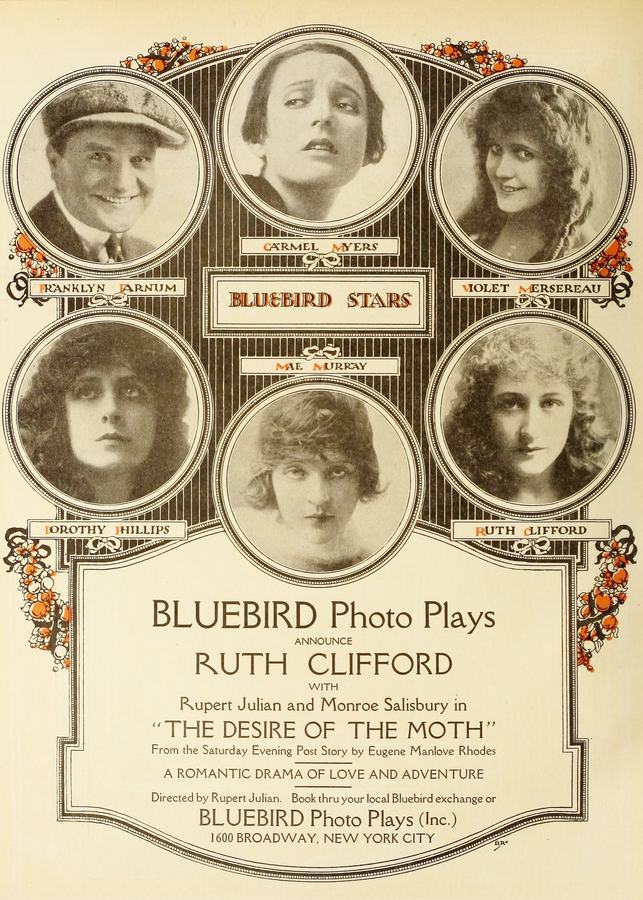
Torchlight trembles across rough-hewn pine, and suddenly The Desire of the Moth feels less like a 1917 one-reeler than an incantation someone forgot to bury. Director Rupert Julian—yes, the future phantom of the Paris Opera—treats every inch of celluloid like tinder, coaxing perilous heat from what could have been a stock outlaw fable. The title itself, lyrical yet ominous, warns that proximity to flame ends in singed wings; the film delivers on that threat with such earnest austerity that even century-old scratches look like intentional scar tissue.
Shot in the San Jacinto range during the notorious winter when Hollywood’s itinerant companies froze their developing tanks, the picture acquires documentary grit: exhalations fog the lens, hoarfrost crusts the aperture, and Monroe Salisbury’s cheekbones carve shadows sharp enough to slice intertitles. Those who revere The Conqueror (1917) for its on-location verisimilitude will discover an even starker precursor here; instead of the usual painted-linen backdrop, we get granite precipices that refuse to flatter the performers, turning every medium shot into a confrontation between man and mineral.
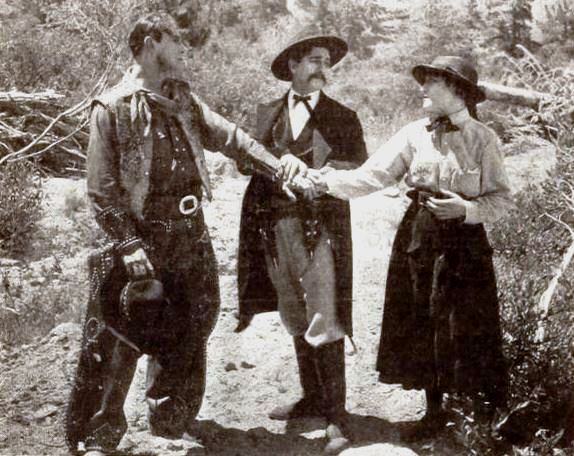
The mountain cabin interior, ostensibly claustrophobic, becomes a chiaroscuro cathedral thanks to cinematographer Allen Siegler (later celebrated for Shadow of the Law). He rigs a rudimentary arc bounce off tinfoil, producing a molten halo around Stella’s hair—Ruth Clifford’s crowning asset—so that each time she leans toward the wounded Foy, the screen temperature spikes. When the narrative migrates to the valley’s cattle barony, Siegler swaps amber kerosene for slate-blue dusk, flipping visual hierarchies: civilization now looks refrigerated, while the earlier outlaw hideout glows like a heart.
Eugene Manlove Rhodes, chronicler of New Mexico’s austere ethics, co-scripts, and his fingerprints smear every moral fissure. Foy’s introductory crime—never specified—might be trespass, manslaughter, or sedition; the ambiguity weaponizes our own assumptions. When he confesses to Colonel Vorhis, the moment plays like secular penance, a reversal of The Ticket of Leave Man’s Protestant scrutiny. Vorhis, portrayed by granite-jawed W.H. Bainbridge, becomes both priest and parole board, deciding that contrition outweighs jurisprudence—a stance that feels radical even by post-1917 progressive standards.
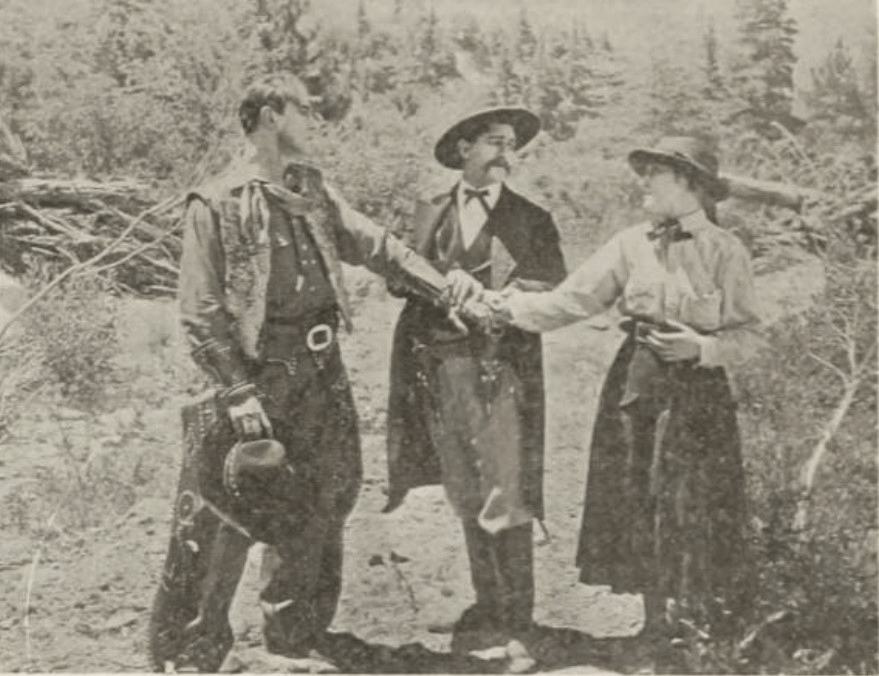
Yet the film refuses to ossify into easy absolution. A second accusation—cattle rustling—slams Foy back into the wilderness, and this déjà vu smacks of cosmic mockery. The cycle of flight, refuge, and re-flight suggests Nietzschean eternal return more than dime-novel coincidence, positioning our hero as Sisyphus in rawhide.
Ruth Clifford, barely nineteen during production, essays Stella with a hushed potency that prefigures Lillian Gish’s later wind-whipped martyrs. She wields silence like a rapier: watch the shot where she hears Foy’s second escape; her pupils eclipse the iris, a micro-eclipse that speaks volumes no intertitle dares articulate. Unlike the imperiled naïfs cluttering The Battle of Love or Stolen Goods, Stella owns agency; she rides, shoots, and ultimately decides which suitor merits her future. The film’s boldest feminist beat arrives when she rejects Pringle’s offer of rescue, declaring through a strategically placed intertitle: “A heart can’t be stolen like beeves, John—it’s either freely given or left to wander.”
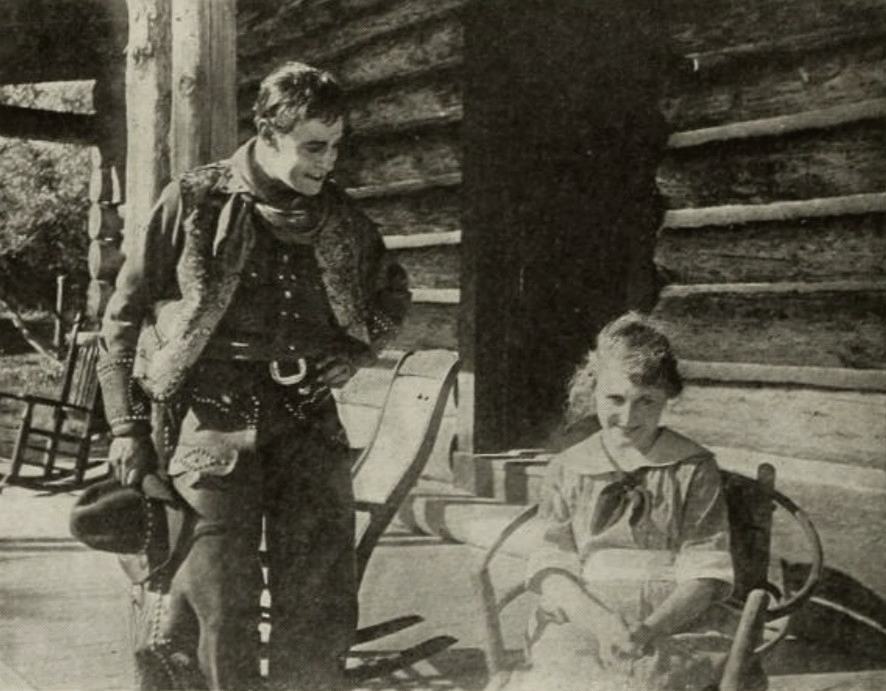
Milton Brown’s Pringle could have devolved into mere third-wheel obstruction. Instead, the screenplay grants him an interior epic: a man who excavates evidence for his competitor because moral arithmetic outweighs romantic arithmetic. His climactic oration to the cattle tribunal—delivered atop a rain-soaked crate—ranks among the era’s most rousing pieces of silent rhetoric, rivaled only by Rupert Julian’s own monologue in The Last Chapter. The scene’s kinetic cutting—alternating tight shots of branded hides, forged cheques, and Pringle’s trembling lip—cements montage as moral machinery.
Contemporary exhibitors received a cue sheet calling for Grieg’s In the Hall of the Mountain King during Foy’s initial dash, segueing into the folk hymn “Aura Lea” for romantic interludes—an inspired clash that anticipates Copland’s later Americana lilt. Modern festival accompanists often substitute a prepared-piano rattle to mimic hoofbeats on frozen loam, proving the film’s tonal elasticity.
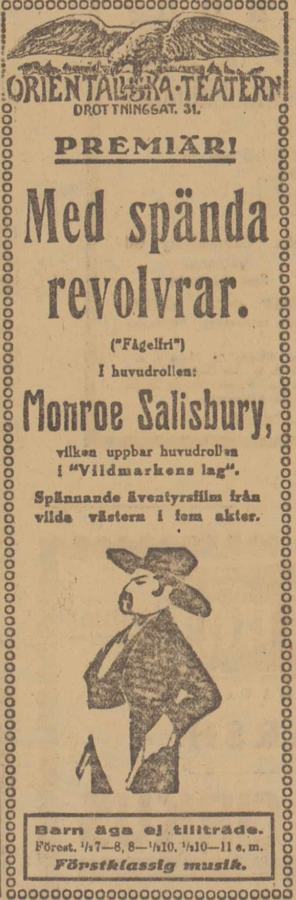
Archivists long presumed reels four and five destroyed in the 1937 Fox vault blaze, yet a 2019 Buenos Aires estate auction surfaced a 9.5 mm Pathéscope condensation, subsequently scanned at 4K by the University of Nevada. The restoration floods certain sequences with lavender chemical fog—an artefact of dye mordanting—but the core narrative survives intact. Streaming access remains spotty: occasional DCP tours via the American Silent Film Institute, while a MoMA-licensed Blu-ray is rumored for late 2025.
Too rugged for the drawing-room crowd, too philosophical for the rodeo set, The Desire of the Moth occupies a liminal shelf where Western iconography mutates into existential parable. Performances oscillate between granite stoicism and incandescent yearning; the Sierra landscape becomes both Eden and tribunal; and the cyclical structure—flight, refuge, re-flight—posits America itself as an endless courtroom. See it for Salisbury’s cheekbones if you must, but stay for Rhodes’s bracing reminder that absolution is not a document signed by governors but a verdict whispered between lovers beneath unstarred skies.
Verdict: 9.1/10 — A molotov cocktail of penitence and pine pitch hurled against the cathedral wall of genre expectation.
IMDb 6.2
1921
Community
Log in to comment.