DbcultAccessing Vault...
Cult Review
Senior Film Conservator
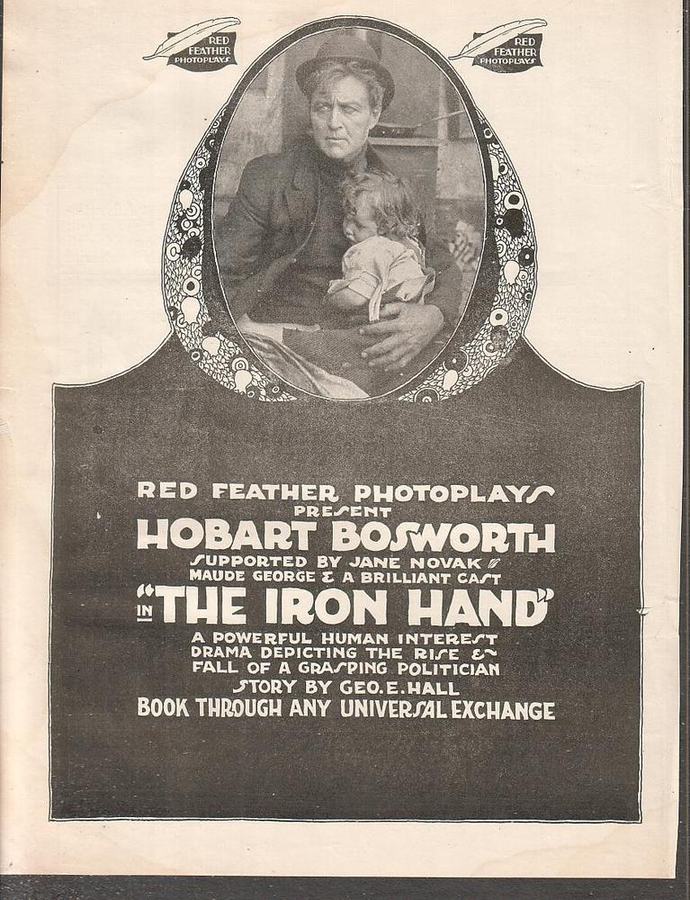
Stepping into the cinematic world of The Iron Hand is akin to unearthing a time capsule, a powerful dramatic artifact from an era when silent films spoke volumes through gesture, expression, and meticulously crafted narrative. This particular offering, penned by the astute minds of George Edwardes-Hall and F. McGrew Willis, delves into the intricate dance between moral uprightness and the corrupting allure of political power, weaving a tale that remains startlingly relevant even a century later. It’s a compelling character study, primarily focused on the evolution of Roy, an individual thrust into a maelstrom of conflicting loyalties and ethical quandaries. The film’s strength lies not just in its dramatic tension but in its nuanced portrayal of human nature, a testament to the enduring power of storytelling through the nascent art form of cinema.
At its core, The Iron Hand presents a fascinating social experiment. We are introduced to Tim Noland, a political boss whose influence is both pervasive and morally ambiguous. His decision to adopt Roy, the infant son of a departed associate, is an act born more of obligation than pure altruism. However, Noland’s subsequent, somewhat reluctant, yielding of the child to a doctor who promises an upbringing free from the taint of Noland’s own world sets the stage for the film’s central conflict. This early choice, seemingly minor, reverberates through Roy's entire existence, shaping his character and ultimately dictating the trajectory of the plot. It’s a brilliant narrative device, positioning Roy as a tabula rasa, a blank slate upon which the conflicting ideologies of his guardians will be inscribed. The film subtly asks: can a man escape the shadow of his origins, or is he forever bound by the choices made on his behalf?
Twenty years later, Roy, now a man of principle and integrity, returns to live under Tim Noland’s roof. The contrast between the two men could not be starker. Noland, still entrenched in his unscrupulous methods of conducting business, represents a bygone era of backroom deals and moral compromises. Roy, on the other hand, embodies a fresh perspective, a moral compass uncorrupted by the grime of political expediency. His revulsion at Noland's machinations is palpable, a silent yet powerful indictment of the systemic corruption he witnesses firsthand. This dramatic tension forms the backbone of the film, highlighting the generational clash between old-guard pragmatism and burgeoning idealism. It’s a theme that echoes in other films of the period, such as Forbidden Fruit, which also explored moral choices and their societal repercussions, albeit through a different lens of temptation and consequence.
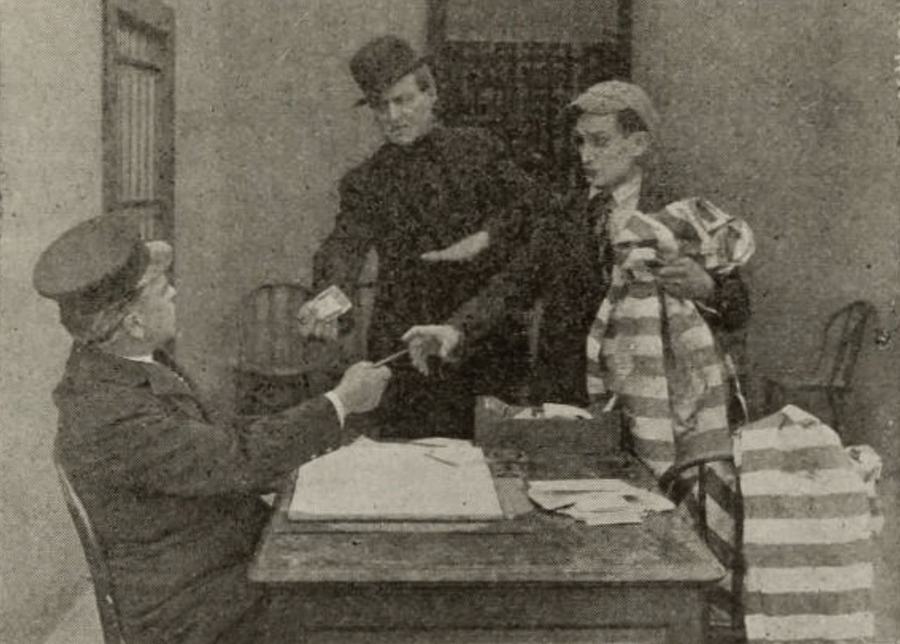
The arrival of Enid Winslow further complicates Roy’s already tumultuous existence. Enid is the daughter of a social reformer, a man dedicated to civic betterment and diametrically opposed to everything Noland stands for. This romantic entanglement isn't merely a subplot; it's the catalyst that forces Roy to actively choose a side. His love for Enid becomes inextricably linked with his burgeoning moral convictions, pushing him to align himself with her father’s progressive ideals. The film brilliantly uses this romantic narrative to underscore the broader ideological battle being waged. It’s a classic setup: love blossoming across a chasm of familial and political animosity, reminiscent of the societal divides explored in films like The Octoroon, which similarly grappled with forbidden love against a backdrop of deeply entrenched social prejudices.
The political contest between Winslow and Noland is depicted with a keen understanding of the era’s electoral machinations. Roy, unable to stand idly by while Noland’s corrupt influence threatens the future he envisions with Enid, makes a decisive move. He provides significant financial support to Winslow’s campaign, a clandestine act that tips the scales and secures a victory for the reformer. This act is a watershed moment for Roy, marking his full embrace of his own moral agency and a definitive break from Noland’s world. It’s a powerful portrayal of an individual using his resources to effect change, a narrative thread that can be found in other tales of personal conviction against systemic odds, perhaps even in the underdog spirit seen in films like The Immigrant, where individual struggle against oppressive systems is a central theme.
Winslow’s triumph, however, does not immediately pave the way for happiness. His deep-seated animosity towards Noland, fueled by years of political rivalry and ethical distaste, extends to anyone associated with the political boss, including Roy. The reformer, despite benefiting from Roy's support, refuses to sanction the marriage between Enid and Roy, creating a new, formidable barrier. This stubbornness on Winslow's part adds another layer of complexity to the narrative, preventing an easy, saccharine resolution. It speaks to the human element of grudges and the difficulty of overcoming deeply ingrained resentments. The film could have ended here, a tragic testament to the enduring power of past conflicts, but the writers, George Edwardes-Hall and F. McGrew Willis, had a more intricate resolution in mind.
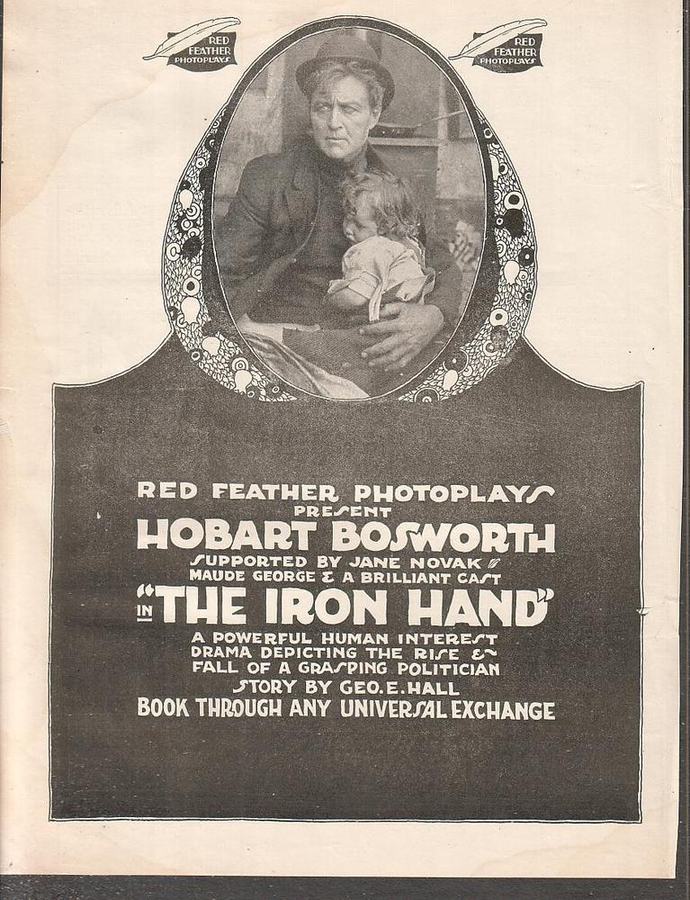
The film’s climax is a masterstroke of character development and narrative ingenuity. Tim Noland, the seemingly unyielding political boss, makes an unexpected move. He offers to pay all of Winslow’s campaign debts, a gesture that, while seemingly pragmatic, also carries a profound symbolic weight. It’s not necessarily an act of pure altruism; Noland is, after all, a man of power and influence. Yet, it serves to heal the breach between the families, demonstrating a surprising capacity for reconciliation and perhaps even a subtle form of redemption for Noland. This act underscores the complex nature of morality in the political arena, suggesting that even those with dubious pasts can contribute to positive outcomes. This kind of complex character arc, where even antagonists show glimmers of humanity, can be compared to the nuanced villainy sometimes found in adventure stories like The Sea Wolf, where moral lines are often blurred.
The success of The Iron Hand owes much to its talented ensemble cast. While specific roles are not detailed in the provided information, we can infer the impact of performers like Winifred Harris, Jane Novak, and Maude George, who would have conveyed complex emotions through their expressions and body language, essential in silent cinema. Edward Clark, Jack Curtis, Hobart Bosworth, William V. Mong, and Frank Newburg would have filled out the world with their portrayals of various societal figures, from the stoic doctor to the formidable political operatives. The power of silent acting lies in its ability to communicate universal human experiences without dialogue, relying on a heightened sense of visual storytelling. This film, like many of its contemporaries, would have depended heavily on these actors to convey the moral weight and emotional depth of its intricate plot. Their collective efforts would have breathed life into the characters, making their struggles and triumphs resonate with the audience.
Beyond the immediate plot, The Iron Hand thoughtfully explores themes of legacy, free will, and the possibility of transcending one's origins. Roy’s journey from an infant adopted by a questionable figure to a man who actively fights against that figure’s corrupting influence is a powerful statement on the human capacity for self-determination. The film implicitly asks: are we defined by the circumstances of our birth or by the choices we make? It suggests that while environment plays a role, individual conscience ultimately holds sway. This philosophical depth elevates it beyond a mere melodrama, positioning it as a significant piece of social commentary for its time. It encourages reflection on how societal pressures and personal ethics intertwine, much like the intricate social tapestries woven in films such as Evangeline, which also explores the long-term impact of life's circumstances on individual destiny.
While specific directorial credits are not provided, the coherent narrative and dramatic pacing suggest a skilled hand at the helm. The visual storytelling, characteristic of the silent era, would have relied on clear blocking, expressive intertitles, and perhaps evocative cinematography to convey mood and meaning. The film’s ability to build tension, develop complex characters, and ultimately deliver a satisfying, if morally intricate, resolution speaks volumes about the craftsmanship involved. It stands as a testament to the fact that compelling stories, regardless of the technological limitations of their era, possess a timeless quality. The conflict, the romance, the political intrigue — these are universal elements that continue to captivate audiences. The Iron Hand, therefore, is not merely a historical curiosity but a vibrant piece of cinematic history that continues to offer insights into human nature and societal dynamics. It reminds us that the foundational elements of compelling drama have remained constant, even as the medium itself has undergone profound transformations.
Ultimately, The Iron Hand is a film that rewards careful viewing. It’s a nuanced exploration of how personal ethics intersect with public life, how love can bridge seemingly insurmountable divides, and how even the most hardened individuals can be swayed by the promise of a better future. The resolution, where Tim Noland's pragmatic generosity heals the familial rift, is particularly noteworthy. It avoids a simplistic good-versus-evil dichotomy, instead presenting a more realistic, albeit still dramatic, conclusion where compromise and unexpected gestures of goodwill pave the way for harmony. This intricate resolution sets it apart from more straightforward moral tales, offering a richer, more thought-provoking experience. It’s a film that leaves you pondering the nature of power, redemption, and the enduring strength of human connection. The writers, George Edwardes-Hall and F. McGrew Willis, crafted a narrative that is as morally complex as it is emotionally resonant, ensuring The Iron Hand remains a compelling watch for anyone interested in the foundational works of dramatic cinema and the timeless questions they pose about the human condition.
IMDb 8
1923
Community
Log in to comment.