DbcultAccessing Vault...
5.6/10
Senior Film Conservator
A definitive 5.6/10 rating for a film that redefined the boundaries of cult cinema. East Lynne remains a cornerstone of transgressive art.
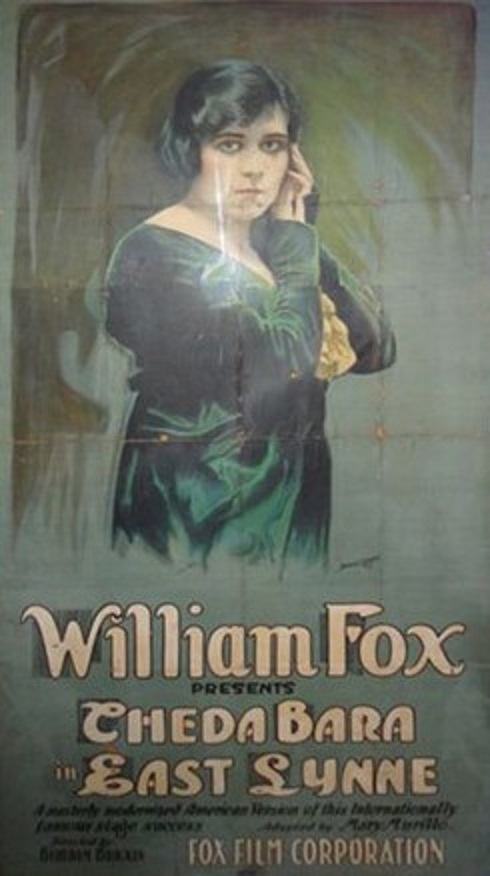
Imagine, if you can, a universe where the corset is both armour and prison, where gaslight drips like molten wax across damask walls, and every hushed footstep on Turkish carpet sounds like the first tremor of apocalypse. East Lynne—that oft-adapted, much-maligned “woman’s weepie” of Victorian penny dreadfuls—was distilled in 1916 into a silent aria of transgression by director Bertram Bracken and scenarist Mary Murillo. Fox’s publicity machine hawked it as “a deluge of heart-searing pathos,” yet beneath the lacquer of moral comeuppance lurks something far more sulphurous: a study in maternal erasure, class panic, and the masochistic ecstasies of self-annihilation.
The film survives only in scattered reels, but those shards glint like mirror-glass in a dark wood—enough to reconstruct the emotional architecture. From the first iris-in on Theda Bara—the studio’s patented ‘vamp’, here deglamorised into a restless gentlewoman—we sense the suffocation of a creature too incandescent for drawing-room twilight. Isabel Carlyle’s ennui is not the polite sigh of a bored matron; it is a full-blooded thirst, a carnivorous craving for sensation that Bara conveys with the subtlest of ocular tremors. Watch her pupils dilate when Captain Levison (portrayed with oleaginous charm by Stuart Holmes) murmurs that “a life unlived is a novel missing its middle chapters.” In that instant, the film pivots from melodrama into something perilously close to existential noir.
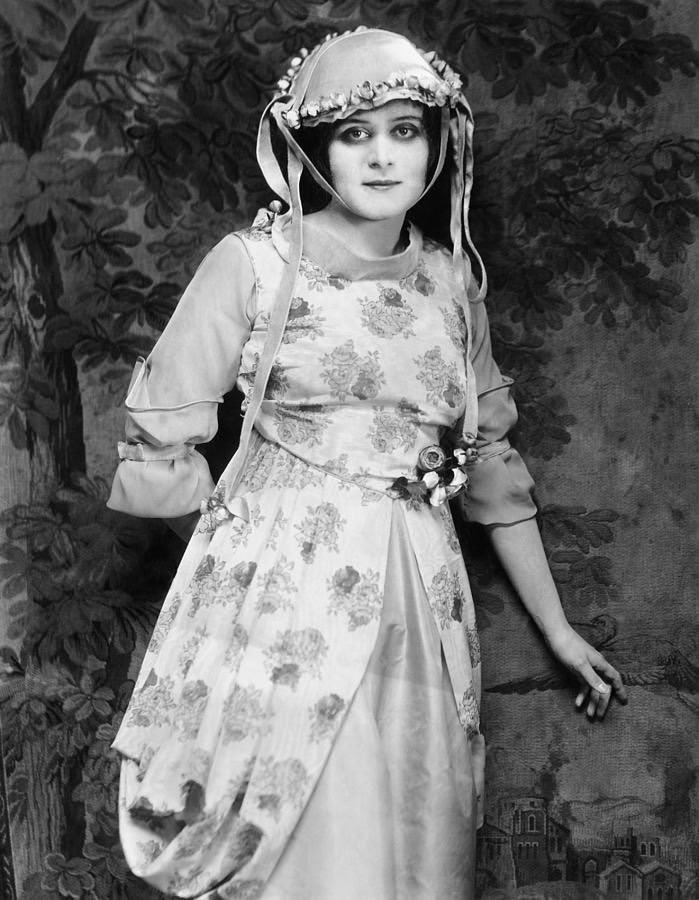
Braddon’s triple-decker tome is filleted to its marrow: Sir Richard Carlyle (Ben Deeley), upright as a Corinthian pillar, weds the impulsive Isabel. Domesticity calcifies; gossip poisons. Isabel flees with Levison, is promptly abandoned, and—through a bureaucratic sleight involving a derailed train and a misidentified corpse—is presumed dead. Scarred, penniless, she re-enters her former home disguised as Madame Vine, a governess whose accent veers between Calais and Calcutta. There she witnesses her replacement (Claire Whitney) caress the children she abandoned, while her own daughter calls another woman “mamma.” Cue three reels of exquisite agony: candle-snuffing shadows, lullabies strangled in the throat, tuberculosis blooming like nightshade on her consumptive lips.
Yet Murillo’s intertitles refuse the pious platitudes of Wood’s novel. “Shame,” one card reads in towering crimson,“is a cloak that scalds the wearer yet leaves the onlooker cold.” The film doesn’t merely punish the adulteress; it interrogates the very scaffolding of patriarchal mercy. Every penitential tear Isabel sheds is matched by the camera’s slow, almost clinical scrutiny of her decay: Bara’s cheekbones jut like promontories, her famous kohl smears into consumptive halos. The spectacle of suffering becomes a voyeuristic communion for the audience, implicating us in the same society that both lusts after and loathes the fallen woman.
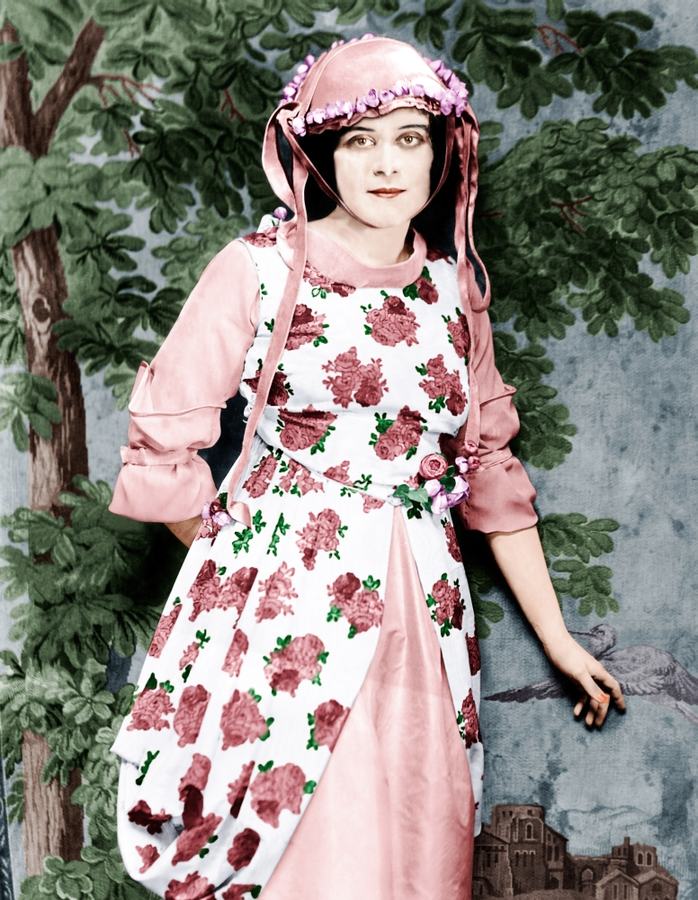
Cinematographer Rial Schellinger lights interiors like Rembrandt on a bender: faces emerge from velvet gloom, eyes glint with the fever of the damned. Note the sequence where Isabel, crouched at her child’s bedside, is bisected by a diagonal shaft of moonlight—half in radiance, half in Stygian black. The frame itself becomes a moral ledger, a ledger that ultimately refuses balancing. Even the exterior landscapes—shot in the still-rural outskirts of L.A.—carry a preternatural menace. Trees claw at the sky; clouds ripple like bruises across a cadaverous dawn. The crash sequence, often dismissed as crude model-work, is in fact a surrealist rupture: the locomotive, a leviathan of industrial modernity, vomits steam across the lens, reducing human destiny to splinters and soot.
And then there is Bara’s face, that ineffable instrument. In close-up, the camera lingers until the actress’s composure quivers on the lip of collapse. She knows—as few performers of the teens did—that the silent close-up is not a showcase for pretty contortions but an X-ray of the soul. Watch the moment little William dies (off-screen, asphyxiated by diphtheria, the film ever tactful). Bara does not indulge in grand hysterics; instead, her lower lip trembles like a leaf about to detach, her gaze slides off-camera as if the very act of seeing were intolerable. It is a masterclass in restrained devastation, one that would influence Garbo’s later renunciations.
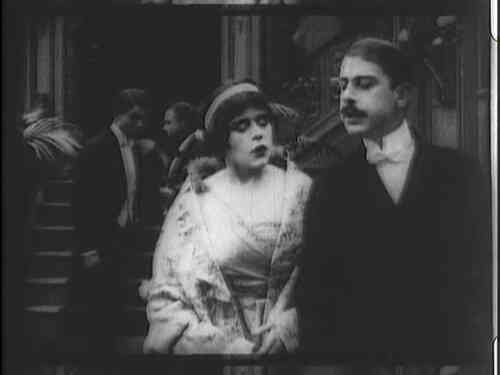
Of course, no 1916 release arrived with a synchronized score; exhibitors relied on house pianists or, in grander venues, a ten-piece orchestra. Contemporary cue sheets recommended “Hearts and Flowers” for Isabel’s exile and “The Shadows” (a brooding waltz) for her deathbed vigil. Today, most home-viewers encounter the film mute, save for the metronomic clatter of the projector. Paradoxically, the silence amplifies the emotional dissonance. Every flicker of Bara’s eyelid becomes a drumbeat; every splice a gasp. One finds oneself leaning in, as if the screen itself might exhale absolution.
Place East Lynne beside the year’s other darlings and its aberrant pulse quickens. From the Manger to the Cross aestheticised divinity with desert vistas; Help Wanted flirted with urban labour reform; Der Hund von Baskerville imported Teutonic gloom to American cinemas hungry for detectives. Yet none dared centre female transgression so brazenly. Even Cinderella and its fairy-tale ilk preserved virginal virtue as narrative currency. East Lynne, by contrast, is a poisoned valentine to the cult of domesticity, a film that invites the respectable matrons in the audience to taste the salted iron of adulterous blood—if only vicariously—before retreating into the safety of hymn-singing respectability.
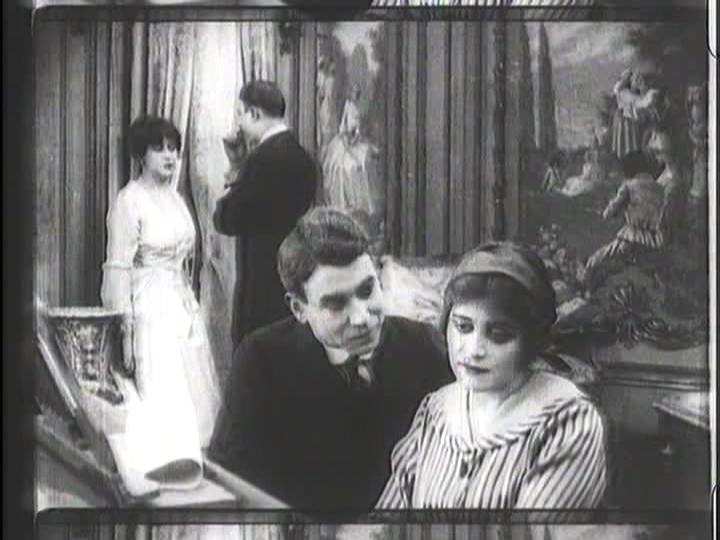
“To adapt East Lynne is to perform surgery on a saint: you must extract the thorn of judgement without anaesthetising the pain.” — Mary Murillo, Photoplay, 1916
Fox marketers fretted that Bara’s patented man-destroying vamp persona might curdle into audience antipathy if grafted onto a maternal figure. Their solution was audacious: strip the serpent coils, unbind the raven tresses, and expose the raw scalp of female despair. The result is a deconstruction of the femme fatale years before the term gained critical coin. Isabel’s erotic power is not weaponised; it is spent, squandered in a single impulsive bolt for freedom. Once the scarlet letter is affixed, the film refuses the patriarchal fantasy of easy redemption. Even her final deathbed confession—clasping the daughter who does not recognise her—offers no cathartic melding of parent and child. The child turns away; the curtain falls. The absence of closure is itself a revolutionary act in a cultural moment addicted to moral arithmetic.
Upon release, East Lynne minted coin from Boston to Brisbane. Variety crowed that “Bara has never been so humanly repellent, so repellently human.” Clergymen sermonised against its “apologia for adultery”; women’s clubs lobbied for edits that never came. Yet within a decade, the picture vanished—victim of Fox’s 1937 vault fire that devoured so many nitrate treasures. Fragments resurfaced in a MoMA basement in 1978; a more complete 35 mm nitrate was unearthed in an Argentine convent in 2004, its intertitles Spanish-translated but miraculously preserved. Today the restoration clocks in at 58 minutes—a full third of the original reportedly lost. Still, what remains is more than enough to induct the film into the canon of proto-feminist tragedy.
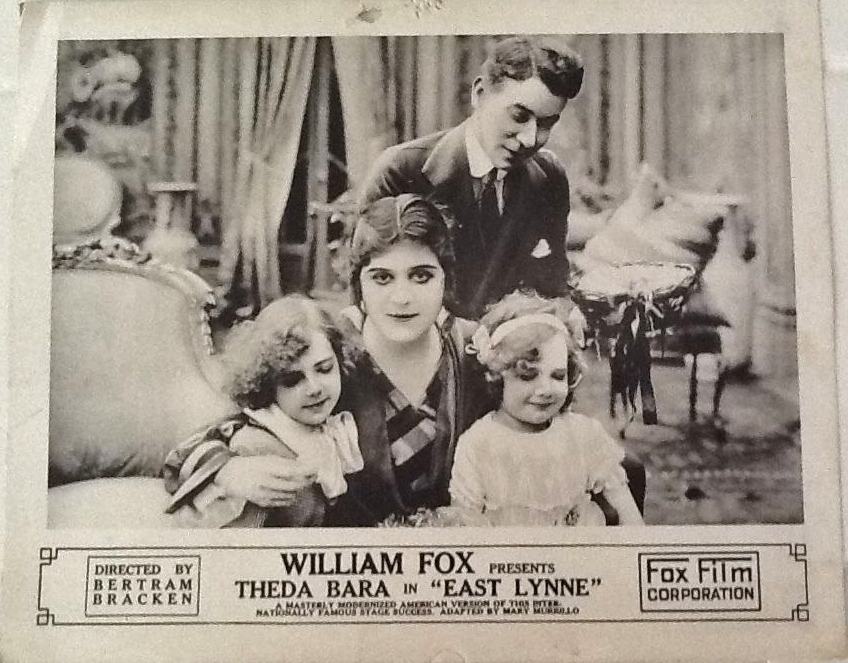
Streaming platforms, slaves to algorithmic freshness, have not yet queue-jumped East Lynne. Your best bet is the Kino Classics Blu-ray (region-free) featuring a newly commissioned score by Guenter Buchwald’s silent-cinema ensemble. Project it onto the largest wall you can commandeer, dim every bulb, and—crucially—disable the player’s default speed-up (many transfers run at unsound 24 fps instead of the era-correct 18). Pair with a peppery Shiraz whose tannins bite like Isabel’s conscience; allow the wine to breathe as the reels unspool. You will arrive, by the final iris-out, at an emotional altitude best described as excoriated rapture.
Why does East Lynne still matter? Because every frame is a wound that refuses scabbing. It dramatises the moment when patriarchal mythmaking buckles under the weight of female desire, and it does so without the anodyne palliatives of later Hollywood. There are no courtrooms absolving the adulteress, no doting suitors waiting in the wings—only the grim ledger of choice and consequence. In an age when women’s bodily autonomy is again contested terrain, Isabel Carlyle’s masked return to the domestic scene feels less like antique melodrama and more like a prophetic nightmare of surveillance and self-erasure. To watch her glide through her former parlour, unrecognized by her own offspring, is to glimpse the ultimate horror of mother-work commodified: love repossessed like a defaulted mortgage.
So, resurrect this ghost. Let her candle gutter in your retina. Let her whisper—“Dead? Yes, long ago to happiness, to peace, to name…”—echo in the hollow behind your sternum. And when the screen darkens, ask yourself: Which of my own faces am I wearing tonight, and who among my beloveds would know me without it?
IMDb —
1922
Community
Log in to comment.