DbcultAccessing Vault...
Cult Review
Senior Film Conservator
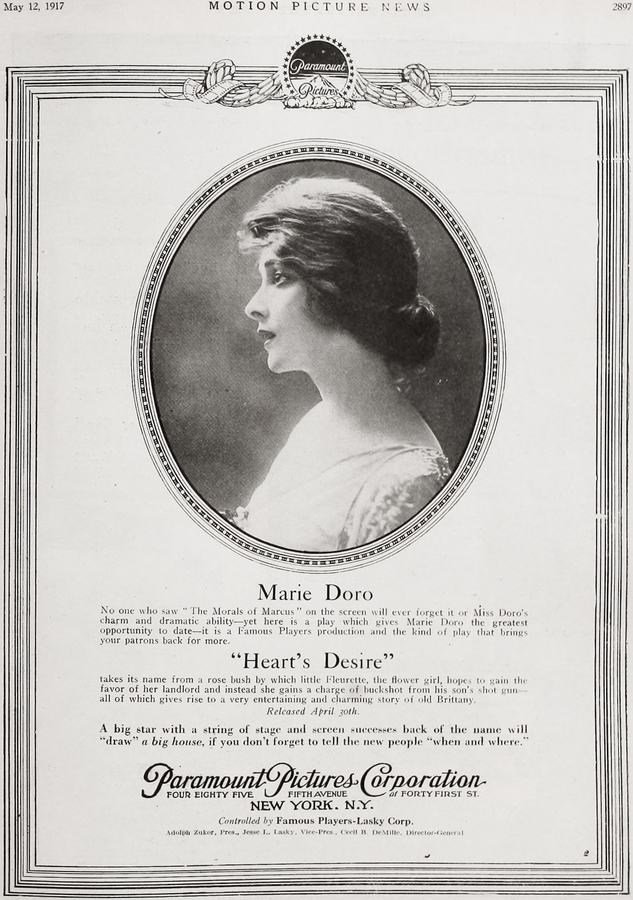
Stepping back into the nascent days of cinematic storytelling, one encounters films that, despite their age and the technical limitations of their era, resonate with a surprising depth of human emotion. Among these, the 1915 production Heart's Desire, a silent drama penned by the insightful Eve Unsell and Shannon Fife, stands as a poignant testament to the enduring power of love to bridge societal chasms. Directed with a keen eye for character and conflict, this film, starring the luminous Marie Doro and the earnest Alan Roscoe, unfurls a narrative rich with both the tensions of class disparity and the quiet triumph of the human spirit. It is a work that, while firmly rooted in its time, speaks to universal themes that remain as relevant today as they were over a century ago.
The story commences with an unsettling arrival: Henri Le Rocque, portrayed with a formidable, almost austere presence by Mario Majeroni, descends upon a tranquil island village. His purpose is stark and uncompromising – to assert his ownership over the land and demand advanced rental from its long-standing inhabitants. This act immediately establishes a palpable tension, a simmering resentment that underscores much of the film's early exposition. Le Rocque is not merely a landlord; he is a symbol of absentee ownership, of power exercised from a distant, privileged sphere, clashing directly with the communal, hardscrabble existence of the villagers. This initial conflict sets the stage for a drama that explores not just individual romantic entanglements, but the broader societal friction inherent in such power dynamics. One might draw parallels to the socio-economic critiques found in films like The Black Chancellor, which often explored the ramifications of authority and influence on the common populace, albeit with different narrative trajectories.
Accompanying the formidable Henri is his nephew, Paul, played by Alan Roscoe. Paul is introduced not as a figure of authority, but as a man bearing the invisible scars of a recent, unfortunate love affair. He is melancholic, introspective, seeking a quiet refuge from the emotional tempest that has ravaged his spirit. This immediately humanizes the Le Rocque contingent, offering a counterpoint to Henri’s stern demeanor. Paul’s vulnerability makes him an accessible character, a vessel through which the audience can explore themes of healing and second chances. His journey from emotional desolation to rekindled hope forms a significant emotional core of the film. It's a classic trope, perhaps echoing the wounded male protagonists found in melodramas such as A Fool There Was, though Paul's redemption arc here is far more sympathetic and less self-destructive.
The catalyst for much of the subsequent drama arrives in the form of Fleurette, the little flower girl, brought to life with exquisite grace and naturalism by Marie Doro. Fleurette is the embodiment of innocence and natural beauty, a stark contrast to the Le Rocque mansion’s perceived coldness. Her visit to the estate, bearing a rare flower as a gesture of simple kindness, is met with an utterly unexpected and tragic response: she is shot as a trespasser. This incident is a pivotal moment, a violent intrusion that shatters the initial narrative of class conflict and introduces a deeply personal, emotional stakes. The immediate aftermath, where Fleurette is nursed back to health within the very mansion where she was wounded, sets the stage for an unlikely bond. This forced proximity, born of tragedy, allows for the gradual unfolding of affection between Paul and Fleurette. Doro’s performance here is particularly noteworthy; her expressive eyes and delicate gestures convey both her initial fright and her burgeoning tenderness, making her character instantly endearing.
The burgeoning romance between Paul and Fleurette is depicted with a delicate touch, emphasizing the profound differences in their backgrounds while highlighting their shared humanity. Paul, the jaded aristocrat, finds solace and a renewed sense of purpose in Fleurette’s unadulterated spirit. Fleurette, in turn, discovers a world beyond her village, finding kindness and genuine affection in Paul, a representative of the very class that initially caused her harm. This cross-class romance is a classic narrative device, but Heart's Desire handles it with a sincerity that elevates it beyond mere cliché. It suggests that true connection can transcend artificial societal barriers, a theme explored in various forms across cinematic history, from the grand historical romances like Madame Du Barry to more intimate dramas. The visual storytelling, characteristic of silent films, relies heavily on close-ups and subtle interactions to convey the deepening emotional bond, a testament to the actors' abilities to communicate volumes without a single spoken word.
Just as their love appears to find its footing, an unwelcome shadow from Fleurette’s past emerges: Jacques, her former sweetheart. His appearance injects a new layer of conflict, threatening to unravel the fragile happiness Paul and Fleurette have found. Jacques represents the pull of the familiar, the comfort of one's own world, and perhaps a simpler, less complicated past. He persuades Fleurette to run away with him, a decision born of confusion and a sense of obligation rather than true affection. This moment of wavering highlights Fleurette’s internal struggle, caught between her past loyalties and her burgeoning love for Paul. It’s a classic romantic dilemma, a test of true feelings, and it adds significant dramatic weight to the narrative. The film, through this device, explores the complexities of choice and commitment, themes that resonate in many romantic dramas, including those that depict the tumultuous nature of young love, such as in certain episodes of serials like Beatrice Fairfax Episode 11: The Wages of Sin, where moral quandaries often dictate the characters' paths.
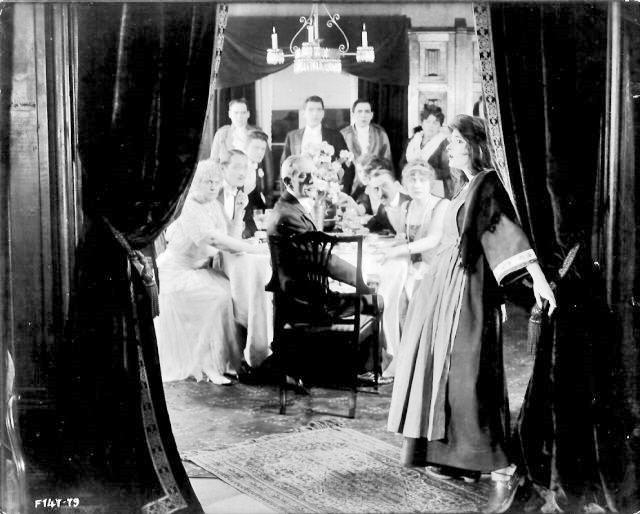
Fleurette's brief departure with Jacques serves as a crucible for her emotions. Upon her return to the village, she is met with the startling revelation that the villagers, fueled by their long-standing resentment towards Henri Le Rocque and perhaps emboldened by the perceived injustice against Fleurette, are planning to storm the mansion. This impending act of violence elevates the stakes dramatically, transforming the personal romantic drama into a full-blown societal conflict. It’s a moment of truth for Fleurette. The realization that she truly loves Paul, coupled with the imminent danger he faces, propels her into decisive action. Her subsequent rush back to the mansion, a desperate race against time to warn Paul, is the film’s emotional and narrative climax. This act of selfless courage not only underscores the depth of her affection but also serves as a powerful symbol of her character's growth and unwavering moral compass. It’s a compelling example of a protagonist rising to the occasion, reminiscent of heroines in adventure tales like A Million a Minute, where quick thinking and bravery often determine the fate of loved ones.
Fleurette's heroic intervention profoundly impacts Henri Le Rocque. Witnessing her unwavering loyalty and genuine concern for his nephew, the previously stern and unyielding Henri experiences a significant transformation. His heart, once seemingly hardened by privilege and perhaps past disappointments, is softened by Fleurette’s pure-hearted devotion. He recognizes in her not just a suitable partner for Paul, but a source of genuine happiness and a bridge between his family and the community they have alienated. His urging for Fleurette to marry Paul is more than just a parental blessing; it's an acknowledgment of her intrinsic worth and a symbolic gesture of reconciliation. This resolution, where love and compassion triumph over class prejudice and past grievances, provides a satisfying emotional conclusion to the film. It's a powerful statement about the redemptive power of love, capable of softening even the most rigid hearts, a theme often explored in narratives of personal growth and societal harmony.
Marie Doro's portrayal of Fleurette is arguably the beating heart of the film. Her ability to convey innocence, fear, budding love, and ultimately, courageous resolve through expression and physicality alone is remarkable. She embodies the purity and strength that the narrative requires, making her transformation from a simple flower girl to a pivotal figure entirely believable. Alan Roscoe, as Paul, provides a compelling counterpart, his initial melancholy giving way to a hopeful romantic, his performance offering a nuanced depiction of emotional recovery. Mario Majeroni's Henri Le Rocque, while initially a figure of antagonism, undergoes a believable arc of softening, demonstrating the profound influence Fleurette has on his character. The supporting cast, including Helen Dahl, Harry Lee, and Gertrude Norman, contribute effectively to the village's collective persona and the unfolding drama, creating a believable world for the central conflict to play out.
Thematically, Heart's Desire delves into several timeless concepts. The most prominent is the clash between wealth and poverty, the 'haves' and 'have-nots,' a constant source of dramatic tension in cinema. However, the film moves beyond a simplistic portrayal of good versus evil, instead exploring the potential for understanding and reconciliation. It champions the idea that genuine love and selfless action can break down the most entrenched barriers. The journey of Paul from a state of emotional withdrawal to finding a renewed purpose through love is a classic narrative of redemption. Likewise, Henri Le Rocque's transformation highlights the idea that even the most rigid individuals can be touched by compassion and loyalty. These themes resonate with the kind of moral clarity often found in early cinema, where narratives frequently aimed to impart valuable lessons about human nature and societal harmony. In a similar vein, the film touches upon the notion of an outsider disrupting a settled community, a dynamic explored in various forms, from the rugged individualism of The Chechako to the more nuanced social interactions of The Politicians, though the outcomes differ greatly.
As a silent film from 1915, Heart's Desire relies entirely on visual storytelling, intertitles, and the expressive capabilities of its actors. The cinematography, while perhaps not as elaborate as later productions, effectively captures the idyllic charm of the island village and the contrasting grandeur of the Le Rocque estate. The use of natural light and carefully composed shots helps to establish mood and atmosphere. The pacing, typical of early cinema, allows for moments of quiet reflection and gradual emotional development, building towards its dramatic climax with a steady hand. The intertitles are judiciously used, providing necessary dialogue and exposition without overwhelming the visual narrative, ensuring that the audience remains immersed in the emotional journey of the characters. This careful balance is a hallmark of well-crafted silent cinema, demonstrating how compelling stories could be told without the benefit of synchronized sound. The narrative's focus on a strong female character, making pivotal choices that drive the plot, can be seen as an early precursor to the more independent heroines who would grace the screen in films like Cleopatra, showcasing women as agents of change rather than mere objects of affection.
The film's enduring appeal lies in its sincere exploration of universal human experiences. The desire for love, the struggle against injustice, the capacity for forgiveness, and the power of individual action to influence collective fate are all woven into its fabric. While it may lack the technical sophistication of modern cinema, its emotional honesty and the compelling performances of its cast ensure its continued relevance. For enthusiasts of early film, Heart's Desire offers a fascinating glimpse into the storytelling techniques and thematic preoccupations of its era, a time when cinema was still finding its voice but already capable of profound emotional resonance. It reminds us that the fundamental elements of compelling drama – well-drawn characters, clear conflicts, and a satisfying resolution – have remained constant, regardless of the technological advancements in filmmaking. The journey of the main characters, particularly Fleurette's growth and eventual triumph, echoes the spirit of perseverance often celebrated in narratives like Ben Blair, where individual fortitude leads to ultimate success and happiness.
Ultimately, Heart's Desire is more than just a historical artifact; it is a captivating drama that speaks to the timeless human longing for connection and understanding. It’s a film that, through its silent gestures and poignant narrative, manages to articulate the profound complexities of the human heart, proving that some stories, like true love, need no spoken words to be universally understood and deeply felt. It leaves the viewer with a sense of hopeful reconciliation, a belief that even in the face of deep-seated grievances, compassion can prevail, making it a truly rewarding experience for those willing to engage with the artistry of silent cinema.
IMDb —
1927
Community
Log in to comment.