DbcultAccessing Vault...
6.5/10
Senior Film Conservator
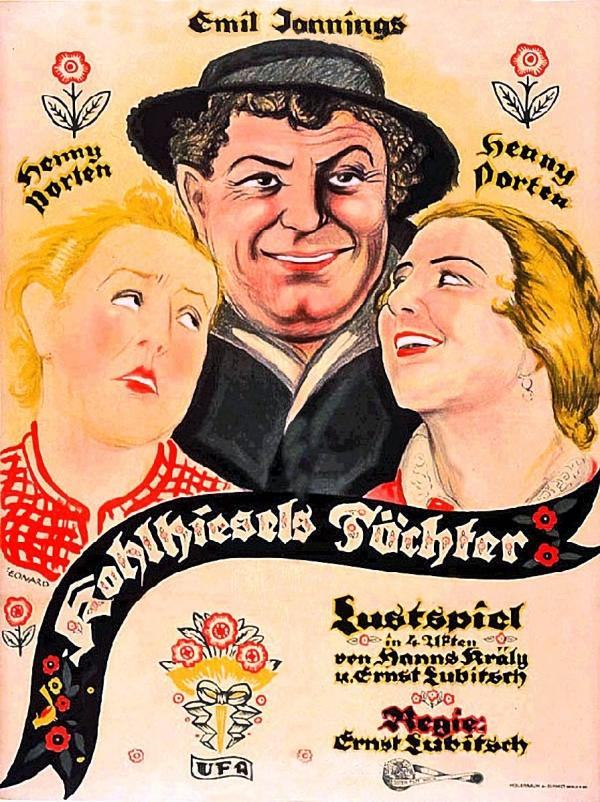
A definitive 6.5/10 rating for a film that redefined the boundaries of cult cinema. Kohlhiesel's Daughters remains a cornerstone of transgressive art.
In the annals of cinematic history, few names resonate with the consistent brilliance and sophisticated wit of Ernst Lubitsch. His German period, often overshadowed by his later Hollywood triumphs, is a treasure trove of narrative ingenuity and directorial finesse. Among these early gems, Kohlhiesel's Daughters, a 1920 silent comedy, stands as a testament to his burgeoning genius, demonstrating an innate understanding of human foibles and the power of visual storytelling. This film, crafted with a delicate balance of farce and genuine sentiment, transports us to a quaint Southern Bavarian village, where tradition and personal desire clash in a delightfully convoluted dance of matrimonial machinations. It’s a masterclass in how to extract profound humor and unexpected pathos from a seemingly straightforward premise, elevating what could have been a simple folk tale into a nuanced exploration of perception, societal pressure, and the transformative power of love.
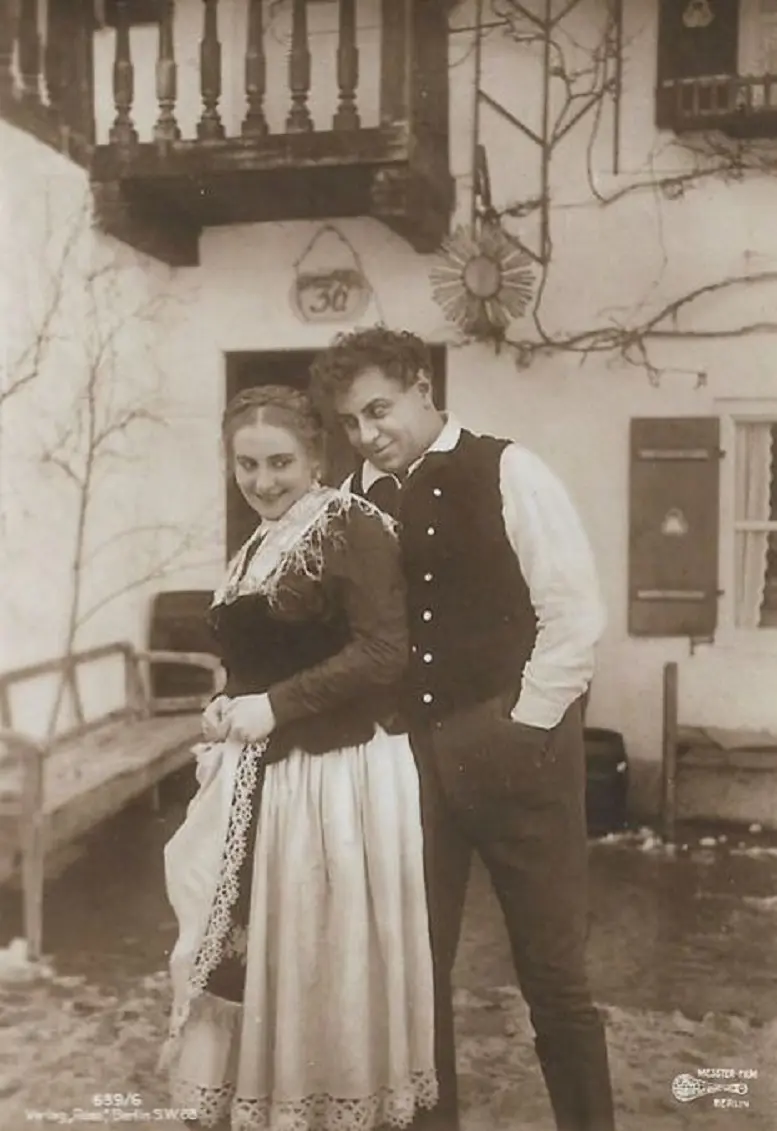
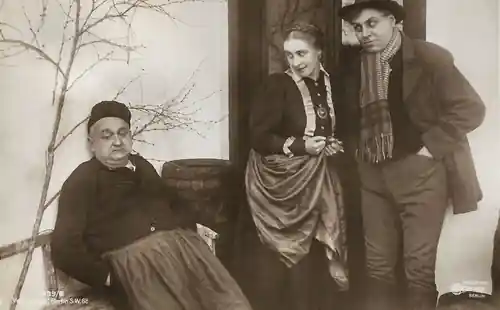
At the heart of this comedic fable lies the venerable Kohlhiesel (Jakob Tiedtke), a patriarch whose adherence to local custom dictates that his elder daughter, Liesel, must marry before her younger, more comely sister, Gretel. The issue? Gretel (Henny Porten, in a dual role of remarkable range) is a vision of pastoral charm, courted by the earnest Xaver (Gustav von Wangenheim). Liesel, on the other hand, also portrayed by the incomparable Henny Porten, is a formidable, unyielding presence, renowned for her brusque demeanor, physical strength, and a general lack of traditionally feminine graces. She is, to put it mildly, considered unmarriageable in the eyes of the village bachelors, her formidable will and rustic pragmatism rendering her an anathema to potential suitors. This seemingly insurmountable obstacle sets the stage for a delightful dilemma, a true Lubitschian predicament that demands a clever, if slightly unscrupulous, solution.
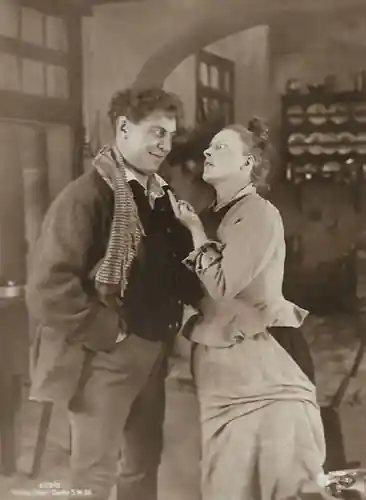
Enter Seppel (Emil Jannings), a local rogue whose cunning is matched only by his audacity. Seppel proposes a scheme that, on the surface, appears to be a selfless act of community service: he will marry Liesel himself, thereby fulfilling Kohlhiesel’s decree and clearing the path for Xaver and Gretel’s union. The unspoken, yet clearly understood, subtext is that Seppel intends to swiftly rid himself of his new, undesirable bride once the immediate objective is achieved. It’s a matrimonial gambit fraught with moral ambiguity, a calculated risk that promises freedom for some, but potentially heartbreak and humiliation for others. This narrative device, a common trope in folk tales and farcical comedies, is elevated by Lubitsch’s nuanced direction and the exceptional performances of his cast, transforming a simple plot into a rich tapestry of human interaction and misdirection. The film masterfully plays with the audience's expectations, leading us down a path of predictable outcomes only to surprise us with delightful twists and turns that reveal deeper truths about character and love.
What truly distinguishes Kohlhiesel's Daughters is the unmistakable 'Lubitsch Touch,' even in its nascent stages. The director, along with his brilliant co-writer Hanns Kräly, crafts a narrative that is both economically told and richly detailed. Lubitsch’s skill in conveying complex emotions and comedic situations through visual cues is nothing short of extraordinary. A raised eyebrow, a dismissive shrug, the subtle shift in body language – these are the brushstrokes with which Lubitsch paints his characters, allowing the audience to infer entire backstories and motivations without a single intertitle. The pacing is meticulous, building comedic tension with slow, deliberate gestures before erupting into moments of uproarious laughter. This early film already exhibits the hallmarks of his later, more celebrated works: a keen observation of social manners, an ironic detachment, and a profound empathy for his characters, even when they are at their most foolish. The film’s ability to weave together broad physical comedy with a more refined, character-driven humor is a testament to Lubitsch's versatile directorial vision. It’s a delicate balancing act, one that many filmmakers attempt but few achieve with such consistent grace and precision.
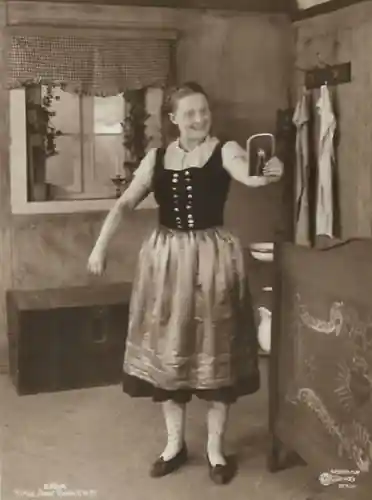
The transformative arc of Liesel, in particular, showcases Lubitsch's nuanced approach to character development. What begins as a cynical transaction gradually evolves into something far more intricate and human. Seppel's attempts to 'tame' Liesel, or at least make her more palatable, inadvertently lead to a softening of her rough edges, not through forced conformity, but through the unexpected power of genuine interaction and, dare one say, affection. This subtle shift is handled with remarkable sensitivity, avoiding simplistic resolutions and instead embracing the complexities of human relationships. It reminds one of the intricate character dynamics found in films like The Game's Up, where deception often leads to unforeseen emotional consequences, or even the subtle societal pressures depicted in Man's Desire, where individual longings are frequently at odds with communal expectations. Lubitsch's ability to imbue even the most farcical situations with an undercurrent of genuine human emotion is what sets him apart, making his comedies not just funny, but deeply resonant.

Henny Porten's dual performance is, without hyperbole, a tour de force. Her portrayal of Gretel is imbued with a sweet innocence, a stark contrast to her robust and formidable Liesel. The physical transformation alone is remarkable, but it is Porten's ability to convey two distinct personalities with such conviction that truly elevates the film. As Liesel, she commands the screen, her every gesture speaking volumes of an unyielding spirit that refuses to be confined by societal norms. When the transformation begins, it’s not merely an external change, but a gradual revelation of an inner vulnerability, expertly portrayed by Porten. Emil Jannings, a titan of early German cinema, brings his usual intensity and gravitas to the role of Seppel, but here it is tempered with a surprising lightness and comedic timing. His initial cynicism slowly gives way to a genuine, if begrudging, admiration for Liesel, a transition that Jannings plays with masterful subtlety. The chemistry between Porten and Jannings is palpable, their evolving dynamic forming the emotional backbone of the narrative.
Beyond the performances, the film delves into fascinating thematic territory. It’s a keen observation on the nature of beauty and brutality, questioning whether true appeal lies in outward appearance or an inner spirit. The village's initial dismissal of Liesel as 'too brutal' speaks volumes about societal judgments and the narrow definitions of femininity prevalent at the time. The film subtly critiques these rigid social structures, suggesting that perhaps what is perceived as a flaw might, in fact, be a strength, a testament to resilience and individuality. This exploration of societal expectations surrounding marriage and women's roles finds echoes in other films of the era, such as Why I Would Not Marry, which, despite its different narrative approach, similarly grapples with the pressures placed upon individuals to conform to marital norms. The rural setting, reminiscent of the rustic charm found in films like Fighting Cressy, provides a grounded backdrop against which these universal human dramas play out, highlighting how deeply ingrained tradition can be, even in the simplest of communities.
The cinematography, though adhering to the conventions of the silent era, is remarkably expressive. Lubitsch and his team utilize simple yet effective camera angles and compositions to emphasize character dynamics and comedic beats. The Bavarian setting is not merely a backdrop; it is an active participant in the story, its quaint charm contrasting with the boisterous personalities of its inhabitants. The film’s production design, while not extravagant, is meticulously detailed, immersing the audience in the world of the village. Every costume, every prop, feels authentic, contributing to the overall verisimilitude of the narrative. This attention to detail, a hallmark of German cinema of the period, is evident throughout, creating a tangible sense of place and time. It’s a testament to the collaborative genius of the era, where every element of filmmaking was honed to serve the narrative, a practice that can be admired across a range of contemporary silent films from Die Frau mit den Karfunkelsteinen to Mästerman, each demonstrating unique approaches to visual storytelling.
The brilliance of Hanns Kräly's screenplay, brought to life by Lubitsch’s direction, lies in its ability to take a potentially predictable premise and infuse it with unexpected depth and genuine humor. The dialogue, conveyed through intertitles, is sharp and witty, but it’s the unspoken communication, the expressive faces, and the expertly choreographed physical comedy that truly shine. The film manages to be both broadly entertaining and subtly insightful, a rare combination that few directors could achieve with such apparent ease. The themes of transformation and the unexpected nature of love are universal, making the film just as relevant today as it was a century ago. It’s a narrative that explores how external appearances can deceive, and how true connection often blossoms in the most unlikely of circumstances, echoing the intricate dynamics of character revelation found in films such as The Inevitable or the nuanced portrayal of relationships in Heimgekehrt.
Kohlhiesel's Daughters is more than just a historical artifact; it is a vibrant, engaging piece of cinema that continues to delight and entertain. It showcases Ernst Lubitsch at a pivotal moment in his career, honing the skills and developing the distinctive style that would make him one of the most revered directors of all time. The film's charm lies in its gentle satire, its genuine affection for its characters, and its unwavering belief in the transformative power of human connection. It’s a reminder that even in the most rigid of social structures, love and individuality can find a way to flourish, often in the most unexpected and humorous ways. For enthusiasts of silent cinema, or anyone interested in the foundational works of a directorial master, this film is an absolute must-see. It offers a captivating glimpse into the origins of the 'Lubitsch Touch,' demonstrating that even in 1920, his unique blend of sophistication, wit, and humanity was already fully formed, ready to enchant audiences for generations to come. It firmly cements its place not just as a significant work in Lubitsch's German period, but as a timeless comedy that continues to resonate with its exploration of human nature, societal norms, and the unpredictable path of the heart.
IMDb —
1923
Community
Log in to comment.