DbcultAccessing Vault...
Cult Review
Senior Film Conservator
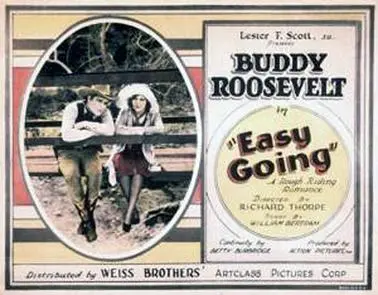
Can a film like Easy Going, a product of its specific era and cinematic conventions, truly resonate with contemporary audiences? Short answer: yes, but with significant caveats. This is a film for those who appreciate the foundational elements of the Western genre, the raw, unpolished charm of early cinema, and the straightforward storytelling that prioritizes character over convoluted plots. It is decidedly NOT for viewers accustomed to modern pacing, intricate narratives, or high-budget spectacle; those seeking such will find its deliberate rhythm and simpler production values challenging.
This film works because it distills the essence of a particular strain of Western storytelling into a digestible, if somewhat predictable, package. It delivers on the promise of its title, presenting a protagonist whose journey from nonchalance to engagement forms the emotional core. This film fails because its technical limitations and narrative simplicity can, at times, feel rudimentary compared to the genre's later masterpieces, hindering its ability to fully immerse a modern audience. You should watch it if you are a cinephile keen on understanding the evolution of the Western, or if you simply enjoy the unpretentious appeal of a classic cowboy hero finding his purpose.
The allure of Easy Going lies in its deceptive simplicity. It’s a film that, on the surface, promises little more than a pleasant diversion, yet delivers a surprisingly robust character arc for its lead. The initial setup, as Buddy Roosevelt’s character drifts into a conflict-ridden landscape, establishes a clear thematic trajectory. He's a man who prefers to observe rather than participate, a trait often romanticized in early Westerns, but here, it’s subtly challenged.
Betty Burbridge’s writing, even within the confines of a seemingly straightforward plot, carves out moments of genuine human interaction. While the overarching narrative beats might feel familiar – the damsel in distress, the villainous land baron, the hero’s reluctant intervention – the execution often elevates these tropes. There’s a particular strength in how the film builds tension not through grand, explosive set-pieces, but through sustained interpersonal conflicts and the growing moral imperative felt by the protagonist.
The character of Alma Rayford, as the intrepid heroine, is more than just a plot device. She represents the stakes, the reason for the hero’s eventual awakening. Her resilience in the face of adversity provides a powerful contrast to the protagonist's initial apathy, driving home the film's core message about responsibility. This dynamic is crucial; without it, the film would indeed be 'easy going' to the point of being forgettable.
Buddy Roosevelt, in the titular role, brings an undeniable, almost effortless charm to the screen. His portrayal of a man who would rather whistle a tune than draw a gun is captivating. He embodies the 'easy-going' aspect with a relaxed physicality and a twinkle in his eye that suggests a deeper well of capability just beneath the surface. His performance is less about dramatic fireworks and more about a consistent, appealing presence that anchors the film.
There's a scene, early on, where he defuses a barroom scuffle not with fists, but with a disarming smile and a well-placed, almost lackadaisical comment. It’s a subtle moment, but it speaks volumes about his character's preferred method of operation. This isn't the stoic, grim-faced Western hero of later decades; this is a man who prefers diplomacy, until diplomacy is no longer an option. It's a refreshing take, reminiscent of some of the more nuanced portrayals seen in films like Men in the Raw, where character depth was sought even in action-heavy narratives.
Alma Rayford, as the female lead, delivers a performance that is both spirited and grounded. She avoids the pitfalls of being a passive figure, instead imbuing her character with a fierce independence that feels authentic to the period and setting. Her interactions with Roosevelt are charged with a believable tension, evolving from initial suspicion to grudging respect, and eventually, a deeper connection. Her ability to convey strength and vulnerability simultaneously is a testament to her talent, especially given the often two-dimensional female roles of the era.
The supporting cast, while not given as much screen time, fulfill their roles adequately, populating the frontier with believable, if sometimes broadly drawn, characters. The villain, in particular, manages to be sufficiently menacing without resorting to overly theatrical gestures, a welcome restraint that serves the film’s overall tone.
The direction of Easy Going is functional and efficient, characteristic of many films from its period. The camera work, while not groundbreaking, effectively frames the action and the vast, open landscapes that are synonymous with the Western genre. There's a clear understanding of how to use the natural environment to enhance the storytelling, making the setting feel like a character in itself.
One particularly striking aspect is the use of long shots to establish the isolation and scale of the frontier. A shot of Roosevelt riding alone across a desolate plain, for instance, immediately conveys his solitary nature and the immense challenges of the environment. It’s a simple technique, but incredibly effective, drawing parallels to the visual storytelling prowess seen in films like The Painted World, where landscapes often dwarfed human figures to emphasize their struggle.
The action sequences, while not as frenetic as modern blockbusters, are competently staged. They prioritize clarity and impact over gratuitous violence, ensuring that the audience understands the stakes without being overwhelmed. The final showdown, though brief, feels earned and decisive, a satisfying culmination of the narrative tension built throughout the film. It's a testament to the director's ability to maximize limited resources for maximum narrative effect.
The pacing of Easy Going is, fittingly, easy-going for much of its runtime. It takes its time to establish the characters and their world, allowing the audience to settle into the rhythm of frontier life. This deliberate pace might test the patience of some viewers, but it also allows for a greater appreciation of the subtle character developments and the burgeoning relationships.
However, the film is not without its moments of urgency. When the conflict ignites, the pacing shifts quite dramatically, injecting a welcome burst of energy into the narrative. This contrast between the leisurely setup and the sudden spurts of action is one of the film's strengths, preventing it from becoming monotonous. It works. But it’s flawed. The transitions aren't always seamless, sometimes feeling a tad abrupt, but they effectively signal a change in the narrative's direction.
The tone maintains a consistent balance between lighthearted adventure and genuine peril. It never descends into overly grim territory, nor does it become purely comedic. This tonal consistency ensures that the audience remains invested in the characters' journey, understanding the gravity of their situation while still enjoying the inherent charm of the Western genre. It's a delicate balance, and the film largely pulls it off, much like the nuanced approach seen in films such as The Sultana, which also blended adventure with serious stakes.
One surprising observation about Easy Going is how effectively it uses the concept of 'inaction' as a character trait. Most Western heroes are defined by their decisive actions, their quick draw, or their unwavering moral compass. Here, the protagonist's initial reluctance to engage is not portrayed as cowardice, but as a kind of philosophical detachment, a preference for peace over conflict. It's a subtle but powerful subversion of the genre's expectations, making his eventual commitment all the more impactful.
Another point worth noting is the film's surprising lack of overt melodrama. While many films of this era relied heavily on exaggerated emotions, Easy Going opts for a more understated approach. The emotional beats are earned, not forced, which lends a greater sense of authenticity to the characters and their struggles. This restraint is, in my opinion, a significant strength, setting it apart from some of its more histrionic contemporaries like The Avalanche, which often leaned into dramatic excess.
In the grand tapestry of Western cinema, Easy Going might not be the most intricate thread, but it is a sturdy and honest one. It serves as a compelling example of how a simple premise, when anchored by strong performances and a clear narrative vision, can create a lasting impression. While it demands a certain level of appreciation for the cinematic conventions of its time, its core story of a reluctant hero finding his purpose remains timeless. It’s a foundational piece, not a revolutionary one, but its quiet charm and Buddy Roosevelt's engaging presence make it a worthwhile watch for those willing to saddle up for a journey back to the genre's roots. It’s certainly not for everyone, but for the right audience, it offers a genuinely satisfying, if somewhat unhurried, ride into the sunset.
IMDb 6.4
1932
Community
Log in to comment.