DbcultAccessing Vault...
Cult Review
Senior Film Conservator
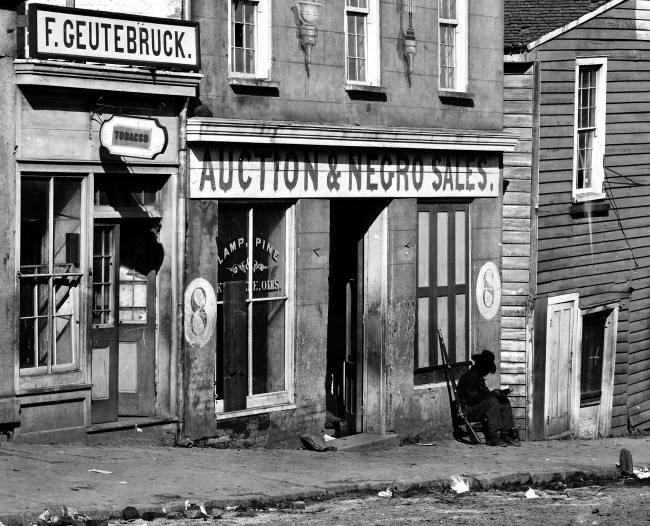
In the grand, ambitious canvas of 'The Son of Democracy,' a ten-part cinematic tribute to the monumental legacy of Abraham Lincoln, an episode titled 'The Slave Auction' stands as a stark, uncompromising testament to the moral crucible from which modern America was forged. This particular installment, more than a mere historical reenactment, functions as a visceral excavation of the nation’s deepest wounds, presenting a narrative that, while deeply rooted in a specific historical moment, resonates with an enduring, tragic universality. It is a silent film, a medium often dismissed by contemporary audiences, yet one that here, through the sheer power of visual storytelling and the raw, unadorned performances of its ensemble, achieves a profound eloquence that transcends the spoken word.
The film, a product of an era grappling with its own historical memory and the continuing echoes of the Civil War, dares to place its audience directly into the heart of an institution that defined and defiled a nascent republic. It is less about the grand sweep of political machinations and more about the micro-tragedies, the individual heartbreaks that collectively form the bedrock of a national shame. The very title, 'The Slave Auction,' is not merely descriptive; it is a declarative statement, an immediate invocation of an image so potent, so inherently agonizing, that it sets the tone for the entire viewing experience. This is not a film to be passively consumed; it demands engagement, reflection, and an uncomfortable confrontation with the past.
The potency of 'The Slave Auction' lies largely in its masterful deployment of silent film techniques, particularly the reliance on exaggerated yet deeply felt performances. Benjamin Chapin, known for his uncanny ability to embody Lincoln in other parts of the series, here adopts a more generalized, perhaps symbolic, role. One might imagine him as a quiet observer, a sympathetic bystander whose internal torment mirrors the audience's own, or perhaps even a young Lincoln, witnessing the horrors that would galvanize his future convictions. His presence, whether overt or implied, lends a gravitas to the proceedings, grounding the episodic tragedy within the broader arc of Lincoln's moral awakening and his eventual crusade for emancipation. Chapin’s expressive face, a canvas for profound human emotion, becomes a focal point for the film's ethical core, reflecting the burgeoning conscience of a nation.
Maud Granger delivers a performance of breathtaking pathos as Eliza, the mother at the heart of the film's central tragedy. Her portrayal is a symphony of silent screams, her eyes conveying volumes of despair, defiance, and a mother's fierce, protective love. The scene where she clutches her daughter, Clara, her body language a desperate shield against the inevitable, is etched into the viewer's memory with an almost physical intensity. Granger’s ability to articulate such profound suffering without a single spoken word is a testament to the power of early cinematic acting. Her anguish is palpable, drawing the audience into her personal hell, making the abstract concept of slavery agonizingly concrete. In a similar vein of portraying profound societal injustice through individual struggle, one might draw a thematic parallel to Shoes, where the silent film era also excelled at depicting the quiet desperation of the marginalized, albeit in a different social context. Both films leverage the visual medium to underscore the human cost of systemic inequalities.
George E. Clarke, likely cast in the role of an auctioneer or a callous slave owner, embodies the cold, economic machinery of the institution. His performance, devoid of overt villainy but laden with a chilling indifference, highlights the normalization of cruelty. It's not a mustache-twirling caricature, but rather a chilling depiction of a man operating within a system, his actions driven by profit and societal acceptance rather than personal malice. This nuanced portrayal makes the horror even more profound, as it suggests the banality of evil, the ease with which human dignity can be disregarded when deemed economic fodder. The tension between Granger's raw emotion and Clarke's detached professionalism forms the dramatic engine of the film, a stark confrontation between humanity and commerce.
The cinematography, though rudimentary by today's standards, is remarkably effective in conveying the oppressive atmosphere of the auction block. Close-ups on faces, particularly Granger's, amplify the emotional stakes, while wider shots establish the grim context of the market, populated by both the desperate and the indifferent. The use of natural light, or perhaps carefully controlled artificial light to mimic it, adds a stark realism to the scenes, avoiding any sense of theatricality that might dilute the film's serious message. The director, whose hand in shaping this narrative is palpable, understands that silence itself can be a powerful tool, allowing the audience to project their own horror and empathy onto the screen.
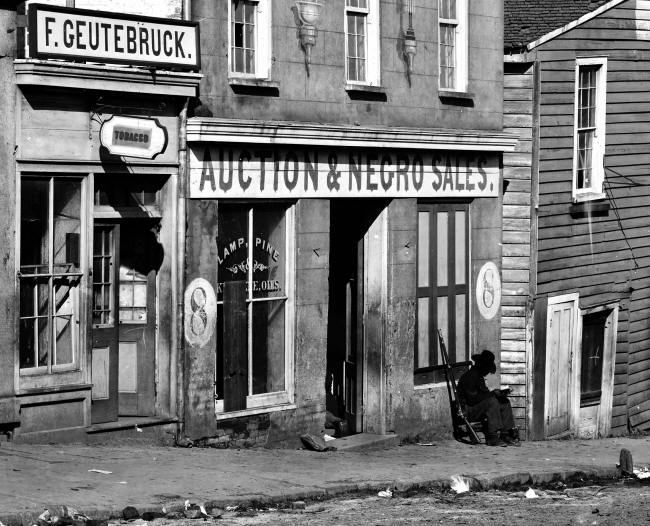
Thematically, 'The Slave Auction' is a profound meditation on freedom, identity, and the moral responsibilities of a nation. It poses uncomfortable questions about the cost of prosperity built on human bondage and the long shadow such a legacy casts. While part of a series honoring Lincoln, this episode doesn't just celebrate his triumph; it contextualizes the immense moral quagmire he inherited and sought to rectify. It underscores the deep-seated injustice that necessitated his extraordinary efforts, making his eventual actions all the more poignant and heroic. The film serves as a vital reminder that democracy, especially in its formative years, was a fraught, often contradictory, experiment.
As an artifact from 'America in the making,' 'The Slave Auction' is more than just entertainment; it’s a historical document in its own right, reflecting how early cinema chose to confront or interpret the nation's past. Released at a time when the wounds of the Civil War were still fresh for many, and racial tensions continued to simmer, the film's directness might have been startling. It is a precursor to later, more explicit cinematic explorations of slavery, yet it achieves its impact through suggestion and raw emotion rather than graphic depiction. The film's message, that human dignity is inalienable and that the buying and selling of people is an abomination, remains as potent today as it was a century ago. It forces a reckoning with historical injustices, a necessary step in understanding the present and shaping a more equitable future.
One could compare its unflinching gaze at societal ills to films like The First Law, which similarly grappled with legal and ethical quandaries of its time, albeit in a different context. Both films, in their respective narratives, underscore the fragile nature of justice and the often-brutal realities that necessitate legal and moral intervention. 'The Slave Auction' doesn't offer easy answers, but rather presents the problem in its most agonizing form, leaving the audience to ponder the immense struggle required to overcome such profound moral failings. The film's power lies in its refusal to sanitize history, instead presenting a raw, unembellished account of an indelible stain on the American narrative.
The conclusion of 'The Slave Auction' is not one of resolution or triumph, but rather of lingering sorrow and a profound sense of injustice. The final shots, perhaps of Eliza being led away, her daughter's cries fading into the distance, or a lingering shot of the empty auction block, resonate with an almost unbearable weight. It is a deliberate choice, denying the audience a neat, satisfying closure, instead emphasizing the lasting trauma inflicted by such events. This narrative decision aligns with the broader goals of 'The Son of Democracy' – to not just glorify Lincoln, but to illuminate the immense, often agonizing, challenges he faced. The film serves as a potent reminder that the fight for justice is rarely clean or immediate, often leaving behind deep, generational scars.
In its quiet, devastating way, 'The Slave Auction' achieves what many more bombastic historical dramas often fail to do: it humanizes history. It strips away the grand narratives and focuses on the individual suffering, making the abstract concept of slavery terrifyingly real. It compels viewers to consider the sheer resilience of the human spirit in the face of unimaginable oppression, while simultaneously highlighting the profound moral failure of a society that permitted such atrocities. For those seeking to understand the deep roots of American identity and the immense struggles that shaped its character, this episode is not merely a historical curiosity but an essential, albeit painful, viewing experience. It is a powerful, enduring piece of early cinema that continues to provoke thought and stir the conscience, reminding us that the echoes of the past, particularly those of injustice, are never truly silenced.
The film's impact can be likened to the stark emotional resonance found in The End of the Road, which, despite its different subject matter, similarly delves into the deep, often uncomfortable, emotional landscape of human experience. Both films, in their respective approaches, utilize the cinematic medium to confront challenging aspects of life, leaving a lasting impression on the viewer. 'The Slave Auction' is a testament to the power of film to not only entertain but to educate, to provoke, and to serve as a vital link to the narratives that define us. Its place within 'The Son of Democracy' series is not just chronological, but thematic, laying bare the moral urgency that would ultimately define Lincoln's monumental struggle. It is a film that, despite its age and silent format, speaks volumes, echoing the cries of a past that must never be forgotten.
Ultimately, 'The Slave Auction' stands as a powerful, if difficult, piece of cinematic heritage. It is a reminder of the enduring capacity of art to confront uncomfortable truths and to contribute to a deeper understanding of our shared human story. Its legacy is not just as an episode in a series about a great man, but as a poignant, standalone statement on the nature of injustice and the unyielding spirit of those who endured it. The film, in its quiet dignity and profound sorrow, continues to resonate, challenging us to remember, to learn, and to strive for a more just world.
IMDb 4.1
1935
Community
Log in to comment.