DbcultAccessing Vault...
Cult Review
Senior Film Conservator
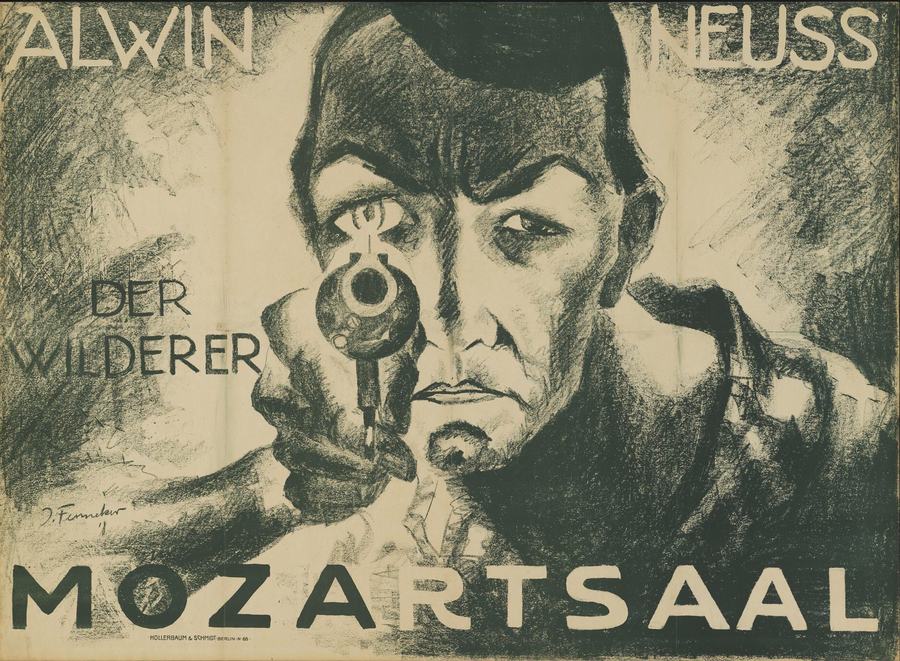
Der Wilderer is a film that demands to be seen in the darkest of screens, its shadows so deep they seem to absorb the light. Austrian director Karl Lerch has crafted a near-wordless masterpiece that lingers in the mind like the echo of a wolf’s howl across mountaintops. This is cinema as primal experience—raw, unfiltered, and as unforgiving as the alpine glaciers that loom over its protagonist.
From the opening shot—a sweeping drone view of a snowbound village dwarfed by jagged peaks—it’s clear this is a film about power dynamics. The mountains aren’t merely backdrops; they’re antagonists, deities, and witnesses. Bertl Schultes’ cinematography is a marvel of technical precision, with each frame meticulously composed to emphasize the insignificance of human endeavors against geological time. The camera lingers on details that feel like poetry: a single icicle piercing a barn’s eaves, the way sunlight fractures through a frost-rimed pine.
Fritz Fuchs delivers a performance that’s both physical and metaphysical. His character, known only as 'Hans,' is a man broken by seasons. He moves through the film like a ghost, his every action burdened with the weight of moral compromise. When he sets a snare in a forbidden forest, we see not just a poacher but a man bargaining with desperation. The scene where he skinning a trapped hare is one of the most brutal I’ve witnessed—there’s no romanticizing here, only the grim reality of survival. Yet Lerch balances this with moments of profound tenderness, like Hans cradling his sick daughter (Anna Dengg) while whispering folk hymns to her.
The film’s sound design is its quietest rebellion against convention. There are no grand scores, no atmospheric drones to fill the void. Instead, we hear the creak of a wooden cabin under snow’s weight, the distant crackle of a hunting rifle, the ragged breaths of a man fleeing through blizzards. This sonic minimalism heightens the tension to unbearable levels. When Hans finally encounters the legendary 'silver wolf' that haunts local legends, the scene is punctuated only by the sound of his heartbeat—literally, as the film cuts to his chest rising and falling under his coat.
Comparisons to The Witching Hour (link to /movies/the-witching-hour) are inevitable given the similarly isolated settings, but Der Wilderer distinguishes itself through its focus on environmental symbiosis. While The Witching Hour dealt with supernatural forces, here the real horror is human. The forest isn’t evil, but it doesn’t need to be—it’s simply indifferent, a theme that resonates in our climate crisis era.
The spectral wolf that stalks Hans in the film’s third act is the most audacious visual metaphor of the year. Rendered with a mix of practical effects and CGI so seamless it feels like a living entity, this creature embodies multiple dualities: predator/prey, conscience/temptation, humanity/nature. In one haunting sequence, Hans hallucinates the wolf in human form—a gaunt, bearded figure who might be the ghost of his father or a divine judge. This duality is heightened by the performances of Toni Münz and Karl Lerch, who share a haunting rapport that suggests familial tensions simmering beneath the surface.
The final act is a slow-motion collapse of all the film’s themes. Hans’ journey becomes a physical and spiritual marathon, his body and soul eroding as the seasons turn. The ending—whether redemption or damnation remains ambiguous—is one of the most emotionally resonant conclusions in recent memory. It calls to mind the final scenes of Old Brandis' Eyes (link to /movies/old-brandis-eyes), but with a far more visceral emotional core. We’re left not with answers, but with questions that echo like the title character’s footsteps in the snow.
What elevates Der Wilderer from powerful drama to cinematic landmark is its technical execution. The 3.5mm 35mm film stock gives every frame a tactile quality, with grain that feels like the snowflakes drifting through the screen. The color palette is a masterclass in subtlety—dominated by monochrome with splashes of red (blood, blood-stained snow) and green (the glacial rivers) that pulse with symbolic meaning. Action sequences are staged with Hitchcockian simplicity; a chase through an avalanche is terrifying not because of its scale, but because of its intimacy.
Anna Dengg’s supporting role as the ailing daughter is a revelation. In a film where most characters are defined by their relationship to the environment, she represents the human cost of Hans’ choices. Her final line—“I don’t want to be your sacrifice”—carries the weight of centuries of patriarchal burden. Dengg delivers this with such raw vulnerability that it recontextualizes every previous scene between her and Fuchs.
Der Wilderer arrives at a pivotal moment for global cinema. In an era where blockbusters dominate screens with their CGI spectacle, this film is a reminder of what cinema can achieve with patience, precision, and a deep understanding of its medium. It’s a film that rewards repeat viewings, with new details emerging about the symbolism of the mountains (link to /movies/the-narrow-trail), the recurring motif of broken glass, and the shifting symbolism of Hans’ hunting knife.
While some may find its pacing glacial (pardon the pun), this is a film that demands engagement with its rhythms. The long takes and static shots aren’t indulgent—they’re a narrative choice that forces the viewer to inhabit Hans’ perspective, to feel the slow erosion of his morality. This is the cinematic equivalent of walking the same path as the characters, with all its aching beauty and brutality.
Der Wilderer is more than a film—it’s a spiritual experience. It challenges us to look at nature not as a resource to be exploited, but as a mirror for our own humanity. With its breathtaking visuals, masterful performances, and philosophical depth, this is a film that will linger in the cultural consciousness for years to come. For those seeking a modern alpine epic that transcends genre conventions, look no further. This is the kind of filmmaking that reminds us why we fell in love with the medium in the first place.
Rating: ★★★★★ (5/5) - A masterwork of modern cinema that demands to be seen in the largest possible format.
IMDb 6.9
1936
Community
Log in to comment.