DbcultAccessing Vault...
Cult Review
Senior Film Conservator
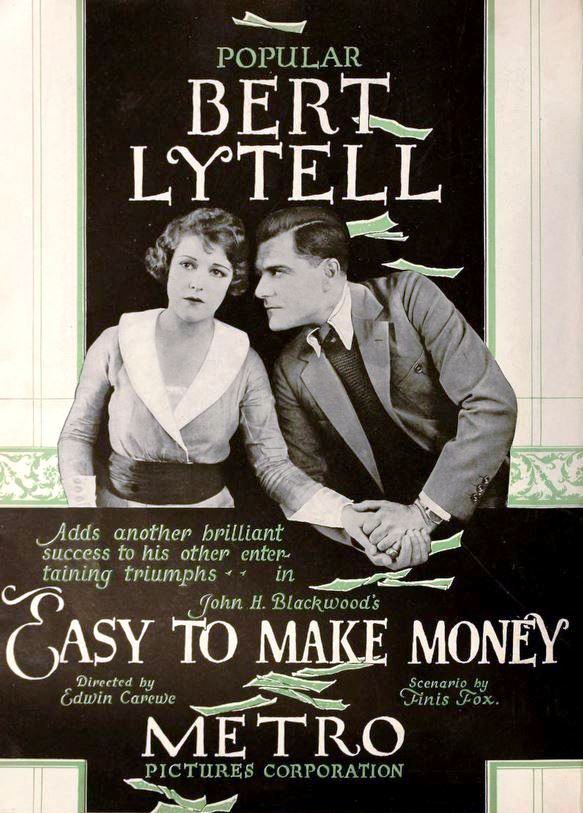
In the annals of silent cinema, Easy to Make Money stands as a paradoxical meditation on privilege and perseverance. The film opens with Jimmy Slocum (Bert Lytell), a scion whose life is a perpetual carousel of fines, bets, and paternal indulgence. His father, a magnate of ambiguous morality, settles every speeding ticket and loses every wager to his son, thereby establishing a dynamic where wealth is both shield and shackles.
The inciting incident—a $1,000 wager that Katherine Fowler (Gertrude Selby) does not truly love Jimmy—functions as a narrative fulcrum. It is a moment that simultaneously underscores Jimmy’s cavalier attitude toward affection and foreshadows his eventual break from paternal control. The bet, while seemingly trivial, reveals the father’s covert machinations: he desires Katherine as a conduit to cement social standing, yet Jimmy’s triumph exposes the hollowness of that arrangement.
Escalating the stakes, Jimmy wagers $25,000 that he can endure more than one arrest within a year, beginning with a twelve‑month sentence for a barroom brawl. The courtroom scene—where Jimmy, dripping with insolence, sassily retorts to the judge—exemplifies the film’s blend of bravado and vulnerability. The judge’s decision to impose a brief term, later mitigated by the father’s influence, illustrates the tenuous balance between law and wealth.
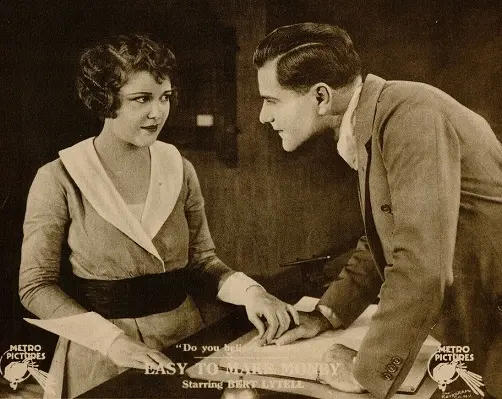
When the father’s clout secures Jimmy’s premature release, the young man’s resolve crystallizes: he will no longer rely on inherited capital. This decision propels him into the narrative’s second act, a geographic and emotional exile that mirrors the classic ‘hero’s journey.’
Stranded in a modest township, Jimmy encounters Ethel Wheeler (Ethel Shannon), a resilient proprietor of a weather‑worn hotel. Their chemistry, rendered through lingering glances and shared labor, provides the emotional core absent from his earlier aristocratic entanglements. The town itself—depicted with a palette of muted grays and sun‑kissed dust—functions as a character, its desolation juxtaposed against the bubbling mineral spring on Ethel’s property.
Jimmy’s entrepreneurial spark ignites when he recognizes the commercial potential of the spring water. He bottles and markets the mineral elixir, transforming a humble natural resource into a lucrative commodity. This venture not only revitalizes the local economy but also symbolizes Jimmy’s shift from parasitic heir to industrious self‑maker.
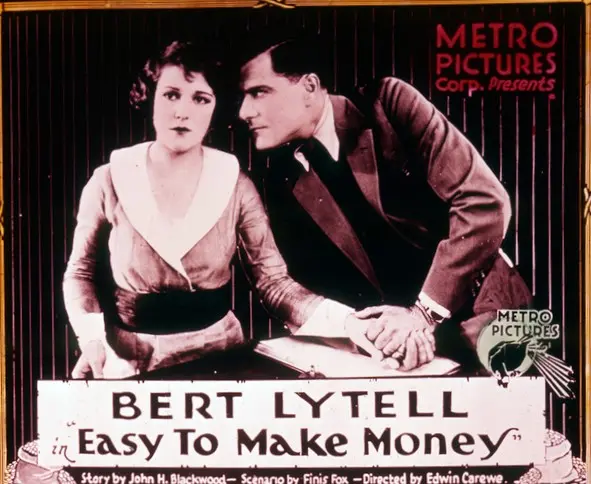
Conflict escalates when the town’s banker—an embodiment of institutional oppression—attempts to foreclose on Ethel’s hotel. In a bold reversal of power, Jimmy channels his $25,000 winnings into establishing a rival bank, thereby subverting the very system that once facilitated his father’s dominance. The scene where he signs the charter, ink glistening on his fingertips, is a visual metaphor for autonomy reclaimed.
The marriage between Jimmy and Ethel, solemnized in the modest chapel of the town, seals his transformation. It is not merely a union of hearts but a pact of shared ambition, a melding of capital and labor. The father’s eventual acknowledgment—an understated nod of respect—serves as the narrative’s denouement, confirming that true validation must be earned, not bestowed.
Bert Lytell delivers a nuanced portrayal of Jimmy, oscillating between swagger and earnest yearning. His expressive eyes convey the internal conflict that dialogue cannot articulate, a hallmark of silent‑film acting. Gertrude Selby, as the poised yet conflicted Katherine, offers a foil to Ethel’s earthy sincerity, while Ethel Shannon’s performance radiates a quiet fortitude that anchors the film’s emotional gravity.
The supporting cast—Edward Connelly as the imperious father, Frank Currier as the town’s beleaguered banker, and Bull Montana providing physical menace—populate the story with archetypal figures that enhance the central themes of power, class, and redemption. The direction, attributed to Finis Fox and John Blackwood, balances melodramatic set pieces with intimate character moments, a duality reminiscent of After the Ball’s interplay between spectacle and sentiment.
The cinematography employs chiaroscuro lighting to accentuate the moral dichotomies at play. Night scenes in the jail are bathed in stark shadows, while the mineral spring is illuminated with a golden hue, evoking the alchemical transformation of water into wealth. The use of long, static shots during the courtroom drama heightens tension, whereas handheld camera movements during the hotel renovation inject kinetic energy.
Set design deserves commendation; the contrast between the opulent mansions of Jimmy’s upbringing and the rustic, timber‑framed inn underscores the narrative’s socioeconomic commentary. The film’s visual language, though rooted in the silent era, anticipates later works such as The Stronger Vow, where setting becomes a silent interlocutor.
At its core, Easy to Make Money interrogates the notion that wealth can be both a crutch and a catalyst. Jimmy’s evolution from a dependent heir to a self‑sufficient entrepreneur reflects the American Dream’s paradoxical promise: success is attainable, yet often requires the abandonment of comfort.
The mineral spring functions as a multifaceted symbol. On one level, it is a literal source of profit; on another, it represents purity and renewal, cleansing Jimmy of his inherited decadence. The bank he establishes is more than a financial institution; it is a monument to self‑determination, a counter‑weight to the paternalistic banking empire that once threatened his love.
The recurring motif of wagers underscores the film’s exploration of risk. Each bet—whether monetary, romantic, or legal—propels Jimmy toward self‑actualization, echoing the gamble inherent in any artistic endeavor. This thematic resonance aligns the film with contemporaneous narratives like Die große Wette, which also foregrounds the stakes of personal ambition.
While Easy to Make Money may not enjoy the same renown as D.W. Griffith’s epics, its craftsmanship merits scholarly attention. The film’s blend of melodrama, social critique, and entrepreneurial mythos anticipates later Hollywood narratives that celebrate the self‑made man. Its influence can be traced to the 1930s’ screwball comedies, where protagonists similarly navigate class boundaries through wit and guile.
In terms of preservation, the surviving prints exhibit the grainy texture characteristic of the era, yet the visual storytelling remains strikingly clear. Modern restorations could benefit from a color‑grade that respects the original palette while enhancing the contrast between the dark orange of the father’s opulent interiors and the sea‑blue hues of the town’s river, thereby reinforcing the film’s chromatic symbolism.
Easy to Make Money is a compelling study of a young man’s quest for authenticity amid the gilded trappings of inheritance. Its narrative architecture—anchored by well‑timed wagers, a love that transcends social strata, and a triumph over institutional oppression—offers a layered viewing experience. The performances, direction, and visual composition coalesce into a work that, despite its silent‑film constraints, speaks eloquently to contemporary audiences fascinated by the interplay of wealth, agency, and love.
For cinephiles seeking a silent‑era gem that balances entertainment with incisive social commentary, this film is indispensable. Its relevance persists, reminding us that the pursuit of “easy” money often conceals a far more arduous journey toward self‑respect and genuine connection.

IMDb 7
1930
Community
Log in to comment.