DbcultAccessing Vault...
5.3/10
Senior Film Conservator
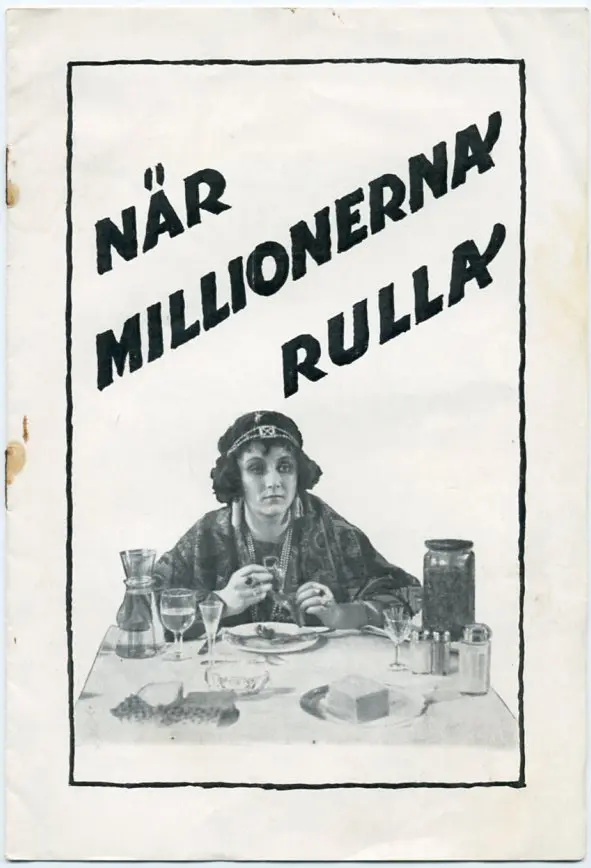
A definitive 5.3/10 rating for a film that redefined the boundaries of cult cinema. När millionerna rullar... remains a cornerstone of transgressive art.
In the pantheon of Swedish silent cinema, names like Stiller and Sjöström often cast shadows so long they obscure the fascinating, gritty explorations of the era’s lesser-known provocateurs. Lasse Ring’s När millionerna rullar... (1924) is a prime example of a film that eschews the pastoral mysticism of its contemporaries in favor of a jagged, almost modern cynicism regarding the machinery of wealth. It is a film about the movement of capital—not just as a concept, but as a physical, destabilizing force that ignores the sovereignty of nations and the sanctity of human relationships. Watching it today, one is struck by how little the architecture of greed has changed in a century.
The film opens with a sequence that establishes a frantic, kinetic energy, a stark contrast to the slow-burn melodrama found in The Storm. We are introduced to a cadre of Swedish businessmen whose eyes are perpetually fixed on the horizon—specifically the eastern horizon. The geopolitical landscape of 1924 was a jagged mosaic of collapsing empires and nascent republics, and Ring utilizes this instability as a narrative engine. The Swedish men, played with a rugged, desperate charm by Elias Ljungqvist and Otto Malmberg, are not villains in the traditional sense; they are opportunists, the ancestors of today’s venture capitalists, navigating a world where the rules are being rewritten in real-time.
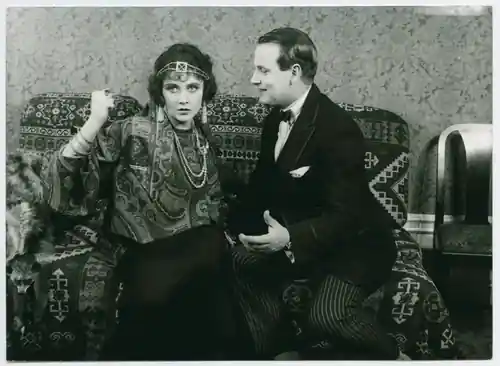
The brilliance of the screenplay lies in its refusal to simplify the logistics of the trade. This isn't a film about a single heist or a simple deal; it is about the friction of cultures. The inclusion of Russian and Polish characters adds a layer of linguistic and cultural complexity that the silent medium handles with surprising dexterity. Through expressive intertitles and nuanced physical performances, particularly from Nadjeschda Botchkaroff-Hjärne and Vera Schmiterlöw, the audience feels the weight of history pressing against the present. The interactions are fraught with a suspicion that transcends the immediate business at hand, echoing the darker themes of betrayal found in The Other Man's Wife.
Visually, the film is a masterclass in using shadows to articulate internal conflict. The cinematography captures the stark contrast between the bright, snowy expanses of the Swedish countryside and the dim, claustrophobic interiors where the 'millions' are discussed. This visual dichotomy mirrors the characters' own fractured identities: the public face of the respectable merchant versus the private desperation of the gambler. In many ways, Ring’s aesthetic choices prefigure the noir sensibilities that would dominate cinema decades later, though here they are rooted in the immediate economic anxieties of the post-war period.
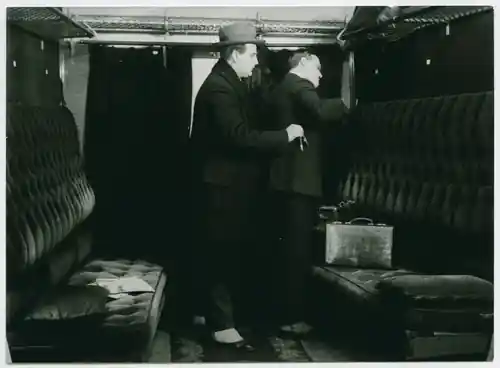
The ensemble cast is remarkably disciplined. Elias Ljungqvist carries a certain gravitas that anchors the film’s more flighty moments. His performance is a study in restrained ambition, a man who sees the world as a series of ledger entries. Opposite him, Nita Hårleman provides a much-needed emotional core, her presence reminding the viewer of the human cost that often disappears when millions are rolling across borders. Unlike the more stylized performances in Flickering Youth, the acting here feels grounded in a gritty, recognizable reality.
Special mention must be made of Carl Barcklind, whose presence adds a layer of theatrical pedigree to the proceedings. The way he occupies the frame suggests a world that is rapidly fading—the world of the 19th-century aristocrat being steamrolled by the 20th-century industrialist. This clash of eras is a recurring motif in Lasse Ring’s work, and it is handled here with a sophistication that rivals Erich von Stroheim’s Greed, albeit on a more intimate, regional scale. While Greed focused on the psychological decay of the individual, När millionerna rullar... focuses on the systemic decay of a society that has prioritized profit over stability.
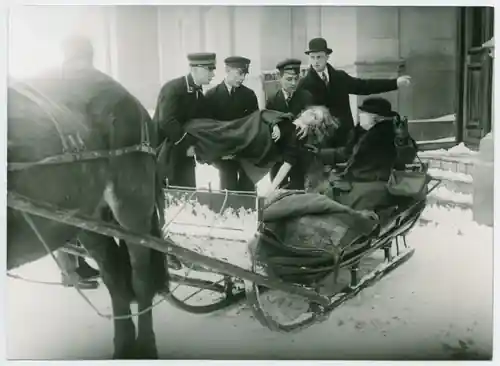
The pacing of the film is relentless. Ring understands that in a world of high finance, time is the only currency that cannot be devalued. The editing mimics the heartbeat of a speculator—quick, irregular, and prone to sudden spikes of adrenaline. This is particularly evident in the scenes involving the Russian border crossings. The tension is palpable, not from physical violence, but from the threat of bureaucratic failure. It shares a certain DNA with the suspenseful maneuvers in In the Python's Den, where the danger is often unseen but ever-present.
Technically, the film utilizes some impressive location shooting. The Swedish landscape is not merely a backdrop; it is a character. The biting cold seems to seep through the celluloid, emphasizing the harshness of the world these men are trying to conquer. The use of natural light in the outdoor sequences provides a crispness that was rare for 1924, allowing the audience to see every furrow in the brows of the actors as they contemplate their next move. This level of detail is something one might expect from The Man Unconquerable, yet Ring applies it to the mundane world of trade rather than the heroic exploits of an adventurer.
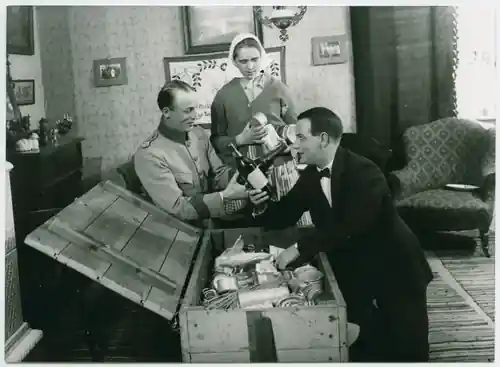
To understand När millionerna rullar..., one must look at it through the lens of Swedish neutrality and its aftermath. While the rest of Europe was decimated, Sweden occupied a unique position of relative stability, allowing its businessmen to act as intermediaries. However, the film suggests that this neutrality was a fragile facade. The moral rot of the continent was contagious. In this regard, the film serves as a cautionary tale, much like As a Man Sows, illustrating that the seeds of greed planted in foreign soil will eventually bear bitter fruit at home.
The film’s climax is not a traditional resolution. There are no clear winners, only survivors who are left to count their losses in the cold light of day. This ambiguity is what elevates the work from a simple melodrama to a piece of genuine art. It refuses to provide the easy catharsis found in Hello, Judge, opting instead for a haunting, open-ended conclusion that asks the viewer to consider what they would sacrifice for a seat at the table of power. The millions roll on, but the human spirit remains stationary, trapped in the amber of its own desires.
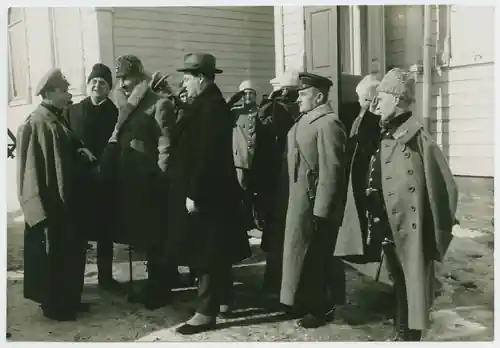
In the final analysis, Lasse Ring’s 1924 effort is a vital piece of the European silent cinema puzzle. It lacks the flamboyant expressionism of the Germans or the grand sweeping vistas of the Americans, but it possesses a rugged, intellectual honesty that is uniquely Nordic. It is a film that demands attention, not through spectacle, but through the sheer force of its thematic conviction. It stands alongside works like Skinning Skinners as a testament to the era's fascination with the predatory nature of the modern economy.
For the modern cinephile, När millionerna rullar... is more than a historical curiosity. It is a mirror. As we navigate our own era of global instability and digital millions, the faces of Ljungqvist and Malmberg reflect our own anxieties. The technology has changed—the telegraph has been replaced by the high-frequency trading algorithm—but the fundamental human impulse to chase the rolling millions remains unchanged. This is a film that deserves to be pulled from the archives, restored, and discussed with the same fervor as the more famous icons of the Swedish Golden Age. It is a cold, brilliant diamond of a movie, cutting through the sentimentality of its time with a sharp, uncompromising edge.
Final Verdict: A hauntingly prescient look at the intersection of commerce and morality.
IMDb —
1919
Community
Log in to comment.