DbcultAccessing Vault...
Cult Review
Senior Film Conservator
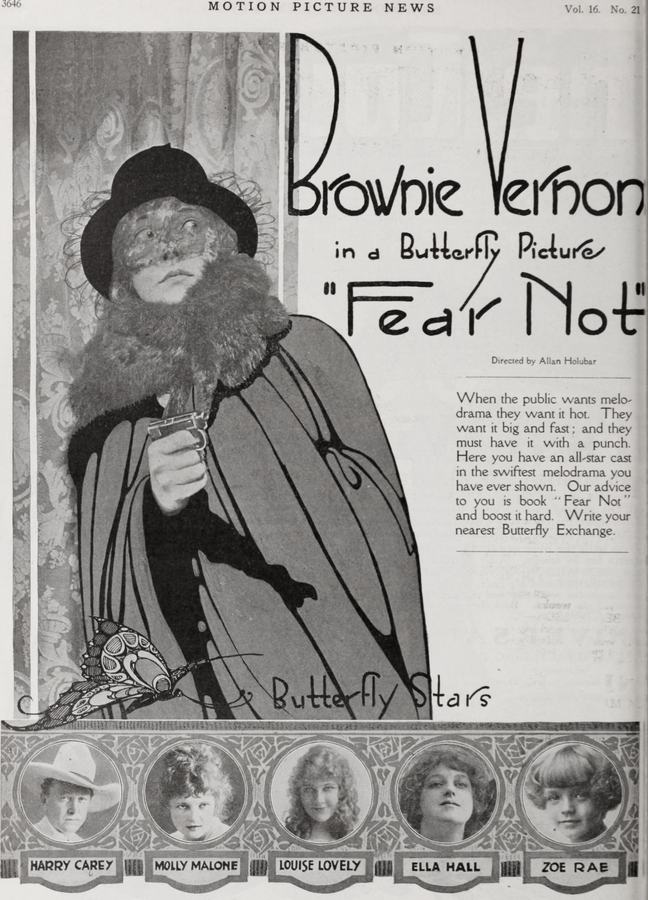
The first time the powder hits the lens, Borzage’s camera almost sneezes—an iris-in that pinpoints the pupil like a private eclipse, reminding us that addiction is always a solo performance staged in a crowded skull.
There is a moment—wordless, as all truth in Fear Not must be—when James Mornington’s hand hovers above the scales of justice and we see the residue of yesterday’s sins chalked into the creases of his palm. This is silent cinema operating like a confessional booth carved from nitrate: no spoken admonition, only the shiver of celluloid light to indict hereditary appetite.
Released through the Robertson-Cole pipeline in the exhausted aftermath of the Great War, the film arrived when dope panic slithered through headlines and prohibitionist sermons. It dared to whisper that vice might be chromosomal rather than merely criminal—an heretical notion that still pricks today’s discourse on addiction. Writers J. Grubb Alexander and Fred Myton lace Victorian melodrama with proto-noir fatalism, yielding a parable that feels both moth-eaten and startlingly contemporary.
Borzage, not yet canonized for his later romantic transcendentalism, choreographs degradation with a clinical tenderness. Note the tableau of the brothers sharing a cramped reflection in a wardrobe mirror: the glass slices the frame, duplicating each gesture until the screen breeds an infinity of Morningtons, all of them itching for chemical absolution. Smoke from a bedside candle drifts across the lens, softening the image as though even the film itself were trying to forget what it records.
Compare this to the sun-dappled austerity of A Vermont Romance, where Borzage’s pastoral longings already glimmer, and you sense a director wrestling with two opposing gravitational pulls: one toward redemption, the other toward the abyss. In Fear Not, the abyss leads by a nose.
As James, Miles McCarthy carries the stoop of a man who has read every lawbook yet never deciphered himself; watch how he peels off his judge’s robe as though shedding a second, less forgiving skin. The gesture is slow, almost reverent, until it snaps into frantic urgency—an eloquent thesis on status as narcotic.
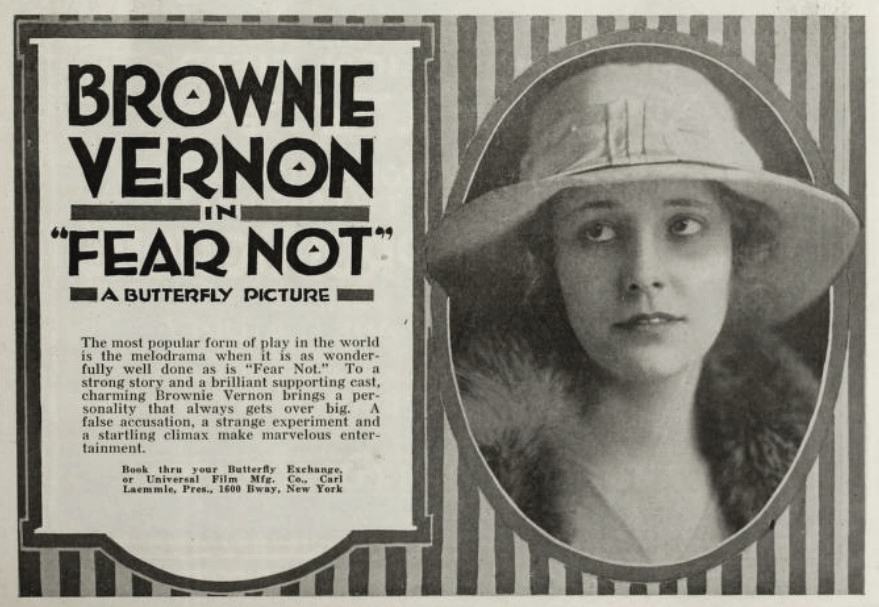
Murdock MacQuarrie’s Allen exudes raffish magnetism, the kind that persuades you corruption could be companionable. He plays seducer not with the wolf’s snarl but the housecat’s purr, insinuating powder into his brother’s snuffbox with the offhand grace of a sommelier topping up a wineglass.
Between them stands Agnes Vernon’s Hilda, wide eyes pooling like tide-caught moonlight. She has comparatively fewer intertitles, yet Vernon weaponizes stillness: every blink is a verdict passed upon the men who have sentenced her to dynasty. When she steps forward to claim the blame for murder, the straightjacket of moral inheritance clamps visible around her narrow shoulders.
Once the narrative absconds from urban gaslamps to sylvan retreat, the tinting shifts—from umber city murk to a pale celadon suggesting both renewal and queasy artifice. The countryside here is no Thoreauvian sanctuary but a limbo where cravings sprout like nettles through railroad ties. Every leaf looks suspiciously opulent, as though nature itself might be dealing.
This inversion anticipates the backwoods delirium of Vengeance of the Wilds, yet where that later picture externalizes menace through fanged fauna, Fear Not keeps horror pharmacological, intimate, almost embarrassingly human.
The physician who strides into this Eden brandishing charts and prognosis embodies Progressive-Era faith in scientific stewardship—so of course he must die. His off-screen crack of gunfire is rendered through a jarring cut to black, followed by a single white frame that floods the theatre like an inverse muzzle flash. The murder happens in our minds, which is where all cinema murder truly happens.
James’s psychic implosion thereafter—rendered via double-exposure spirals swirling around his profile—owes a debt to Germanic Expressionism yet feels homespun, almost Appalachian in its fatalist simplicity. Modern viewers may glimpse here a prototype for the mind-cave hallucinations in Pierrot the Prodigal, minus Technicolor fireworks.
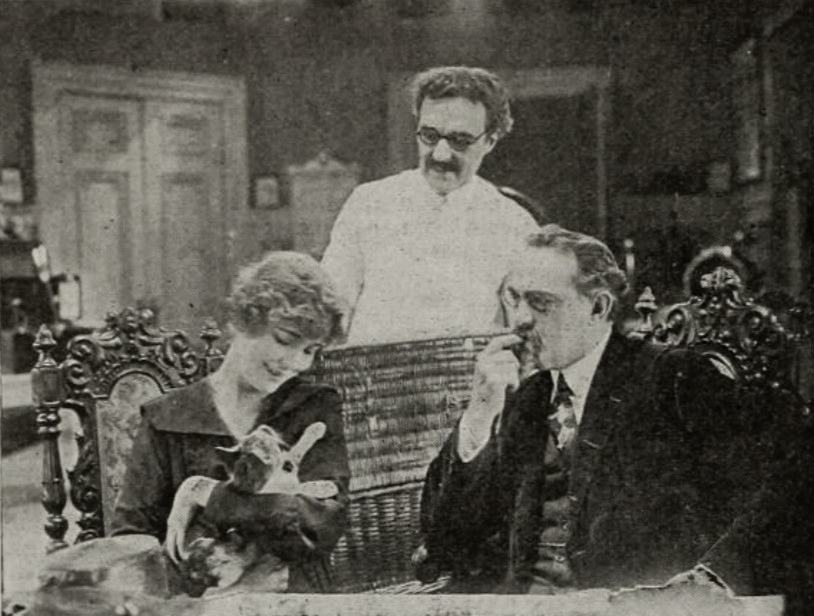
When Hilda swallows ancestral guilt, the film pivots from addiction melodrama to gendered sacrifice. Gildane’s entrance—via low-angle silhouette, coat sweeping like a cape—imports the aura of pulp detective serials. His extraction of Allen’s confession is less forensic than theatrical: a single sustained close-up on Allen’s twitching eye while Gildane’s shadowed hand presumably proffers damning evidence. We never learn the specifics; the point is the spectacle of sin coughing up its own name.
Scholars hunting proto-feminist through-lines may bristle that Hilda’s liberation requires male intercession, yet Vernon’s final smile—tentative, glassy, but undeniably sovereign—complicates a purely patriarchal reading. She accepts Franklin’s ring, yes, but on the condition that lineage be rewritten, not merely renamed.
Archival prints retain the original tinting, a ghostly reminder that monochrome never truly existed; even despair came color-graded. Festival accompanists often pair the third act with a slow-repeated descending motif in Phrygian mode, amplifying the sense that we are watching not a narrative but a requiem whose libretto has been misplaced by time.
Streaming audiences discovering Fear Not after bingeing opioid-era sagas like Euphoria will find startling rhymes: the insistence that relapse is not moral weakness but interlaced helixes of trauma and access; the paradox that the most enabling enabler is often the one who claims to love you hardest.
Set Fear Not beside The Innocent Sinner and you chart a diptych of fallen women—one punished, one pardoned—illustrating how fiercely censors policed the decade’s moral ledger. Pair it with The Naked Truth and you excavate a subterranean genre: the social-hygiene expose masquerading as domestic fable.
Yet Borzage’s film surpasses its didactic brethren because doubt survives the final reel. When Hilda and Franklin stride toward a sunrise that looks suspiciously like a chemical flare, we sense the camera’s hesitation, as if it too questions whether love can truly cauterize chromosomal ache.
For all its Victorian scaffolding, Fear Not vibrates with modern terror: the terror that your identity is merely a sum of inherited flaws; that the people who share your surname are also your most reliable dealers; that escaping the city means dragging your central nervous system with you. Borzage would later chase ecstasies of romantic rapture, but here he trains his saintly empathy on the inverse—ecstasies of collapse—and finds in them a crooked kind of grace.
Seek it out in 4K restoration if you can; the cocaine flecks sparkle like frost on charred celluloid, and every flicker reminds you that addiction, like cinema, is fundamentally an affair of light—dazzling, consuming, gone before you can name the shadow it leaves behind.
IMDb 4.8
1917
Community
Log in to comment.