DbcultAccessing Vault...
Cult Review
Senior Film Conservator
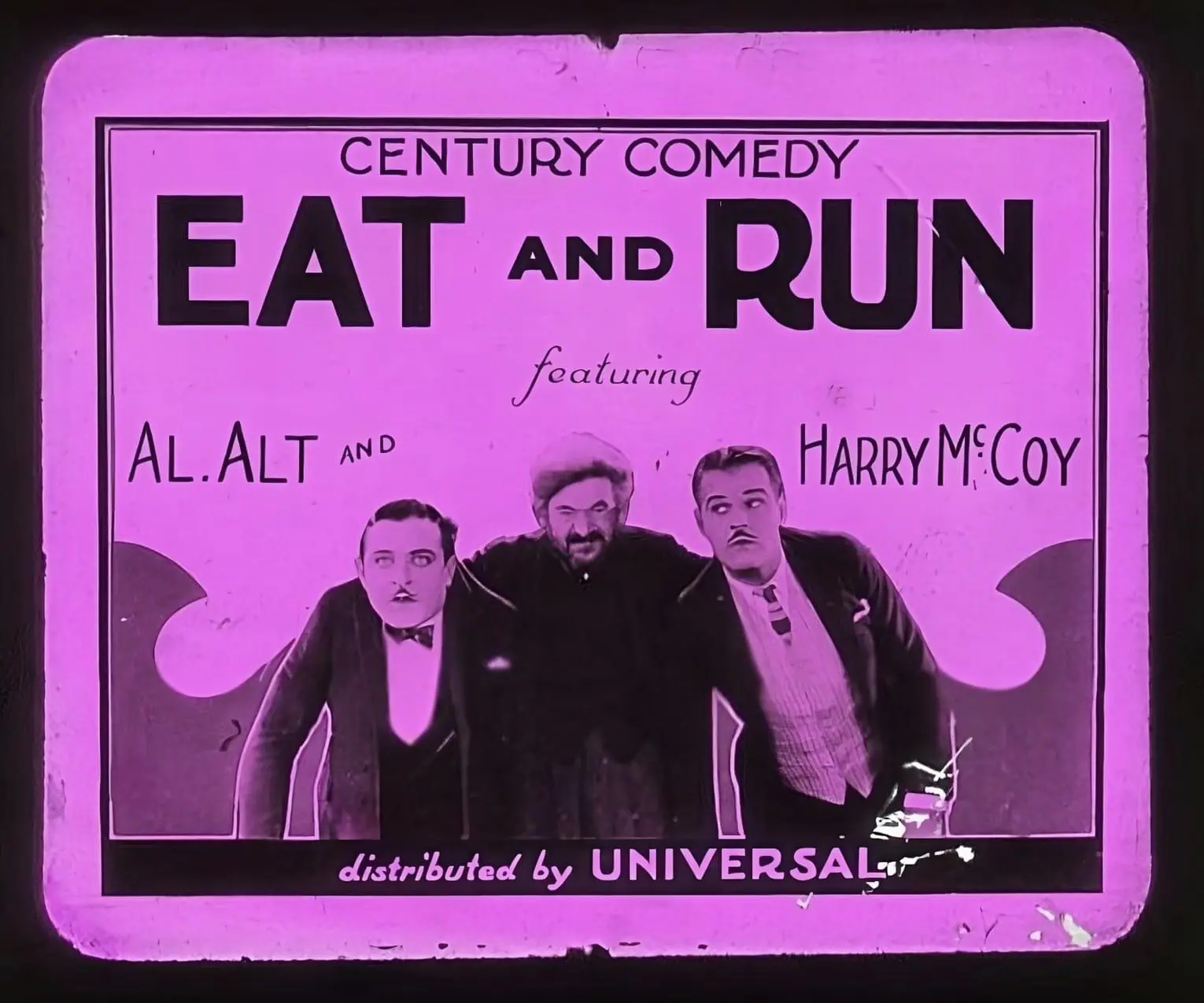
The film 'Eat and Run' is a poignant exploration of human existence, set in a bustling, unforgiving city where every character’s journey is marked by their own brand of struggle and triumph. Directed with a keen eye for detail, this narrative is a testament to the power of storytelling, capturing the essence of resilience in the face of adversity.
At the heart of the film are four distinct yet interconnected characters: Al Alt, a former athlete turned streetwise thug; Harry McCoy, a struggling writer searching for his identity; Max Davidson, a charismatic hustler with a penchant for danger; and Bessie Welch, a resilient woman navigating the urban jungle with a sharp wit and even sharper instincts. Each character’s story is a microcosm of the broader narrative, a tapestry woven with threads of ambition, betrayal, and an unyielding desire to find one’s place in a chaotic world.
The film begins in a desolate alleyway where Al Alt, once a star athlete, now battles the city’s underbelly. His journey is one of redemption and survival, a constant struggle against the forces that seek to drag him down. Meanwhile, Harry McCoy, a writer with a penchant for the macabre, seeks to find his voice amidst the noise, his pen a weapon in the war of the soul. Max Davidson, with a charm as lethal as his wit, navigates the treacherous waters of the city, his every move a calculated risk. And Bessie Welch, a figure of quiet strength, emerges as a beacon of hope, her presence a reminder of the indomitable spirit that lies within all of us.
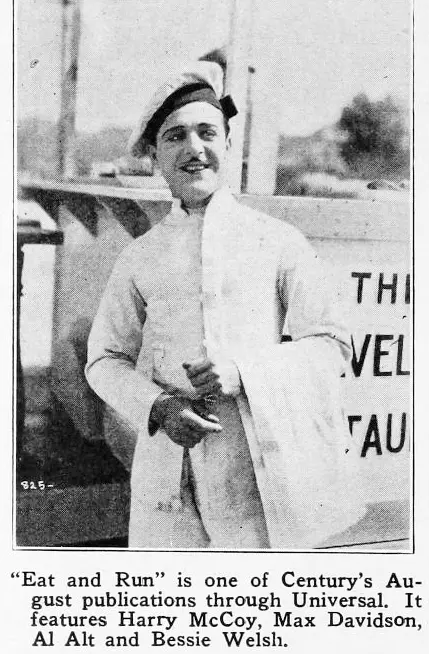
The screenplay, penned by Albert Herman, is a marvel of craft, delivering an intricate plot that is both deeply personal and universally relatable. The dialogue is sharp, each line carrying the weight of the characters’ experiences and the challenges they face. The narrative unfolds with a delicate balance of action and introspection, ensuring that no moment is wasted. The script’s strength lies in its ability to delve into the psyche of each character, revealing layers of complexity that are often overlooked in typical narratives.
The casting is impeccable, with Al Alt, Harry McCoy, Max Davidson, and Bessie Welch bringing their respective characters to life with authenticity and depth. Their performances are a testament to the script’s strength and the direction’s vision. Al Alt’s transformation from a once-great athlete to a hardened street fighter is a masterclass in character development. Harry McCoy’s search for identity is both heartbreaking and inspiring, while Max Davidson’s charisma is palpable, making every scene he is in electric. Bessie Welch’s quiet strength is a reminder of the power of resilience, her every move an act of defiance against the odds.
The cinematography by the visionary behind the lens is nothing short of breathtaking. The urban landscape is captured with a raw, gritty authenticity, each frame a testament to the film’s gritty realism. The use of light and shadow is particularly noteworthy, casting a constant dance of hope and despair, an ever-present reminder of the dual nature of life. The color palette, while predominantly dark, is enhanced with subtle hues of orange and sea blue, creating a visual tapestry that is as rich as the narrative itself.
The score, composed by a master of film music, complements the narrative beautifully. The soundtrack is a mix of haunting melodies and driving beats, enhancing the emotional weight of each scene. The music serves as a silent companion, its crescendos and decrescendos mirroring the peaks and valleys of the characters’ journeys.
The film’s themes are as varied as the characters it portrays. At its core, 'Eat and Run' is a story about survival, a celebration of the human spirit in its most raw and unfiltered form. It explores the duality of life, the constant struggle between light and darkness, and the unyielding desire for meaning in a world that often seems devoid of it. The narrative’s strength lies in its ability to tackle these themes with honesty and clarity, making it a film that is both deeply personal and universally resonant.
Compared to other films in its genre, 'Eat and Run' stands out for its depth and complexity. It draws parallels with films like 'Kennedy Square', which also explores urban life with a critical eye, but 'Eat and Run' delves deeper into the human psyche, offering a more nuanced and layered narrative. It also shares thematic elements with 'Her Hour', a film that similarly grapples with the complexities of identity and survival. However, 'Eat and Run' excels in its character-driven storytelling, making it a standout in its category.
The film’s success is also due to its masterful direction. The director’s ability to weave together disparate elements and create a cohesive narrative is a testament to their skill. Every scene is purposeful, every character’s contribution is significant, and the overall impact is profound. This film is a reminder that great storytelling is an art form, one that requires not just talent but a deep understanding of the human condition.
For viewers seeking a film that is more than just a surface-level entertainment, 'Eat and Run' is a must-watch. It is a film that demands attention, a narrative that challenges and inspires. It is a reminder that in a world often dominated by formulaic storytelling, there is still room for innovation and depth. 'Eat and Run' is a film that will leave a lasting impression, a work of art that is as much about the characters as it is about the stories they tell.
As the credits roll, one is left with a sense of satisfaction, not just from the narrative’s conclusion but from the journey that has been undertaken. 'Eat and Run' is a film that is more than the sum of its parts, a testament to the power of storytelling in all its forms. It is a film that will resonate with audiences long after the final scene, a true masterpiece in the realm of cinema.

IMDb —
1936
Community
Log in to comment.