DbcultAccessing Vault...
Cult Review
Senior Film Conservator
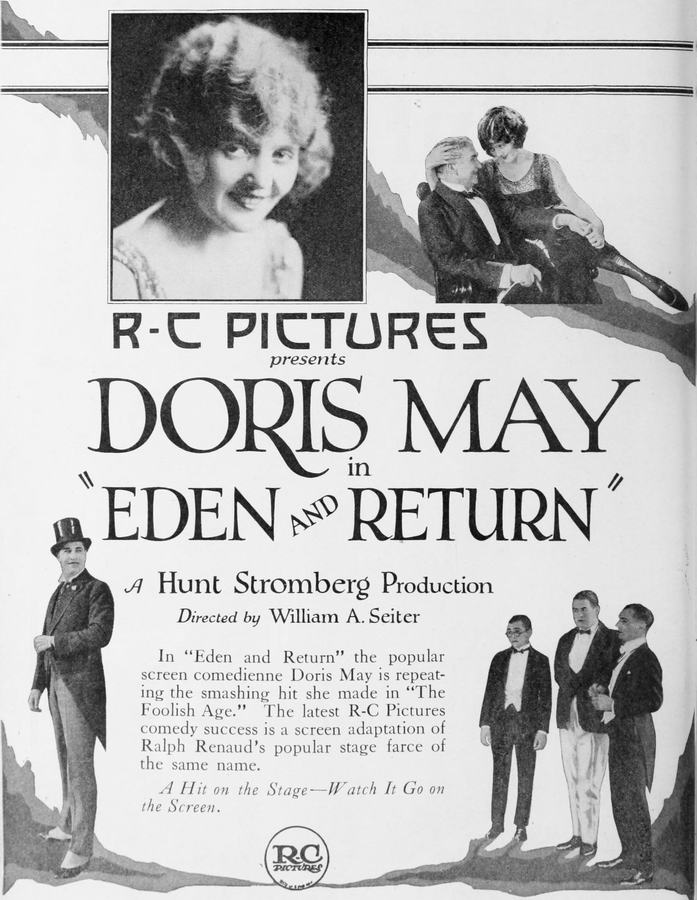
Eden and Return, a 1925 silent film directed with a chiaroscuro sensibility by Ralph E. Renaud, is a masterclass in the subversion of classical Hollywood tropes. Its narrative, co-written with Beatrice Van, weaves a tapestry of familial strife and romantic tumult that feels both archaic and startlingly modern. The film’s aesthetic—laced with the stark contrasts of early cinema—echoes the emotional duality of its protagonist, Betty Baylock (Margaret Livingston), whose journey from constrained daughter to embattled wife is rendered with aching precision.
The film opens with Betty as a cipher of middle-class aspiration, her world circumscribed by the opulent yet suffocating walls of her father’s estate. Her father (Gerald Pring), a stockbroker whose fortune is as much a social armor as it is a financial asset, treats marriage as an economic transaction. When he demands she choose from three suitors—each a walking ledger of social currency—his authority is not just patriarchal but capitalist, reducing human connection to a ledger of assets. Betty’s rejection of all three men is less a feminist act than a recognition that none of these suitors are worthy of her father’s approval, let alone her own.
Enter Jack Grey (Earl Metcalfe), a figure who disrupts the narrative’s equilibrium. A self-described "wastrel with a silver tongue," Jack is a paradox: a man who has squandered wealth yet retains an almost magnetic charisma. His relationship with Betty is not merely romantic but transactional in its own right—a dance of power where each partner seeks to reclaim autonomy from the other. Their courtship unfolds in a series of glances and silences, their unspoken dialogue as charged as the film’s most dramatic set pieces. The tension between them is not just about love but about identity: Betty, torn between her father’s world of rigid propriety and Jack’s chaotic freedom, becomes a mirror for the audience to interrogate their own complicity in systems of control.
The film’s third act, where Betty and Jack are exiled from the paternal estate, is its most audacious. The father’s ultimatum—"earn back your worth"—is both a curse and a liberation. Here, the film’s visual language shifts from the gilded restraint of the earlier scenes to a stark, almost expressionistic landscape. The couple’s struggles to survive in a world devoid of inherited privilege are rendered with a stark realism that prefigures the social dramas of the 1930s. Yet, their journey is not a bildungsroman but a deconstruction of romantic idealism; their love, while genuine, is also a means of survival, a partnership forged in the crucible of rejection.
Margaret Livingston’s performance as Betty is a tour de force, capturing the character’s internal conflict without ever veering into melodrama. Her expressions—often fleeting, often ambiguous—convey the weight of her choices with a restraint that is itself revolutionary. Earl Metcalfe, as Jack, brings a rawness to the role that cuts through the narrative’s formalism, his physicality a counterpoint to Betty’s composed exterior. Together, they form a dynamic that is as much about opposition as it is about chemistry, their chemistry rooted in the mutual recognition of their shared isolation.
The film’s score, though minimal, amplifies its emotional cadence. The use of diegetic sounds—clocks ticking, horses clopping, the creak of furniture—creates a sonic tapestry that underscores the passage of time and the inevitability of consequence. This is most evident in the scene where Betty, now stripped of her father’s wealth, confronts the harshness of her new reality. The camera lingers on her face as she watches a beggar receive alms, the juxtaposition of her pride and vulnerability laid bare. It is a moment that transcends the film’s silent format, speaking to the universal tension between self-reliance and dependence.
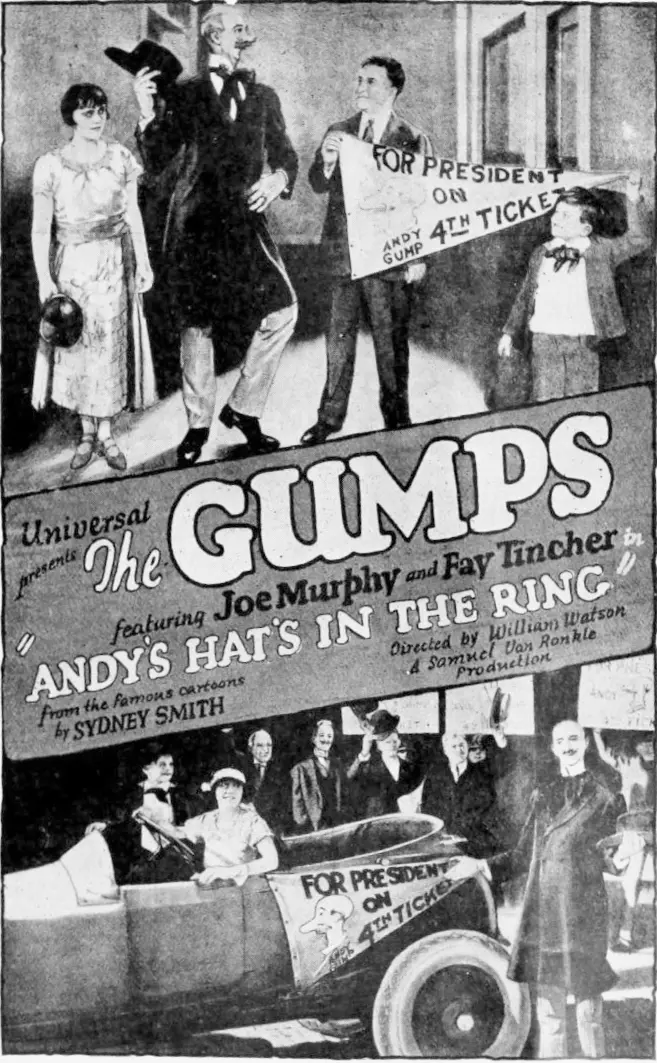
In its exploration of class and autonomy, Eden and Return draws parallels to The Bull’s Eye (1923), where a similar clash of worlds unfolds with far less subtlety. Yet where The Bull’s Eye leans into romantic tropes, Eden and Return subverts them, its narrative resisting easy resolution. The film’s thematic kinship with Yulian Otstupnik (1926) is more pronounced, particularly in its portrayal of characters grappling with the weight of inherited status. However, Eden and Return distinguishes itself through its focus on the female protagonist’s interiority—a rarity in early cinema.
The film’s visual aesthetic is equally noteworthy. The interplay of light and shadow, particularly in scenes set within the Baylock estate, evokes the chiaroscuro techniques of German Expressionism, yet it is employed with a restraint that serves the story rather than overshadowing it. The use of long takes in the exiled couple’s scenes is particularly effective, allowing the viewer to linger on moments of quiet despair or fleeting hope. This visual strategy mirrors the film’s thematic preoccupation with time and consequence, the camera acting as both observer and participant in the narrative’s unfolding.
One cannot discuss Eden and Return without acknowledging the influence of The Man Who Wouldn’t Tell (1924), which shares a similar focus on the corrosive effects of secrets and lies. However, where The Man Who Wouldn’t Tell is a psychological thriller, Eden and Return is a slow-burn character study that thrives on ambiguity. The film’s refusal to offer clear resolutions—does Betty find true autonomy, or is she merely trading one form of subjugation for another?—invites repeated viewings and interpretations, a testament to its layered complexity.
The supporting cast, particularly Doris May as Betty’s confidante and Frank Kingsley as a rival suitor, add nuance to the film’s exploration of gender roles. Their interactions with the lead characters highlight the societal pressures that shape Betty’s choices, offering a broader critique of the period’s patriarchal structures. The film’s closing scene, where Betty and Jack stand at a crossroads, is deliberately open-ended. The camera pulls back to reveal the vastness of the world beyond their immediate struggles, a visual metaphor for the infinite possibilities—and pitfalls—that await in a life unbound by expectation.
In the context of 1920s cinema, Eden and Return is a bold departure from the era’s penchant for formulaic storytelling. Its nuanced portrayal of female agency and the deconstruction of romantic idealism align it with the proto-feminist undertones of The Amazing Adventure (1925), though it diverges in its unflinching critique of wealth as a form of emotional and social control. The film’s legacy lies in its ability to balance narrative ambition with cinematic innovation, a feat that few of its contemporaries achieved.
Ultimately, Eden and Return is a film that lingers in the mind, its themes of autonomy, love, and the price of defiance resonating with a timeless urgency. It is a work that demands more than passive viewing—it invites analysis, debate, and a reckoning with the uncomfortable truths it lays bare. For those seeking a silent film that transcends its medium to speak to the human condition, this is an essential viewing. Just as The Mite of Love (1923) explored the microcosm of personal relationships within societal constraints, Eden and Return expands that scope, offering a macrocosmic view of the forces that shape individual lives.
IMDb 6.2
1933
Community
Log in to comment.