DbcultAccessing Vault...
5.8/10
Senior Film Conservator
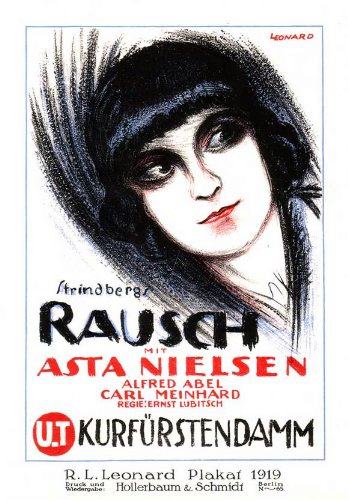
A definitive 5.8/10 rating for a film that redefined the boundaries of cult cinema. Intoxication remains a cornerstone of transgressive art.
The 1919 cinematic adaptation of August Strindberg’s There Are Crimes and Crimes, titled Intoxication (or Rausch), stands as a monumental testament to the burgeoning power of German silent cinema. Directed with a keen eye for psychological claustrophobia, the film navigates the treacherous waters of human ambition and the ephemeral nature of social standing. Unlike the more linear narratives found in contemporary works like The Man Who Woke Up, Intoxication delves into the murky depths of the subconscious, treating success not as a destination, but as a hallucinogenic drug that distorts reality.
The narrative architecture, meticulously crafted by Hanns Kräly, centers on Gaston, a character portrayed by Heinz Stieda with a haunting blend of arrogance and vulnerability. Gaston is a man who has inhabited the fringes of the literary world, enduring the quiet desperation of the unacknowledged genius. When his play finally achieves success, the shift in his psyche is instantaneous and terrifying. This isn't merely a story of domestic betrayal, such as one might find in The Unfortunate Marriage; rather, it is a philosophical inquiry into the weight of guilt and the fragility of the social contract.
The arrival of success acts as a catalyst for Gaston’s latent desires. He is drawn to Henriette, played by the incomparable Asta Nielsen. Nielsen, a titan of the era whose expressive range could convey volumes with a single flicker of the eyelid, brings a predatory yet tragic grace to the role. Her chemistry with Stieda creates a palpable sense of doom, a stark contrast to the domestic stability represented by Marga Köhler. The film masterfully juxtaposes the sterile, high-society salons of Paris with the cold, unforgiving reality of the streets, a visual dichotomy that mirrors Gaston's internal state.
One cannot discuss Intoxication without acknowledging the presence of Pola Negri. While Nielsen provides the emotional gravity, Negri injects a mercurial energy that elevates the film beyond a standard melodrama. The casting of these two legends together is a rare cinematic alignment, akin to the dramatic tension found in The Flying Circus, where the spectacle is as much about the performers' charisma as it is about the plot. Negri’s performance is a masterclass in silent-era magnetism, her every movement imbued with a calculated intensity that threatens to shatter the screen's frame.
The supporting cast, including Alfred Abel and Rudolf Klein-Rhoden, provides a solid foundation for the leads to flourish. Abel, in particular, offers a nuanced performance that foreshadows his later work in expressionist masterpieces. The ensemble works in perfect harmony to create a world that feels both grounded in 19th-century morality and startlingly modern in its exploration of celebrity culture. The film’s pacing, while deliberate, never feels sluggish, as the tension builds toward the inevitable catastrophe of the child’s death.
August Strindberg’s source material provides a rich, albeit dark, tapestry for the filmmakers to work with. The thematic obsession with cosmic justice and the psychological toll of hidden sins is handled with a sophistication that rivals the mystery elements of The Secret of the Old Cabinet. The cinematography utilizes shadows and light not just for aesthetic appeal, but as a narrative tool to signify Gaston's descent into moral darkness. The use of close-ups during the trial sequences creates an atmosphere of interrogation that involves the audience, forcing us to judge Gaston alongside his peers.
The film’s exploration of the "intoxication" of fame is particularly resonant. It suggests that Gaston’s crime isn't just his infidelity or his neglect, but his belief that his artistic success exempts him from the consequences of his actions. This hubris is his undoing. When the child dies, the film shifts from a drama of manners into a psychological thriller. The accusation leveled against him is as much about his character as it is about the physical evidence, a theme explored with similar gravitas in The Wheel of the Law.
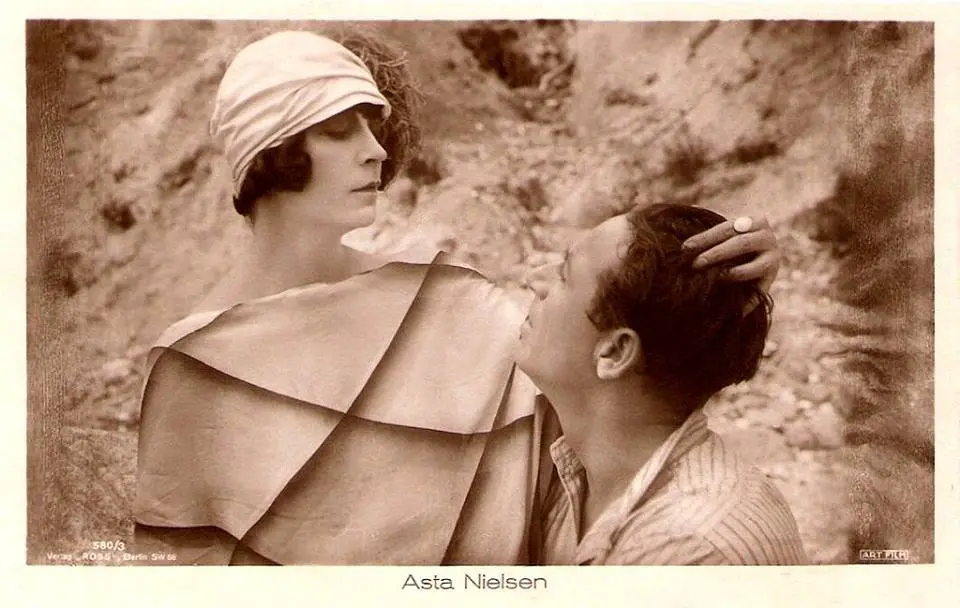
The production design of Intoxication is a marvel of the late 1910s. The sets are not merely backgrounds; they are extensions of the characters' internal landscapes. The opulent apartments where Gaston celebrates his premiere are filled with sharp angles and heavy drapes, creating a sense of being trapped by one's own success. In contrast, the later scenes of his destitution utilize sparse, cold environments that emphasize his isolation. This visual storytelling is far more advanced than many of its contemporaries, such as Leap to Fame, which relies more heavily on intertitles to convey emotional shifts.
The direction ensures that the audience remains tethered to Gaston’s perspective, even as he becomes increasingly unsympathetic. We feel his panic as the crowd turns on him, and we share in his despair as he wanders the streets of Paris. The film doesn't shy away from the brutality of his fall. There is a sequence involving his encounter with former colleagues that is particularly harrowing, highlighting the fickle nature of the artistic community. It’s a sequence that mirrors the social ostracization seen in La belle Russe, though here it is filtered through a more existential lens.
As the film reaches its climax, the question of redemption looms large. Can a man who has essentially wished for the disappearance of his obstacles ever truly be cleared of the guilt of their removal? Intoxication suggests that the legal exoneration is secondary to the spiritual one. The resolution is not a simple happy ending, but a somber reflection on the cost of ambition. This complexity is what separates it from more sentimental fare like A Bachelor's Children.
The final act, where the truth is finally revealed, is handled with a restraint that is surprising for the era. There are no over-the-top histrionics; instead, the revelation is met with a quiet, devastating realization of what has been lost. Gaston may have regained his freedom and his name, but the man he was at the start of the film is gone forever. This transformation is the core of the Strindbergian experience—the idea that we are forged and broken by our own desires.
Looking back at Intoxication through the lens of modern cinema, its influence is unmistakable. The way it handles the psychological breakdown of its protagonist paved the way for the great expressionist films of the 1920s. It shares a certain DNA with Trilby in its depiction of a character under the spell of an external force—though here, the force is Gaston's own ego rather than a Svengali. The film also stands as a crucial entry in the filmographies of Nielsen and Negri, showcasing their ability to carry a complex, adult narrative with grace and power.
While some might find the silent-era acting style occasionally heightened, the emotional core of Intoxication remains piercingly relevant. In an age of instant fame and public cancellations, the story of a man whose life is dismantled in the wake of a scandal feels incredibly contemporary. The film is a sobering reminder that the heights of success are often accompanied by the most dangerous precipices. It is a masterpiece of early cinema that deserves to be studied not just for its historical value, but for its profound understanding of the human condition.
In comparison to large-scale epics like Joan the Woman, Intoxication is an intimate, searing portrait of a single soul. It lacks the thousands of extras and sweeping battlefields, but it possesses an internal scale that is just as vast. It reminds us that the most significant battles are often fought within the confines of our own conscience. Whether you are a devotee of silent film or a newcomer to the era, this film offers a rich, rewarding experience that lingers in the mind long after the final frame has faded. It is, quite simply, essential viewing for anyone who appreciates the art of visual storytelling at its most potent and uncompromising.
Final Rating: A haunting, intellectually rigorous journey into the heart of darkness, anchored by two of the greatest performances of the silent era.
IMDb —
1922
Community
Log in to comment.