DbcultAccessing Vault...
Cult Review
Senior Film Conservator
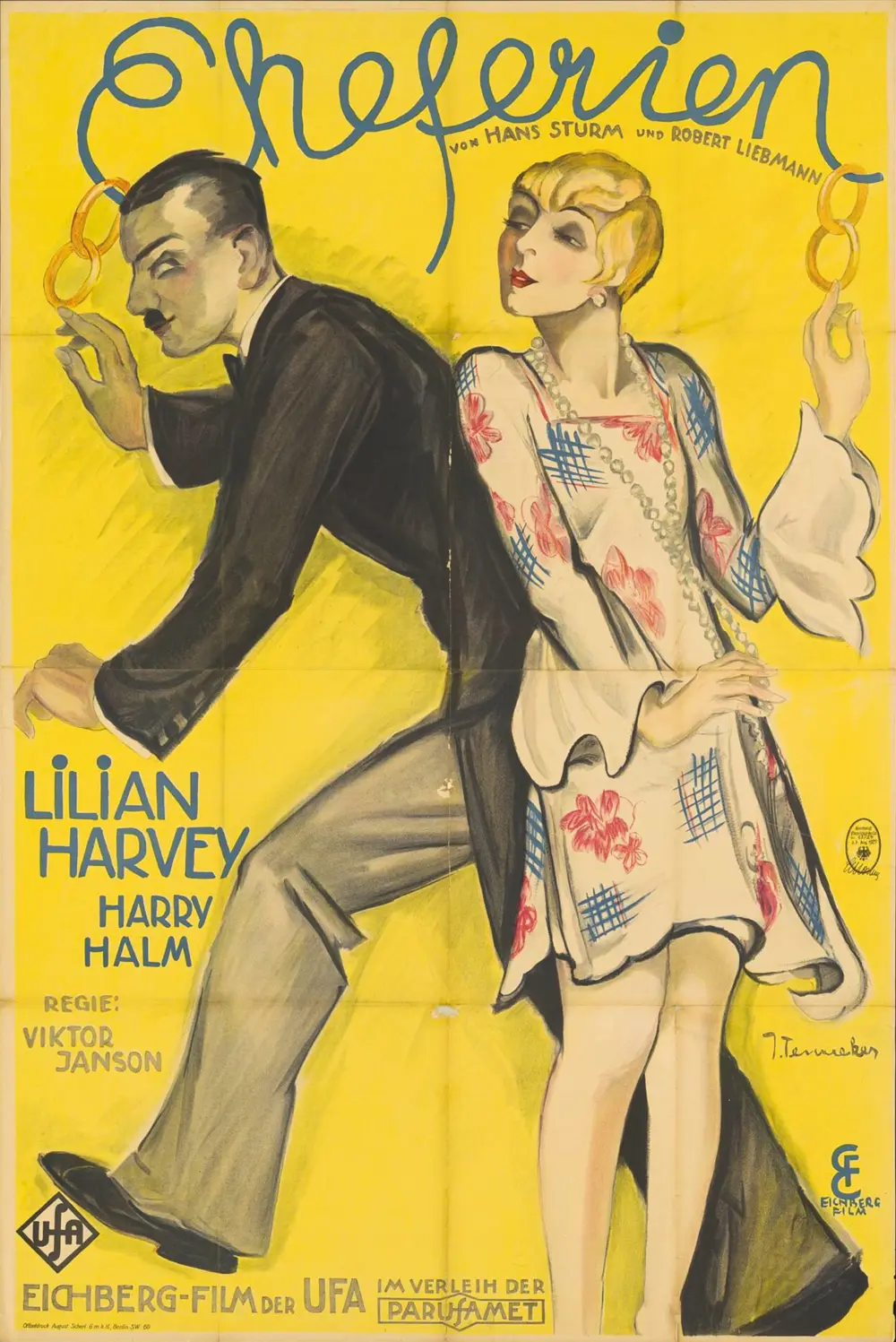
Is Eheferien worth watching today? Short answer: yes, but with a nuanced understanding of its historical context and thematic ambitions. This film, a fascinating relic from an earlier cinematic era, offers a unique window into societal attitudes towards marriage and personal autonomy, making it a compelling, if occasionally challenging, experience for the discerning viewer.
It’s a film for those who appreciate the foundational artistry of cinema, particularly German productions of the period, and are willing to engage with storytelling that prioritizes character study over explosive plot points. However, it is decidedly not for audiences seeking fast-paced action, overt spectacle, or a contemporary narrative sensibility; its charms are subtle, its pace deliberate, and its insights often require a degree of introspection.
The very premise of Eheferien – a 'marriage vacation' – is a provocative one, especially when viewed through the lens of its original release. It suggests a society grappling with the strains of matrimony, perhaps questioning its rigidity or seeking innovative, if temporary, solutions to its inherent challenges. Robert Liebmann’s screenplay, even with minimal concrete plot details available to contemporary critics, hints at a narrative rich with potential for social commentary and psychological exploration.
One can imagine the film deftly balancing the comedic potential of such an arrangement with the underlying poignancy of two individuals, perhaps estranged, attempting to rediscover each other, or themselves, away from the familiar confines of their shared life. This concept, far from being dated, actually feels remarkably modern in its willingness to dissect marital dissatisfaction and the quest for individual happiness within a partnership.
The genius here lies in the film's implied exploration of space – both physical and emotional – and how its absence or presence can redefine a relationship. Is the 'vacation' a last-ditch effort, a calculated risk, or merely a temporary reprieve from an inevitable truth? The ambiguity is its strength.
The ensemble cast, featuring luminaries like Lilian Harvey and Hans Stürm, is undoubtedly a major draw. Harvey, a star of her time, brings an undeniable effervescence and emotional depth to her roles. In Eheferien, one can postulate her character navigating the complexities of the 'marriage vacation' with a blend of optimism, vulnerability, and perhaps a touch of underlying melancholy. Her ability to convey internal states with subtle facial expressions and gestures, even without extensive dialogue, would have been paramount.
Consider a moment, perhaps, where Harvey’s character, caught in a quiet introspection, gazes out a window. The camera, rather than cutting away, holds her in a medium shot, allowing the subtle shifts in her expression – a fleeting smile, a shadow of melancholy – to communicate volumes about her internal conflict regarding the ‘Eheferien’. This kind of nuanced performance is what elevates a simple premise.
Hans Stürm, often playing more stoic or authoritative figures, would likely provide a compelling counterpoint. His presence could ground the narrative, offering a portrayal of the husband grappling with tradition, expectation, and perhaps a burgeoning realization of his own marital failings. The dynamic between these two actors would have been crucial, a silent dance of unspoken grievances and burgeoning hopes.
The supporting cast, including Harry Gondi and Jutta Jol, would fill out the world, perhaps as friends offering advice, or new acquaintances complicating the 'vacation's' rules. Their contributions, even in smaller roles, would add texture and verisimilitude to the film's depiction of social interactions.
While specific directorial choices are lost to time without a viewing, one can infer certain stylistic approaches common to German cinema of this period. Directors often excelled at creating atmospheric settings and employing visual metaphors. The 'vacation' aspect of Eheferien would lend itself to scenic cinematography, perhaps contrasting the bustling city life of their regular existence with the serene, or perhaps isolating, landscapes of their retreat.
The pacing would likely be deliberate, allowing scenes to breathe and emotions to simmer, a characteristic often found in films like The Cost or Dark Secrets from the same era. This measured approach, while potentially challenging for modern viewers accustomed to rapid cuts, is precisely what allows for deeper character engagement and thematic exploration. It demands patience, but rewards with nuance.
A particular sequence might involve a carefully composed shot of the couple at a dining table, physically close yet emotionally distant, with a significant empty space between them. This visual emphasis on their emotional chasm, rather than explicit dialogue, would be a hallmark of effective silent or early sound filmmaking. The use of light and shadow, too, could subtly shift to reflect the characters' internal states – bright, hopeful mornings giving way to shadowed, reflective evenings.
Robert Liebmann, as the writer, would have been tasked with crafting a narrative that was both engaging and insightful. The concept of a 'marriage vacation' is inherently dramatic, offering myriad possibilities for both comedic misunderstanding and heartfelt reconciliation. Liebmann's approach would likely have involved developing distinct character arcs for the husband and wife, showing their individual journeys towards understanding, or perhaps accepting, their marital reality.
The strength of a screenplay like this often lies not in grand gestures, but in the accumulation of small, telling moments. A particular narrative device might involve the introduction of a third party, a charming stranger, who inadvertently forces the main couple to confront their lingering feelings for one another. This classic trope, when handled with sensitivity, can be incredibly effective.
Liebmann's writing would need to navigate the societal norms of the time, perhaps subtly challenging them or, conversely, reinforcing them, depending on the film's ultimate message. Was it a cautionary tale, a romantic comedy, or a poignant drama? The ambiguity is part of its allure and allows for multiple interpretations across generations.
Yes, Eheferien absolutely holds value for a contemporary audience, particularly those interested in film history, the evolution of storytelling, and the enduring themes of human relationships. Its exploration of marital dynamics, individual agency, and the search for happiness within a partnership remains strikingly relevant, even if the specific social contexts have shifted.
It serves as a crucial artifact, illustrating how filmmakers of the era tackled complex emotional landscapes with the tools available to them. For students of cinema, it offers lessons in visual storytelling and performance; for casual viewers, it provides a unique, often thought-provoking, escape into a bygone era.
However, it demands a certain level of engagement. You cannot simply passively consume Eheferien like a modern blockbuster. It asks you to lean in, to observe, and to infer. It works. But it’s flawed by its very age, requiring concessions from the modern eye.
Eheferien is significant because it tackles a timeless theme – marital stress and renewal – with a forward-thinking premise for its time. It showcases the talent of its lead actors, particularly Lilian Harvey, and offers insight into early 20th-century German filmmaking techniques and societal norms around marriage. It represents a period when cinema was rapidly evolving, experimenting with narrative forms and character depth.
This film works because its central premise, the 'marriage vacation,' is incredibly fertile ground for both comedy and drama, allowing for a deep dive into character psychology without necessarily needing a convoluted plot. The casting of charismatic leads like Lilian Harvey ensures that the emotional core of the story, however subtle, resonates.
This film fails because its deliberate pacing and reliance on period-specific acting conventions might alienate contemporary audiences who are unaccustomed to such cinematic rhythms. Without a fully fleshed-out, action-driven narrative, some viewers may find its observational style too slow or understated for their tastes.
You should watch it if you have an appreciation for classic German cinema, enjoy character-driven dramas that explore relational complexities, or are interested in seeing how enduring human themes were portrayed in early film. It’s a must for fans of Lilian Harvey.
Eheferien is more than just a historical curiosity; it’s a thoughtfully constructed cinematic piece that dares to explore the fragile architecture of marriage with a unique premise. While its age and stylistic conventions demand a certain patience, the film's enduring themes and the implied strength of its performances, particularly from Lilian Harvey, make it a rewarding experience for those willing to engage with its particular brand of storytelling. It’s a testament to the fact that profound human truths, even those concerning the most intimate relationships, transcend time and cinematic evolution. Seek it out if you crave depth over dazzle, and a quiet contemplation over loud pronouncements. It’s a film that whispers its insights, rather than shouts them, and those whispers are still worth hearing today.
IMDb 6.1
1935
Community
Log in to comment.