DbcultAccessing Vault...
Cult Review
Senior Film Conservator
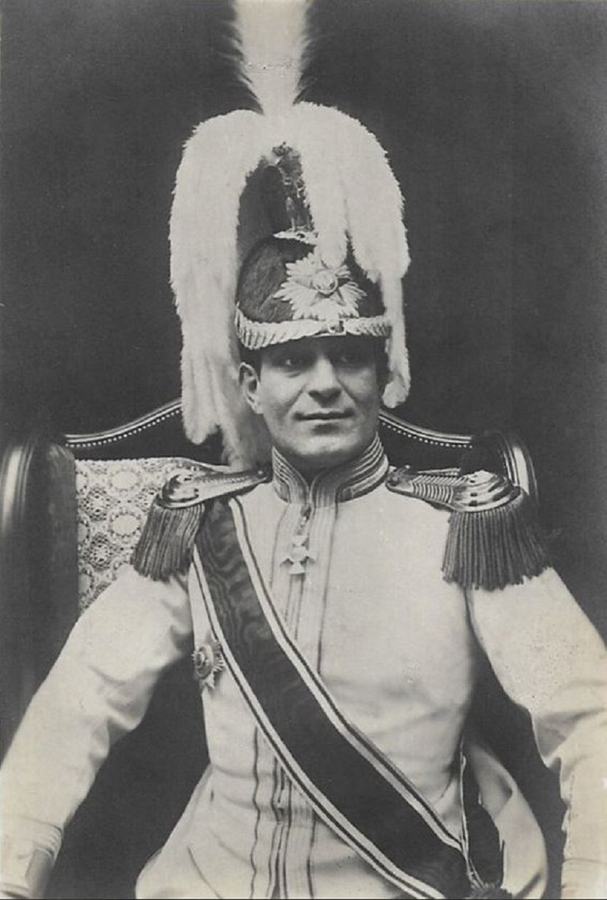
Stepping back into the annals of cinematic history, one often unearths hidden gems, films that, despite their age, resonate with an astonishing contemporary relevance. Fürst Seppl, a German silent film from an era long past, is precisely such a discovery. It’s a narrative tapestry woven with threads of identity, class struggle, and the often-comical clash between rigid societal expectations and the unvarnished truth of human character. To merely label it a period piece would be to do it a disservice; it’s a vibrant exploration of universal themes, presented with a charming simplicity that belies its profound observations and sophisticated storytelling. This film, emerging from the nascent years of cinema, proves that profound narratives and compelling character studies were already at the forefront of the medium's ambitions.
The film plunges us into the picturesque, yet socially stratified, world of rural Bavaria. Here, we encounter Seppl, portrayed with an infectious exuberance by Hanns Beck-Gaden. Beck-Gaden’s performance is a masterclass in silent-era acting, conveying a spectrum of emotions through nuanced gestures and expressive eyes that speak volumes even without a single spoken word. His Seppl is not merely a rustic bumpkin; he is the embodiment of natural wisdom and an untamed spirit, a stark contrast to the stifling formality that pervades the aristocratic circles he inadvertently infiltrates. His physicality is remarkable, a constant kinetic energy that keeps the viewer captivated, from his boisterous village antics to his awkward, yet endearing, attempts at courtly decorum. It's a performance that stands shoulder to shoulder with the comedic brilliance seen in contemporaries like Buster Keaton or Charlie Chaplin, though with a distinctly European flavor and a unique blend of slapstick and heartfelt sincerity. Beck-Gaden manages to imbue Seppl with an authenticity that makes his improbable journey not just believable, but deeply engaging.
The narrative, a delightful conceit of mistaken identity and accidental heroism, begins in the tranquil village of Waldheim. Seppl, a jovial innkeeper's son, possesses a charisma that lights up every frame. Meanwhile, in the distant castle, the true Prince Ludwig languishes, his frailty exploited by the cunning Baron von Falkenstein, brought to life with menacing subtlety by Rudolf Biebrach. Biebrach eschews overt villainy for a more insidious portrayal, his gestures and expressions hinting at a calculating mind beneath a veneer of courtly decorum. His performance is a testament to the power of suggestion in silent cinema, where a raised eyebrow, a slight smirk, or a fleeting shadow in the eyes can speak volumes of malevolent intent. His sycophantic aide, portrayed by Beppo Benz, adds a layer of unctuous support to the Baron's machinations, often serving as a comedic foil to Seppl's genuine nature, highlighting the stark contrast between true character and superficial loyalty.
The catalyst for the entire dramatic arc is a whimsical village festival. Seppl, in a moment of playful abandon, dons an old, princely uniform. This seemingly innocuous act, combined with a striking resemblance to a younger Prince Ludwig, sets in motion a chain of events that catapults him from humble origins to the gilded halls of power. The arrival of a bewildered royal emissary, who, never having met the real Prince, mistakes Seppl for the invigorated monarch, is a moment of pure cinematic magic. It’s a testament to the film’s narrative ingenuity that such a grand misunderstanding feels utterly plausible within its established world, driven by desperation and a touch of wishful thinking on the emissary's part. This particular plot device, where a commoner assumes a noble identity, finds echoes in various forms across cinematic history, from lighter fare to more profound explorations of class and privilege. One might draw parallels, albeit with different tones, to films like The Secretary of Frivolous Affairs, where societal roles are playfully (or dramatically) upended, or even the more earnest explorations of identity in Her Own Way, though Fürst Seppl maintains a unique blend of humor and earnestness, using the trope not just for laughs but for genuine character development and social commentary. The film expertly leverages the audience's understanding of such tropes, allowing for immediate engagement with Seppl's predicament.
Seppl’s reluctant immersion into princely life forms the core of the film’s comedic and dramatic tension. His rustic charm and unconventional wisdom clash hilariously with the rigid etiquette of the court. We witness Seppl fumbling through formal dances, offering unsolicited advice to stuffy courtiers, and generally upending the stale routines of royal life. Yet, it is precisely these qualities – his directness, his empathy, his refusal to be bound by meaningless protocols – that allow him to see through the Baron’s carefully constructed façade of loyalty and uncover the true extent of his machinations. He doesn’t merely play the part; he inadvertently embodies a truer sense of leadership, one rooted in empathy and justice rather than inherited privilege. This theme of intrinsic worth triumphing over superficial status is a powerful one, especially for the period, offering a hopeful vision of meritocracy in an era often defined by rigid social hierarchies.
The introduction of Countess Eleonore, played with an elegant grace by Ferdinande Bethge, adds another layer of complexity to the narrative. Bethge’s Eleonore is not a mere damsel in distress; she is intelligent, perceptive, and initially skeptical of Seppl’s seemingly boorish manners. Her transformation, from initial disdain to growing admiration, is subtly portrayed, her expressions shifting from suspicion to curiosity, and finally to a tender respect. The chemistry between Beck-Gaden and Bethge is palpable, a silent dialogue of glances and gestures that speaks volumes, building a connection that feels earned rather than forced. It's a slow-burn romance that develops organically, rooted in shared values and a mutual respect for character, rather than immediate, superficial attraction. Her character arc is compelling, representing the awakening of the aristocracy to the virtues of the common folk, a theme explored in different contexts in films like The Price of Vanity, where superficial appearances are contrasted with genuine character, or even Marga, Lebensbild aus Künstlerkreisen, which often explored the intersection of different social strata. Eleonore's journey is as much about self-discovery as it is about falling in love, challenging her preconceived notions of what constitutes nobility and leadership.
The film’s direction, while often attributed to the collective efforts of the era rather than a singular visionary in the way we might attribute authorship today, exhibits a remarkable understanding of visual storytelling. The cinematography is often breathtaking, capturing the serene beauty of the Bavarian landscape with sweeping wide shots that establish a sense of place and scale, juxtaposed with intimate close-ups that draw the viewer into the characters' emotional states. The use of natural light, combined with the dramatic shadows inherent to early black-and-white film, creates a rich, textured visual experience that is both aesthetically pleasing and dramatically effective. The pacing is deliberate, allowing scenes to breathe and emotions to register, a hallmark of silent cinema that modern audiences might find refreshingly meditative in its unhurried unfolding. One can observe a certain kinship with the visual storytelling prowess found in other early masterpieces like Life and Passion of Christ, albeit applied to a very different narrative canvas. The directors understood how to leverage every visual element – from set design to costume – to convey meaning and mood in the absence of spoken dialogue, crafting a truly immersive experience.
Seppl’s 'reign' is a fascinating study in accidental reform. His practical, common-sense approach inadvertently dismantles oppressive policies and champions the cause of the villagers. We see him, for instance, overturning an unfair tax on local farmers, or mediating a long-standing dispute between rival hamlets with surprising fairness and insight, decisions that genuinely benefit the common folk. These moments, often infused with humor as Seppl struggles with official paperwork or courtly language, carry a poignant message about the disconnect between rulers and the ruled. The Baron’s nefarious plot, a classic tale of ambition and treachery, provides the necessary dramatic foil. His attempts to expose Seppl are met with unexpected resistance, not because Seppl is a master of deception, but because his actions have already earned him the loyalty and affection of the court and, crucially, Eleonore, who champions his cause with growing conviction. The film effectively illustrates how genuine leadership can emerge from the most unexpected places, challenging the very foundations of inherited authority.
The narrative builds to a crescendo during a lavish ball, a quintessential silent film setting for a dramatic confrontation and grand reveal. Here, the Baron plans his public denunciation and seizure of power, only to be thwarted by the miraculous appearance of the true Prince Ludwig. This deus ex machina moment, while conventional in its structure, is handled with a satisfying emotional payoff, as the weakened but rightful Prince confirms Seppl's benevolent actions and exposes the Baron's perfidy. Seppl, having fulfilled his accidental destiny, gracefully steps aside, his mission accomplished. The scene is not just about the unmasking of a villain; it’s about the validation of an ordinary man’s extraordinary impact. The true Prince, now recovered, serves to underscore the Baron's villainy and Seppl’s genuine goodness, rather than diminishing Seppl’s heroism, giving him the ultimate recognition for his selfless service.
The film’s conclusion, where Seppl returns to his humble village life, is imbued with a bittersweet realism that avoids easy sentimentality. He doesn't ascend to a permanent princely role, reinforcing the film’s commentary on class barriers and the enduring nature of societal structures, yet he leaves an indelible mark on the principality. More importantly, he wins the heart of Eleonore, who, now free from her royal betrothal, chooses a future dictated by affection and respect rather than duty or station. This resolution is not a fairy tale ending in the traditional sense, but a more profound statement on the nature of love and true nobility. It suggests that character, integrity, and genuine connection transcend titles and societal constructs. This thematic depth sets Fürst Seppl apart, elevating it beyond a simple comedic romp into a thoughtful exploration of human values. It offers a hopeful, yet grounded, vision of personal triumph and societal progress.
The societal commentary woven throughout Fürst Seppl is particularly astute for its time. It subtly critiques the rigid class structures of early 20th-century Europe, suggesting that true leadership and nobility are not inherited but earned through action and character. Seppl, the commoner, embodies virtues that the aristocracy has seemingly forgotten or neglected. His ability to connect with people, to understand their struggles, and to implement practical solutions stands in stark contrast to the Baron’s self-serving ambition and the real Prince’s detached illness. This exploration of class and character echoes, in a different vein, the moral quandaries presented in films like The Folly of Sin or the more direct social observations in Kindling, where the lives of ordinary people reveal profound truths. The film manages to be both entertaining and subtly revolutionary in its implicit endorsement of the common man's inherent worth and capabilities.
Moreover, the film’s ability to blend humor with genuine peril is commendable. The early scenes of Seppl navigating courtly life are genuinely funny, relying on physical comedy and situational irony as he misinterprets protocols or uses his rustic ingenuity to solve problems. Yet, as the Baron’s plot thickens and his schemes become more desperate, the stakes become palpably real, creating a compelling dramatic tension that keeps the audience on edge. This tonal balance is difficult to achieve, especially in a silent film where nuances are conveyed solely through visual cues, expressive performances, and carefully crafted intertitles. The writers, Ernst Iros and Franz Weichenmayr, deserve considerable credit for crafting a narrative that is both entertaining and thought-provoking, avoiding the saccharine sentimentality or simplistic moralizing that sometimes plagued films of this period. Their script is a testament to the power of a well-structured story, even in its most nascent cinematic form.
The supporting cast, including Beppo Benz, in a role that likely provided some comic relief or served as a foil to the more serious dramatic elements, contributes to the rich tapestry of court life and village antics. While specific plot details for their individual contributions are often lost to time or require further archival research, their presence undoubtedly adds to the film's texture, creating a believable and bustling world for Seppl's extraordinary journey. The ensemble work, even in its minimalist presentation typical of early cinema, ensures that the film never feels like a one-man show, but rather a community's story, where every character, no matter how small, plays a part in the unfolding drama. This collective effort is what gives Fürst Seppl its lasting appeal and depth.
In an era when cinema was still finding its voice, Fürst Seppl stands as a testament to the power of visual storytelling and the enduring appeal of a well-crafted narrative. It’s a film that speaks to the timeless human desire for justice, the allure of the underdog, and the often-surprising places where true nobility resides. Its blend of comedic charm, dramatic tension, and insightful social commentary makes it a compelling watch, even a century after its creation. For those interested in the evolution of German cinema or the silent film era as a whole, Fürst Seppl is more than a historical artifact; it is a vibrant, engaging piece of art that continues to resonate with audiences who appreciate a story told with heart and intelligence. It reminds us that sometimes, the most profound truths are found not in grand pronouncements, but in the simple, honest actions of a common man, whose spirit can illuminate even the darkest corners of power and privilege.

IMDb —
1928
Community
Log in to comment.