DbcultAccessing Vault...
Cult Review
Senior Film Conservator
A charcoal smear of sun across the Aegean: that is how the film announces itself—no title card, just heat haze and the faint creak of a rowboat.
Helena’s ankles, nut-brown and daubed with salt crystals, balance on the gunwale as if the world’s axis tilted a fraction more she might skid straight into myth. She is drawing, yes, but also divining; every graphite arc a hex cast upon the calm. Her cousin Mary, a slip of a thing with ribboned plaits, hums a tune that will later be weaponised as nostalgia once the cannons begin. The camera—hand-cranked, tremulous—drinks in their isolation the way a parched sponge drinks blood.
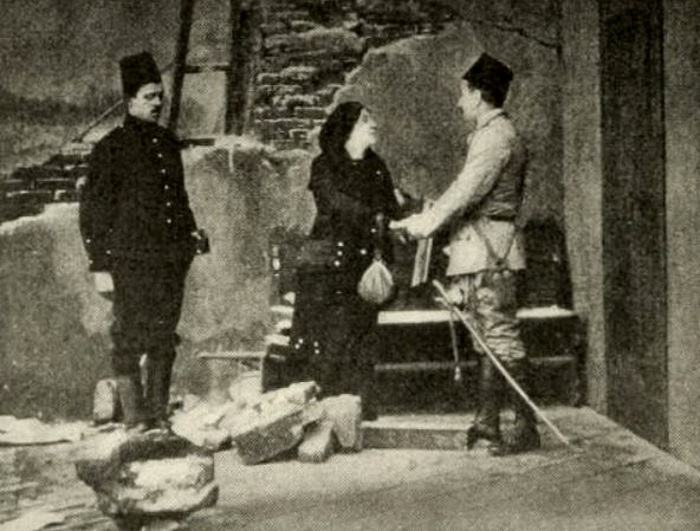
Enter Ali Bey: fez cocked, sabre sheathed, eyes the colour of roasted coffee. He is stationed in Athens as military attaché, which in 1913 parlance means spy with diplomatic immunity. Yet the film refuses to brand him villain; instead it gifts him a conscience that clanks like ill-fitting armour whenever Helena is near.
The boat drifts. Tide turns. A requiem of gulls. What could have been a quaint rescue tableau mutates into ontological theatre: two adults locking gazes across the surf, each recognising in the other a private apocalypse. Ali’s sprint across barnacled rock, his coat shedding buttons like spent cartridges, feels less heroic than erotic—every stride a consummation deferred.
Back in the city, the film’s second movement unfolds inside neoclassical parlours where busts of Hermes mute the scandal of a Greek girl pining for the occupier. Helena’s father—beard like a ship’s broom, voice like gravel in a tumbler—condemns the liaison with the same vehemence he reserves for unpaid tailors. His solution: contract her to Captain Humeroki, a man whose moustache is so rigidly waxed it could slice feta.
The wedding sequence, shot in over-exposed white, is a ghost parade: bride’s eyes circled in kohl borrowed from the theatre of tragedy, groom’s medals flashing Morse code to the cheering crowd. Notice how the camera refuses a close-up until the vows are sealed; only then does it push in, revealing Helena’s pupils dilated not with conjugal bliss but with the vertigo of incarceration.
Months telescope. War is declared—the 1912-13 Balkan Wars serving as off-screen thunder. Humeroki is entrusted with mobilisation maps; Ali Bey receives clandestine orders to filch them. Fate, ever the sadist, stages their collision inside Helena’s moon-drenched garden.
The nocturnal assignation is lit like a Caravaggio: inky shadows, a shaft of lapis moonlight, a pistol Ali presses to his own temple in lieu of persuasion. Helena’s betrayal is filmed in chiaroscuro: fingers trembling over wax seals, sealing not merely documents but the fate of thousands. The film’s genius lies in withholding judgment; her theft registers as both seduction and violation, an eroticised treason.
Remorse arrives not as whisper but detonation. Learning that the plans she stole will rout her people, Helena commandeers dynamite, a phallic corrective to her earlier passivity. The bridge—limestone, Ottoman, phantasm—becomes the altar upon which she sacrifices lover and self alike.
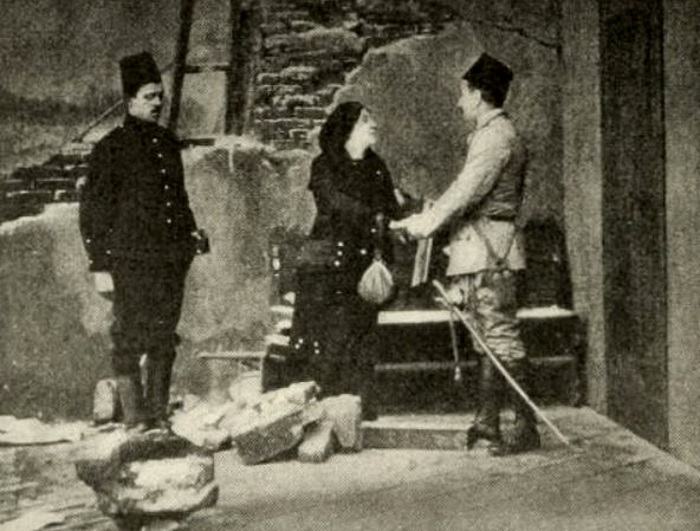
The final reel is a crescendo of montage: hooves drumming, fuse sizzling, cross-cut with flash-images of her sketched waves—art literally exploding into life. When the span collapses, the camera plunges underwater; horses and riders sink in balletic slow motion, epaulettes twirling like sycamore seeds. Above, Helena is felled by shrapnel, her blood soaking the Greek flag the soldiers drape over her—a chromatic inversion of the white wedding dress.
As she expires, Humeroki kneels, whispers forgiveness. The film ends on an iris-out over her charcoal sketchbook floating downstream, pages warping, drawings bleeding into illegibility—history’s amnesia made manifest.
The unnamed actress playing Helena wields stillness as weapon. Watch her pupils in the garden scene: they dilate, contract, dilate—an erotic Morse. Opposite her, Ali Bey’s interpreter balances menace and vulnerability; when he presses the pistol to his chest the gesture reads less blackmail than self-annihilating courtship.
Released during the First Balkan War’s aftermath, the film flirts with propaganda yet ultimately sabotages jingoism. By making the Greek heroine both traitor and saviour, the narrative complicates the us-vs-them binary then saturating European headlines. The dynamited bridge becomes a rupture not merely tactical but epistemological: borders, like celluloid, are permeable, unstable, susceptible to passion and accident.
Compare it to The Mystery of the Rocks of Kador where landscape also functions as moral barometer, or to Robbery Under Arms whose outlaw romanticism likewise blurs ethical cartography. Yet The Spartan Girl is more ferociously concise; it distills imperial angst into a single shard of nitrate.
Surviving prints reside at the Thessaloniki Film Archive, a 4K scan revealing granular details: the way Ali’s fez thread unravels mid-rescue, the frayed hem of Helena’s chemise as she steals the documents. A new score by Konstantina Efthymiadou—bouzouki, ney, prepared piano—premiered at the 2022 Balkan Film Festival, replacing the lost original accompaniment rumored to be a medley of Smyrnaic rebetiko.
Modern viewers will detect proto-feminist currents: Helena’s body is battlefield, archive, weapon. Yet the film refuses to sanctify her; she remains complicit, ethically scorched. In an era of hashtag absolutions, such moral murkiness feels almost radical.
At a brisk 38 minutes, The Spartan Girl compresses epic into episode, tragedy into tryst. Its visual grammar—alternating between sun-scorched vastness and claustrophobic interiors—mirrors Helena’s oscillation between freedom and fate. The climactic sacrifice lands not as patriotic apotheosis but as existential sigh: love, war, identity—all collapse into the Aegean’s indifferent surge.
For cinephiles tracking pre-WWI Balkan cinema, for scholars of gendered nationalism, or for anyone who believes silent film can be as lacerating as shrapnel, this is essential viewing. Seek it out, preferably on a big screen where the nitrate flicker feels like surf against your own ankles. Let its final image—the flag-draped corpse, the floating sketchbook—haunt you the way distant artillery haunts a shoreline at dusk.
Rating: 9/10 — a miniature Antigone carved in seawater and gunpowder.
IMDb —
1925
Community
Log in to comment.