DbcultAccessing Vault...
7.4/10
Senior Film Conservator
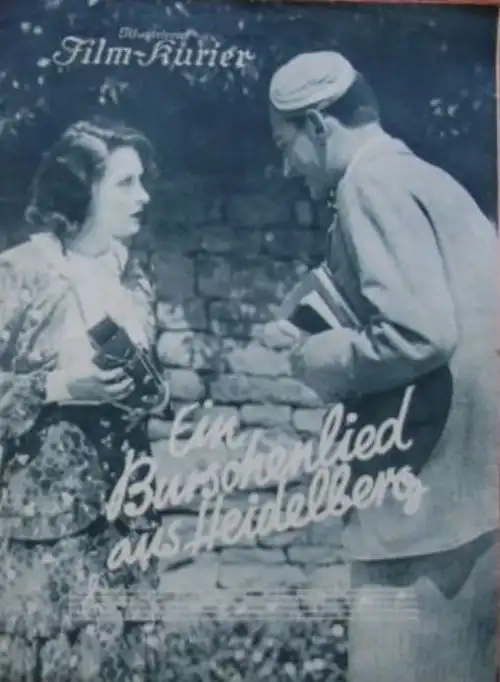
A definitive 7.4/10 rating for a film that redefined the boundaries of cult cinema. Ein Burschenlied aus Heidelberg remains a cornerstone of transgressive art.
If you are a Billy Wilder completist, then yes, you have to see this. Otherwise, it is mostly for people who don't mind old movies where characters burst into song every four minutes for no reason. 🍺
Most modern viewers will probably find it a bit *exhausting* because of how loud the singing gets. It is definitely not a movie for someone who wants a fast-paced thriller or a deep drama.
I sat down to watch this mostly because of the writing credits. Seeing Billy Wilder (or Billie, as he was back then) on a script from 1930 is like finding a hidden treasure, even if the treasure is a bit dusty.
The story follows an American boy who goes to Heidelberg. He thinks he is there to study, but the movie basically says *"forget the books, let's join a fraternity."*
The student life depicted here is all about those tiny colorful caps and sashes. Everyone looks like they are perpetually ready for a parade.
There is a lot of drinking. Like, a lot. I started wondering if the actors were actually getting tipsy on set because some of the group scenes feel very loose and uncoordinated.
Hans Brausewetter plays the lead, and he has this very wide-eyed, slightly confused look the whole time. It works, I guess, because his character is supposed to be a fish out of water.
But the real star for me was Betty Bird. She has this energy that actually cuts through the hiss and crackle of the old audio track. 🎙️
Speaking of the audio, it is pretty rough. This was 1930, so they were still figuring out where to hide the microphones.
There are moments where a character walks away from the center of the room and their voice just... vanishes into the background noise. It makes it feel very real, like you are eavesdropping on a conversation from ninety years ago.
The film reminds me a bit of the early sound experiments like Now You're Talking, where the novelty of hearing people speak was enough to carry a scene.
One scene that stuck with me involves a duel. It is handled with such weird formality that it almost feels like a dance. Nobody seems particularly worried about getting hurt; they just want to make sure their hats stay on straight.
The plot is paper thin. It is basically boy meets girl, boy joins club, boy drinks beer, girl gets mad, boy sings about it.
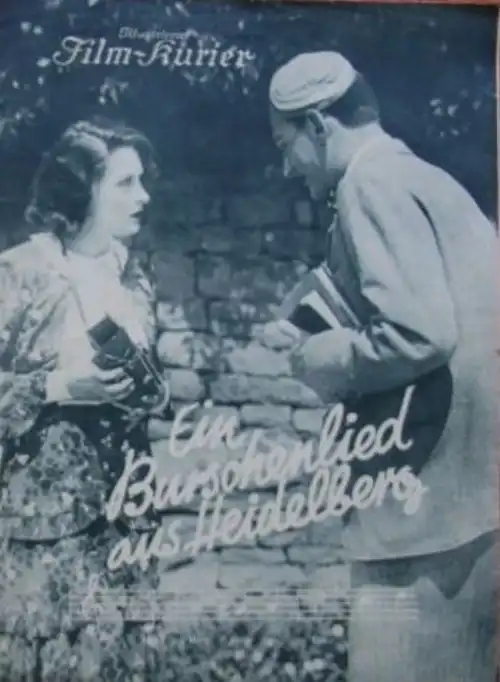
I noticed a few moments where you can see a hint of Wilder's later wit. There is a bit of cynical humor about the American's expectations versus the reality of German traditions that felt sharper than the rest of the script.
However, most of it is pure operetta fluff. It is very sugary. If you have a low tolerance for 1930s sentimentality, this will give you a headache. 🍭
The camera work is surprisingly mobile for such an early sound film. Usually, these movies are very static, like a filmed play, but the director actually tries to move through the crowds in the beer halls.
It gets a bit chaotic. Sometimes there are so many extras in the frame that you lose track of the main characters. It feels like the director just told everyone to "act German" and let the cameras roll.
There is a scene where they all sing the titular song, and it goes on for about two minutes too long. You can see some of the extras in the back looking like they are waiting for the director to yell cut.
It is not a masterpiece, but it has this strange, fuzzy charm. It is like looking at an old postcard that someone spilled a bit of lager on.
I found myself looking at the background details more than the main plot. The way the rooms are decorated, the weirdly high collars on the shirts, the clunky technology of the time.
If you liked The Tourist for its sense of place, you might enjoy the Heidelberg vibes here, even if it is a much older version of that travelogue feeling.
Is the ending satisfying? Not really. It just kind of stops once the songs run out. But that’s okay. You don't watch a movie like Ein Burschenlied aus Heidelberg for the narrative closure.
You watch it to see a young Willi Forst being charming and to hear what people thought was funny in the year 1930. 🥨
It is a movie that really, really loves its own noise. And honestly? After a while, the noise is kind of infectious. I wasn't humming the songs afterward, but I didn't regret the time spent in that weird, singing version of Germany.
It’s definitely better than some of the other stuff from that era, like Film 8, mostly because it actually has a personality, even if that personality is just "drunk college student."
Check it out if you find a decent copy. Just don't expect it to change your life. It’s just a nice little time capsule with some very silly hats.
IMDb 6.9
1927
Community
Log in to comment.