DbcultAccessing Vault...
Cult Review
Senior Film Conservator
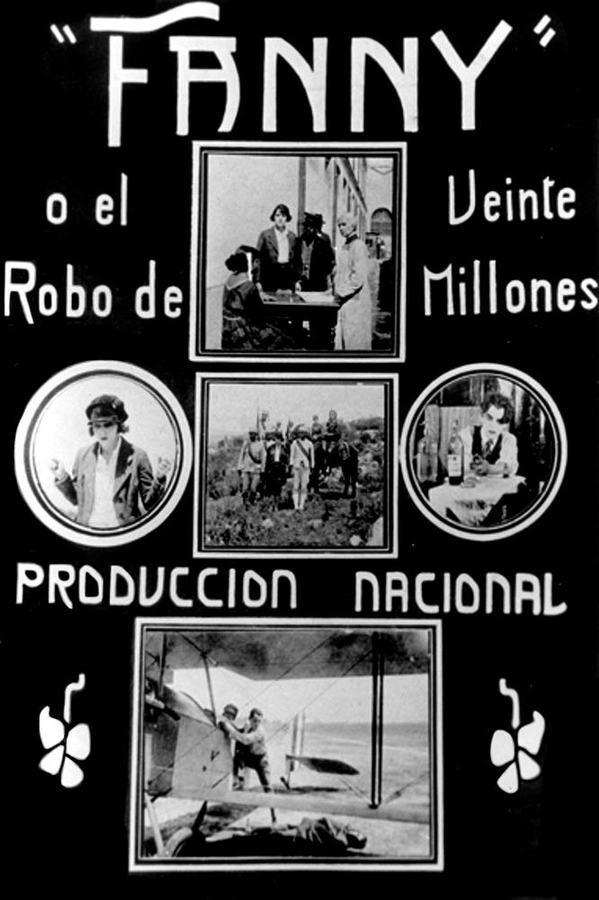
The first thing that strikes you is the smell—no, not onscreen, but in your memory, because Fanny somehow distills brine, cheap rum, and gardenia petals into a phantom musk that clings to the viewer long after the end credits fade to ember. Urriola, who also wrote, refuses to hand-hold; he flings us into a nameless port city where streetlights flicker like bad consciences and every doorway exhales cigar ghosts. Ana Cozzi’s Fanny enters barefoot on cracked cobblestone, heels slung over one shoulder, eyes already older than her throat. The camera, operated with handheld recklessness, can’t decide whether to worship or devour her—so it does both, gliding from the perspiration on her collarbone to the tremor in her lower lip without a shred of polite transition.
The film’s grayscale palette is no mere thrift; it’s alchemy. Shadows pool like spilled ink, then suddenly ignite into sodium flares when a tango bar door swings wide, spilling honeyed light that turns Fanny’s cheek into a living bruise. Production designer Olga Dubois scoured flea markets for mirrors with cracked silvering, so whenever Fanny confronts her reflection, we see a face splintered into three selves: the child she was, the commodity she’s become, and the myth she might yet weaponize. Compare this to Le rêve, where interiors glow with Pre-Raphaelite sumptuousness; here, splendor is scavenged, stitched from cigarette foil and moth-wing.
Nestor Vargas, as the stevedore lover, carries his muscles like borrowed coat-hangers; when he whispers te necesito, the phrase ricochets off iron hulls, sounding more like a threat than a promise. Eduardo Urriola’s own cameo as the banker is a masterclass in reptilian minimalism: a single adjusted cufflink communicates more predation than pages of dialogue. María Cozzi, Ana’s real-life sister, plays the tango singer whose voice is described in-film as “as if someone had kissed a wound and then apologized”; their fraternal duet—half lullaby, half indictment—bleeds through a cracked phonograph, summoning ghosts neither woman can afford to bury.
Some will pigeonhole Fanny as yet another parable of the fallen woman punished by narrative necessity. That reading is too velour, too neat. Notice how Urriola withholds the money shot: we never see the act of prostitution, only the economic vertigo that precedes and the hollowed-out calm that follows. The film’s real transaction is ocular—men pay to look, then pay again to forget. In one bravura sequence, Fanny strolls the docks as whistles crescendo; the camera flips 180°, turning catcalls into meteor-showers streaking past her ears, none sticking. She is commodified, yes, but never consumed; her interiority remains an unlisted port, off-map, tariff-free.
Composer Manuel Arvide employs only diegetic noise: accordion exhalations, anchor chains clanking like iron chandeliers, the susurrus of Fanny’s own breath inside a conch she lifts to her ear. The absence of non-diegetic score until the final ship-horn farewell renders every creak intimate, every silence accusatory. Contrast this with Midnight at Maxim’s, where orchestral strings coat despair in velvet; Urriola prefers the raw rasp of reality, a sonic exfoliant.
Chronology here resembles a deck of cards shuffled by a tipsy sailor. Mid-film, we jump from Fanny’s predawn scavenging to a childhood memory of candle-lit processions without the customary dissolve; the cut feels like a broken bone re-knitting at a wrong angle. Yet the fragmentation is never ostentatious—each rupture lands where a bruise already pulses, so time becomes corporeal. Cinephiles may hark back to Torchy Takes a Chance for its playful jump-cuts, but here the device aches rather than winks.
That silver locket—first seen clamped between Fanny’s teeth while she sews a rip in her only dress—functions as both McGuffin and heart. Inside: no lover’s portrait, just a mirror shard reflecting her eye, cyclops-like. Each time she considers pawning it, the frame dilates as if underwater, sound drops to a tinnitus hum. When she finally barters it for passage on the freighter, the frame cuts to black for a full four seconds—an eternity in a 78-minute film. We emerge to her face, wind-whipped, smiling with teeth that seem sharpened on the grindstone of every betrayal endured.
Where Lorraine of the Timberlands frames its heroine against majestic pines for frontier grandeur, Fanny traps its protagonist between rusted shipping containers, underscoring claustrophobia even in open air. Meanwhile The Love Charm cushions heartbreak in screwball zing; Urriola refuses anesthesia. And if Die Herrin der Welt flirts with colonial exoticism, Fanny stays stubbornly local, a microcosm of dockyard patriarchy that feels globally recognizable.
DP Ángel E. Álvarez lenses Fanny as though she were weather: sometimes a far-off squall, sometimes hail hammering the lens itself. Note the shot where she dances alone, arms wrapped around absence; the camera pivots 360° while focus drifts, so walls smear into cream, and only her silhouette retains sharpness—a negative space carved out of motion blur. It’s the visual equivalent of heartsickness, the world losing cohesion while longing stays cruelly crisp.
As the freighter chugs beyond the breakwater, Urriola denies us the reverse shot of the city receding; we stay on Fanny’s profile, sea spray jeweling her hair. Will she find work in the next port? Sell the only thing left—her name? The film doesn’t care to speculate. Instead, the last image freezes mid-gasp, celluloid grain jittering like plankton in moonlight, then burns white. No end title. Just the audience left holding the match.
Verdict: Fanny is a salt-stung aria scraped raw, a film that lodges under the ribcage and throbs every time the tide of your own life pulls too far out. It won’t comfort, but it will companion—like a scar that learns to speak.
IMDb 4.9
1927
Community
Log in to comment.