DbcultAccessing Vault...
Cult Review
Senior Film Conservator
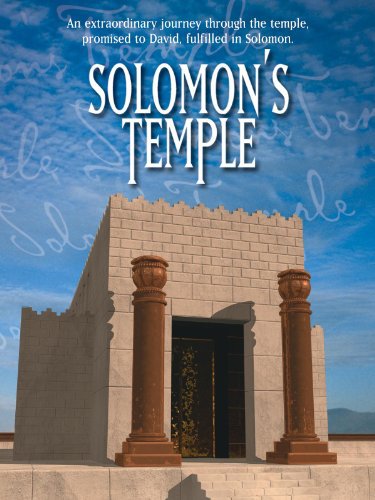
Imagine a documentary that refuses to behave like one. No talking-head scholars parked against library stacks, no reenactments where bearded extras murmur “lo” and “behold.” Instead, Solomon’s Temple arrives as a sensorial assault: cedar sawdust drifts across the lens like amber pollen, while hammer-chisel cadences sync with a heartbeat that may or may not be your own. The film’s governing conceit is disarmingly simple—what if we filmed the building the way Herzog would film a lost city, with reverence and sabotage in equal measure—yet the execution feels alchemical.
The camera enters the construction site at dawn, when Jerusalem’s ridge still smells of night-blooming jasmine and dew-slick limestone. A lone ox cart creaks; someone off-frame humps a cedar beam the color of bruised wine. No one speaks for minutes. The silence is not awkward but hieratic, as though language itself were scaffolding that must eventually come down. When the first voice finally intrudes—a craftsman comparing the Temple’s floor plan to the ribcage of a sleeping whale—it lands with the jolt of prophecy.
From there, the narrative splinters into contrapuntal currents. One strand tracks raw logistics: how many Phoenician sailors it takes to float a log the length of a trireme mast, how many tons of gold equal the annual GDP of a minor kingdom. Another strand is pure metaphysics: can a structure mortared by fear of divine abandonment ever feel like home? The film toggles between these registers without warning, so that a lecture on sacred cubits may abruptly yield to a blood-spattered priest confessing he no longer distinguishes between sacrificial smoke and funeral pyre.
Visually, the palette oscillates between three chromatic poles. Burnt umber dominates the construction montages—cedar, bronze, damp earth—while molten saffron floods the nocturnal dedication sequence, when ten thousand menorahs ignite like a galaxy compressed into a single room. Finally, cerulean obsidian saturates the post-destruction coda, as if history itself were drowning. These hues are not decorative; they function as emotional shorthand. You learn to dread the saffron because it heralds a transcendence that always costs someone a future.
“We built God a house,” a mason mutters off-camera, “and in return He moved into our nightmares.”
Where most religious documentaries genuflect toward cultural affirmation, this one insists on ambivalence. The Temple is simultaneously a marvel of engineering and a fiscal hemorrhage that bankrupts twelve tribes; a magnet for divine presence and a centrifuge that scatters peasants from their ancestral plots. The filmmakers achieve this dialectic by juxtaposing macro-shots of gold-overlaid cherubim with micro-shots of a widow’s cracked pottery outside the walls. One cut ricochets from the High Priest’s bejeweled ephod to a laborer’s inflamed blister, and the theological whiplash is more persuasive than any sermon.
Sound design deserves special reverence. When the curtain to the Holy of Holies is stitched, we hear not needle and thread but the slow tearing of cosmos—cello bow drawn across a cymbal’s edge. Later, when Babylonian armies breach the courts, the soundtrack drops to sub-audible frequencies; your chest feels the invasion before your ears do. The result is a documentary that you sense rather than watch, like a bone conduction hymn.
Pacing follows a liturgical rhythm: forty-minute ascent, seven-minute climax, twenty-minute devastation. The middle section—Solomon’s dedicatory prayer—could have ossified into tableau. Instead, the director loops the prayer across multiple timelines: we see Solomon mouth the words, we see a 19th-century orientalist decipher them, we see a modern Israeli child mouth them again in a secular school playground. The montage suggests that consecration is less event than echo, a phonograph needle stuck in history’s groove.
Comparisons? If The Thunderbolt weaponized silence to indict patriarchal rage, and The Seven Sisters liquefied melodrama into pure chromatic pulse, then Solomon’s Temple hybridizes both tactics: it weaponizes silence to indict theology, liquefies architecture into pure moral pulse. Curiously, the film also shares DNA with Cocain’s toxic shimmer—both works understand that grandeur and ruin are conjugations of the same verb.
Yet the doc’s most transgressive move lies in its refusal to resolve the central tension: did the Temple contain divinity or confine it? The final shot lingers on a post-exilic Jew tracing foundation stones now repurposed as a Persian governor’s courtyard. His finger hesitates above a mezuzah groove, and the screen cuts to black before contact. You leave the theater unsure whether you have witnessed birth or autopsy, and that ambiguity feels like the only honest response to a building that once claimed to hug heaven inside its rafters.
Flaws? Minimal but worth noting. The voice-over occasionally over-marinates in adjectives (“a theophany of cedar and shock”), and the decision to omit female voices until minute 73 risks replicating the patriarchal exclusions the film critiques. Still, these are hairline cracks in an otherwise monolithic achievement.
Should you stream it? If you crave the narcotic comfort of answers, scroll on. If you can stomach a documentary that handles holy ground like a crime scene, press play. Just know that afterward Jerusalem will smell different—like cedar soaked in litigation—and you may catch yourself counting cubits in grocery aisles, wondering what altars we erect out of cereal boxes and debt.
Verdict: essential viewing for anyone who suspects that architecture begins in longing and ends in subpoena.
IMDb 6.8
1930
Community
Log in to comment.