DbcultAccessing Vault...
6.4/10
Senior Film Conservator
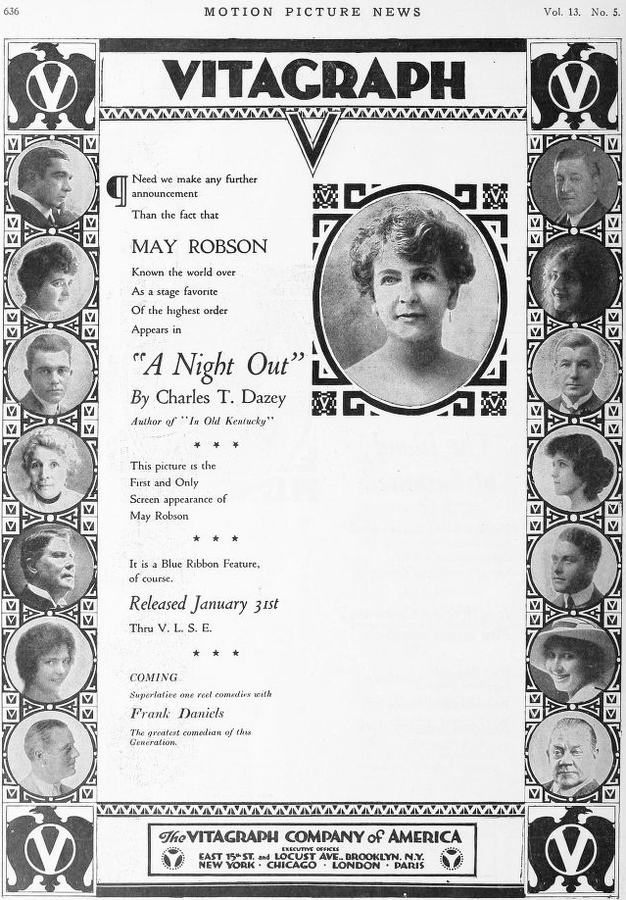
A definitive 6.4/10 rating for a film that redefined the boundaries of cult cinema. A Night Out remains a cornerstone of transgressive art.
In the annals of early cinema, where narratives often gravitated towards broad comedy or melodrama, a film like 'A Night Out' emerges as a surprisingly nuanced and deeply affecting character study. It's a testament to the enduring power of simple storytelling when imbued with genuine human emotion, particularly when that emotion is channeled through the formidable talent of its lead, May Robson. This isn't merely a quaint relic from a bygone era; it's a vibrant, often humorous, and ultimately profound meditation on the human spirit's capacity for rejuvenation, regardless of age. The film invites us to reconsider the societal constructs that often relegate the elderly to the periphery, instead placing a grandmother, usually a figure of quiet domesticity, squarely at the epicenter of an exhilarating personal revolution.
At its heart, 'A Night Out' is a narrative built on the quiet rebellion of a soul yearning for something more. We are introduced to a grandmother, a character whose life, we surmise, has been a tapestry woven with routine, responsibility, and perhaps, a quiet resignation to the expected trajectory of old age. Her world is small, predictable, and devoid of the spontaneous joy that often defines youth. However, a singular, almost imperceptible shift occurs—a spark of curiosity, a whisper of longing for something beyond her familiar four walls. This isn't a grand, pre-meditated escape, but rather an impulsive, almost accidental venture into the unknown. The genius of the film lies in portraying this transition with such delicate authenticity; it's not a sudden transformation but a gradual blossoming of a spirit long dormant. Her decision to simply 'have a night out' is loaded with implications, representing a breaking of invisible chains, a challenge to the unspoken rules that dictate how one should age.
The adventure itself is less about dramatic events and more about the internal landscape of discovery. It’s the thrill of new sights, the unexpected encounters, the sheer novelty of being a spectator, and then a participant, in the vibrant tapestry of urban nightlife. The film doesn't rely on elaborate plot contrivances; instead, it finds its drama in the subtle reactions of its protagonist, her wide-eyed wonder, her tentative steps into unfamiliar territory, and the burgeoning confidence that radiates from her as the evening progresses. This journey, while physically confined to a single night, symbolizes a profound psychological shift, a reclaiming of agency that is both inspiring and deeply moving. It reminds us that the human desire for experience and connection knows no age limit, a theme subtly explored in another era's societal constraints in The College Widow, though 'A Night Out' applies this lens to a vastly different stage of life.
The undeniable anchor of 'A Night Out' is the magnificent performance by May Robson. As a seasoned stage actress who transitioned to film, Robson brings an unparalleled depth and authenticity to her role. In an era where silent film acting could often veer into the melodramatic or exaggerated, Robson delivers a masterclass in subtle, internal expression. Her face, a canvas of nuanced emotions, conveys everything from initial trepidation and curiosity to burgeoning delight and unadulterated joy. We see the flicker of a smile, the widening of her eyes, the slight tilt of her head—each gesture a carefully calibrated brushstroke painting a vivid portrait of her character's inner world.
Robson doesn't just act; she embodies the grandmother, allowing us to feel her decades of quiet existence, her momentary hesitation, and her ultimate exhilaration. Her performance transcends the need for spoken dialogue, communicating a rich inner monologue through her physicality and facial expressions alone. It’s a performance that speaks volumes about the human condition, making her character instantly relatable and deeply sympathetic. Her portrayal is a powerful argument for the expressive potential of the silent screen, rivaling the dramatic intensity one might find in a mystery like A London Flat Mystery, but here, the mystery is internal—the grandmother's own awakening.
While Robson is the undisputed star, the film benefits from a capable supporting cast that populates her night out with various characters, each contributing to the mosaic of her adventure. Arthur Cozine, Hughie Mack, Frank Bunny, Flora Finch, Eva Taylor, William Shea, Charles Brown, Ethel Corcoran, Kate Price, Jack Storey, George Cooper, and Belle Bruce, though perhaps in smaller roles, all play their part in creating a believable and engaging backdrop for the grandmother's journey. Their interactions, however brief, serve to highlight her newfound independence and her ability to navigate a world that was once alien to her. The film's strength lies in these vignettes, demonstrating how a single individual's experience can be enriched by the myriad presences encountered in the bustling anonymity of a city night.
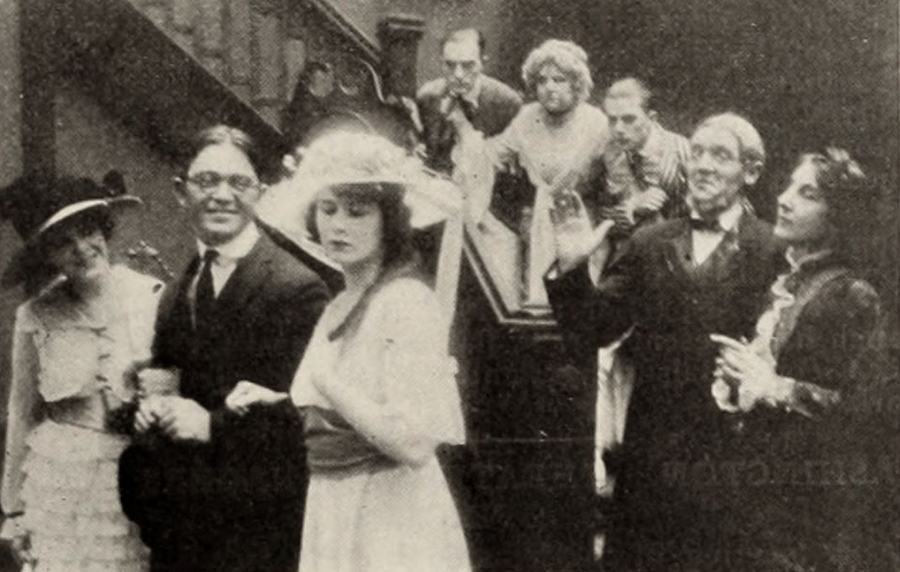
The writing, credited to Frank Mitchell Dazey, May Robson herself, and Charles T. Dazey, showcases a keen understanding of character development and narrative pacing. The story unfolds naturally, avoiding forced humor or contrived situations. Instead, the humor arises organically from the grandmother's genuine reactions to her surroundings, and the emotional resonance comes from her quiet triumphs. The collaborative effort in crafting such a heartfelt story, especially with the lead actress contributing to the script, undoubtedly infused the project with a deeper level of authenticity and personal connection. This collaborative spirit, where an actor's insight informs the narrative, can often elevate a film, much like the focused storytelling in a tight suspense piece such as Time Lock No. 776, but here it's applied to character depth rather than plot mechanics.
Though details on specific cinematographic techniques from this era can be sparse, it's evident that 'A Night Out' makes effective use of the visual language available to early filmmakers. The framing and editing are designed to keep the focus squarely on the grandmother's perspective, drawing the audience into her experience. The film likely employed practical sets and locations to create the atmosphere of a bustling night, allowing the viewer to feel the energy and excitement of her surroundings. The visual storytelling complements Robson's performance, ensuring that every gesture and reaction is clearly communicated, bridging the gap of silence with visual clarity and emotional impact. The simplicity of its production often belies the profound effect it achieves, a common thread in many early films, even those with more elaborate plots like The Vanderhoff Affair, where the focus remains on compelling narrative.
The film's thematic resonance extends far beyond its historical context. It speaks to universal desires: the longing for adventure, the need for personal autonomy, and the joy of breaking free from societal expectations. In an age where youth is often fetishized and old age pathologized, 'A Night Out' offers a refreshing counter-narrative, celebrating the potential for growth and discovery at any stage of life. It’s a quiet affirmation that life’s most profound moments often stem from the simplest of decisions, from daring to step outside one's comfort zone, even if just for a single evening. This theme of unexpected journey and self-discovery resonates with narratives like The Ne'er Do Well, where characters find themselves in unforeseen circumstances leading to personal evolution, though 'A Night Out' grounds its adventure in a more intimate, internal quest.
'A Night Out' is more than just a historical curiosity; it's a timeless piece of cinema that continues to charm and inspire. It reminds us of the power of a well-told story, driven by a compelling character, to transcend the limitations of its medium and its era. It stands as a testament to the talent of its creators, particularly May Robson, whose performance is a masterclass in silent film acting. The film’s quiet wisdom and gentle humor offer a refreshing perspective on aging, challenging preconceived notions and celebrating the enduring human capacity for joy and adventure. It's a film that encourages us to look beyond the surface, to appreciate the richness of inner lives, and to never underestimate the transformative power of a single, audacious decision.
This film, in its unassuming brilliance, carves out a significant niche in the early cinematic landscape. It's not a grand epic or a suspenseful thriller like Der Hund von Baskerville, but a deeply personal, intimate narrative that connects with audiences on a fundamental human level. Its message of embracing life's possibilities, irrespective of age, remains profoundly relevant, urging viewers to find their own 'night out'—their own moment of liberation and joy. The gentle humor and profound emotional depth, reminiscent of the human connections explored in Hearts United, are what give 'A Night Out' its lasting appeal. It’s a film that proves that sometimes, the greatest adventures are not found in distant lands or dramatic confrontations, but in the quiet courage to simply step out of one’s routine and embrace the unknown, even if it’s just for a single, magical evening.
In summary, 'A Night Out' is a delightful and significant piece of early cinema. Its understated charm, coupled with May Robson's captivating performance, makes it a film that resonates long after the credits roll. It’s a beautiful reminder that life’s greatest adventures can often be found in the most unexpected places and at the most unexpected times, a quiet triumph that continues to speak volumes about the human spirit's boundless capacity for wonder and joy. This film deserves to be rediscovered and celebrated for its timeless message and its masterful execution of a simple, yet profound, story.
IMDb 7.1
1934
Community
Log in to comment.