DbcultAccessing Vault...
5.9/10
Senior Film Conservator
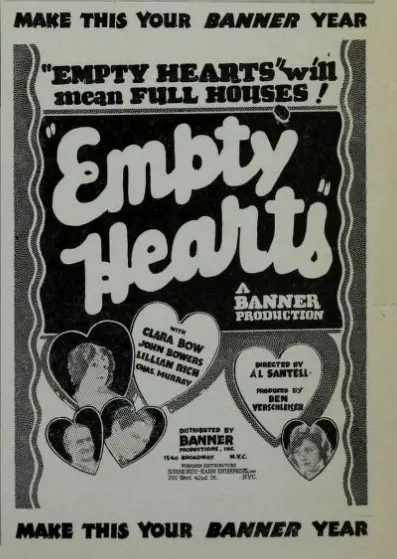
A definitive 5.9/10 rating for a film that redefined the boundaries of cult cinema. Empty Hearts remains a cornerstone of transgressive art.
In the pantheon of 1920s cinema, few titles possess the evocative simplicity of Empty Hearts. Released in 1924, this film serves as a poignant bridge between the Victorian-inflected dramas of the previous decade and the burgeoning modernism of the Jazz Age. It is a work that grapples with the ephemeral nature of joy and the heavy, often suffocating, weight of memory. Unlike the more kinetic energy found in A Yankee Go-Getter, Empty Hearts leans heavily into the internal landscape of its protagonist, Milt Kimberlin, portrayed with a somber intensity by John Bowers.
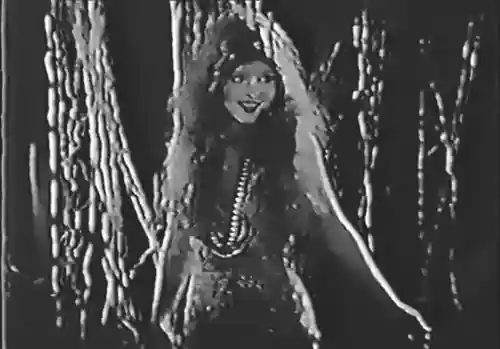
The film’s opening act is a masterclass in atmospheric storytelling. We are introduced to a world of cabaret smoke and rhythmic abandon, a setting that would soon become Clara Bow’s natural habitat. Here, as Rosalie, Bow exhibits the nascent sparks of the 'It' girl persona, though tempered by the dramatic requirements of a tragic arc. Her chemistry with Bowers provides the necessary emotional stakes; without their initial, desperate happiness, the subsequent hour of filmic yearning would lack its foundation. The transition from the bohemian warmth of the cabaret to the cold, sterile hallways of Milt’s later success is not merely a plot point, but a visual metamorphosis that defines the film’s aesthetic.
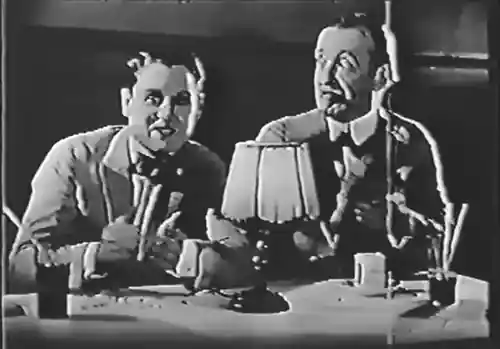
While Lillian Rich carries the majority of the film’s screen time as Madeline, the specter of Clara Bow’s Rosalie looms over every frame. It is a fascinating structural choice. Bow’s presence is a haunting melody that Milt cannot stop humming, even as he builds a life of luxury. In many ways, the film explores the toxicity of nostalgia. Milt is not just a man who lost his wife; he is a man who has deified a moment in time, rendering his current reality—and his current wife—pale by comparison. This thematic depth elevates the film above the standard melodrama found in contemporaries like Boots or the more straightforward action of The Blue Streak.
The cinematography utilizes shadow and light to delineate these two eras of Milt’s life. The early scenes are soft-focus, almost dreamlike, whereas the later sequences in the Kimberlin mansion are sharp, angular, and imposing. This visual language communicates Milt’s alienation from his own success. He has achieved the American dream, yet he wanders through his palatial home like a specter. The direction by Victor Halperin (though uncredited in some records, the stylistic fingerprints are evident) ensures that the audience feels the claustrophobia of wealth without purpose.
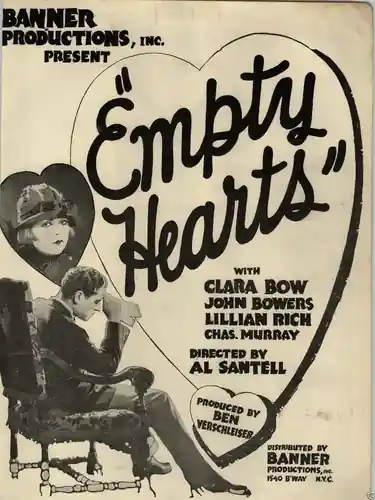
The introduction of the blackmail plot, orchestrated by a villainous John Miljan, shifts the film from a character study into a high-stakes drama. The forged letter, a classic trope of the era, serves as the ultimate test of Milt’s character. Does he believe in the woman he loved, or the evidence presented by a shadow? The tragedy lies in his immediate fall into doubt. His inability to defend Rosalie’s memory—and by extension, his failure to trust Madeline—reveals the cracks in his emotional armor. It is a far more nuanced conflict than the physical brawls seen in The Brute Breaker.
Lillian Rich delivers a performance of quiet dignity as Madeline. She is the 'other woman' in her own marriage, a role that requires a delicate balance of resentment and devotion. When she leaves Milt, it isn't out of spite, but out of a realization that she cannot inhabit a space already occupied by a ghost. Her departure is the catalyst for Milt’s eventual awakening. The narrative suggests that one cannot find new happiness until the old ghosts are laid to rest, a sentiment echoed in the thematic underpinnings of The Discard.
When examining Empty Hearts against the backdrop of 1924, its sophistication becomes apparent. While Jumping Beans offered lighthearted distraction and Iwami Jûtarô provided historical spectacle from the East, Empty Hearts focused on the burgeoning psychological drama that would define the next decade of filmmaking. The writing by Evelyn Campbell and Adele Buffington avoids the overly simplistic morality of films like A Flirt There Was, opting instead for a messy, human exploration of grief.
The film also shares an interesting DNA with Bucking Broadway, specifically in its treatment of the divide between different social spheres. However, where Ford’s work often looks outward at the landscape, Empty Hearts looks inward at the psyche. Even when compared to international fare like Les frères corses or the politically charged Dzhymmi Hihhins, this film maintains a uniquely intimate focus on the domestic sphere as a site of profound existential struggle.
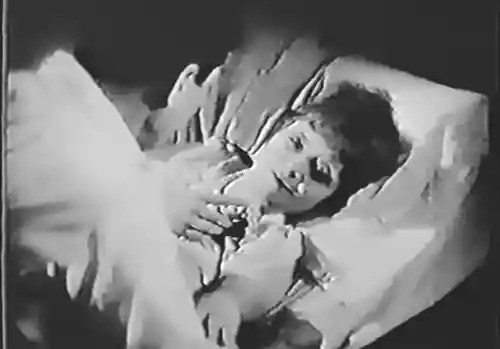
John Bowers was an actor of significant range, and here he portrays a man hollowed out by time with remarkable restraint. His face, often caught in tight close-ups, becomes a map of regret. It is a performance that stands in stark contrast to the broader comedic styles seen in Beach Nuts or Up in the Air. Bowers understands that the silence of the medium requires a more nuanced physical language, one that he deploys to great effect during the film’s climax.
The supporting cast, including the dependable Charles Murray and Joan Standing, provide a necessary grounding for the film’s more operatic tendencies. Even the child actor Buck Black contributes to the emotional stakes, representing the future that Milt is nearly willing to sacrifice for his obsession with the past. The pacing, though deliberate, never feels stagnant. It mirrors the slow process of emotional recovery, a journey that is far more difficult than the whimsical adventures of Join the Circus or the domestic comedy of Why Smith Left Home.
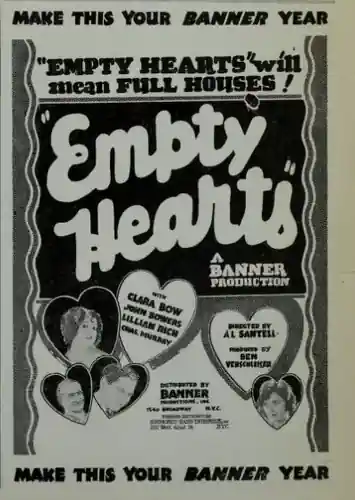
Ultimately, Empty Hearts is a film about the courage required to be happy in the present. It acknowledges that while the past may be beautiful, it is also a graveyard. Milt’s journey from the cabaret to the mansion and finally to a place of emotional equilibrium is a universal one. The film’s resolution, while satisfying the requirements of a happy ending, feels earned because of the arduous psychological terrain the characters have traversed. It is a testament to the power of silent cinema that such complex themes can be conveyed with such clarity and emotional force.
For modern viewers, Empty Hearts offers more than just a glimpse of a young Clara Bow. It offers a sophisticated meditation on the nature of love and the resilience of the human spirit. In a world that often feels as hollow as Milt’s mansion, the film’s message—that hearts can be refilled, that trust can be rebuilt, and that the past does not have to dictate the future—remains as relevant today as it was in 1924. It stands as a vital piece of cinematic history, a work of art that captures the delicate, flickering light of the human soul in the face of darkness.
As we look back at the silent era, we often focus on the spectacles and the slapstick. Yet, it is films like Empty Hearts that remind us of the medium’s capacity for deep, resonant empathy. It is a film that demands to be watched not just with the eyes, but with the heart—filling the void left by time with the timeless beauty of human connection.
IMDb —
1916
Community
Log in to comment.