DbcultAccessing Vault...
Cult Review
Senior Film Conservator
The year 1911 was a watershed moment for the cinematic medium, particularly within the Nordic sphere. As the global audience began to pivot from the primitive 'cinema of attractions' toward more sophisticated narrative structures, Denmark emerged as a formidable titan of the avant-garde. En hjemløs Fugl stands as a testament to this era of rapid evolution, a film that eschews the bombast of its contemporaries for a more nuanced, interior resonance. While the industry was seeing the rise of sensationalism in works like A Victim of the Mormons, this particular piece directed its gaze inward, examining the psychological toll of social exile.
The screenplay, penned by the collaborative duo of Erling Stensgaard and Ljut Steensgaard, is a marvel of economy and emotional weight. In an era where intertitles were often used as crutches for clumsy storytelling, the Stensgaards understood the power of the visual image to convey complex sociological themes. The narrative doesn't merely tell the story of a girl without a home; it interrogates the very concept of 'home' as a construct of privilege. The dialogue, though silent, is felt through the rhythmic pacing of the scenes, creating a cinematic syntax that feels remarkably modern.
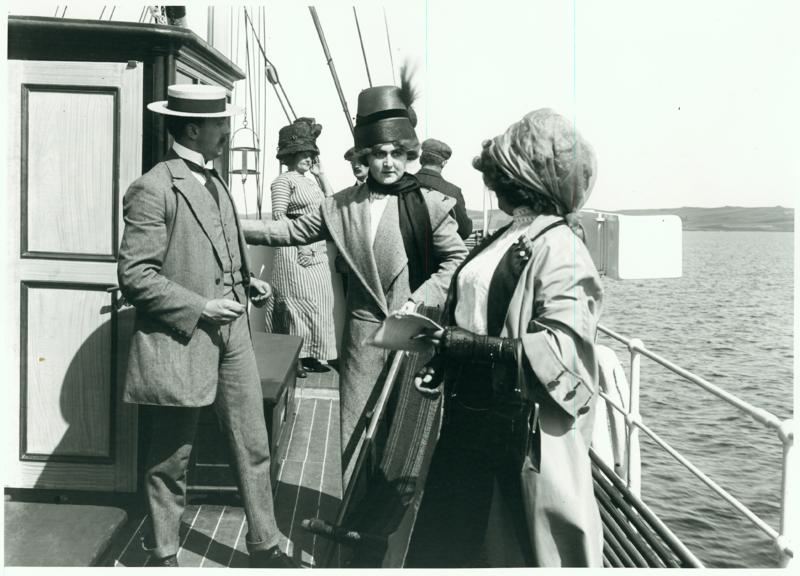
One cannot discuss the script without acknowledging the thematic parallels to other early works of social realism. If The Story of the Kelly Gang was the birth of the outlaw epic, En hjemløs Fugl is the birth of the domestic tragedy. It lacks the explosive violence of the Australian frontier but replaces it with a quiet, devastating erosion of the self. The protagonist’s journey is not one of physical conquest but of spiritual survival, a theme that would later become a cornerstone of the Danish cinematic identity.
The casting of Philip Bech brings an undeniable weight to the production. Bech, a veteran of the stage and screen, possessed a face that seemed carved from the very granite of the Danish coastline. His performance here is one of restraint; he understands that in the silent era, a twitch of the jaw or a furrowed brow carries more narrative weight than a thousand shouted words. He acts as a foil to the more kinetic energy of the younger cast members, providing a grounding presence that keeps the film from drifting into melodrama.
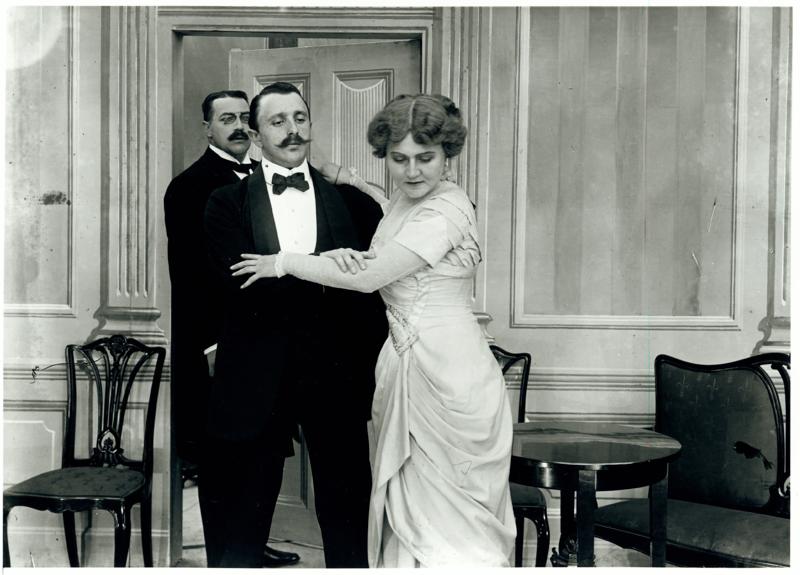
Comparing Bech’s work here to his other performances, or even to the histrionics found in The Black Dream, one sees a deliberate move toward naturalism. There is a sense of 'being' rather than 'acting' that permeates his scenes. This was a radical departure from the theatrical traditions that still gripped much of European cinema at the time. Bech’s ability to project a sense of history and lived experience onto his characters is what makes En hjemløs Fugl feel like a window into a real, breathing world rather than a staged play.
Martha Helsengreen delivers a performance that is both ethereal and heartbreakingly grounded. As the 'homeless bird,' she embodies the precariousness of the human condition. Her movements are bird-like—darting, hesitant, always ready to take flight at the first sign of danger. This physical characterization is essential because it bridges the gap between the literal plot and the metaphorical undertones of the film. Helsengreen’s eyes are the emotional compass of the story, guiding the audience through the labyrinth of her character's misfortune.
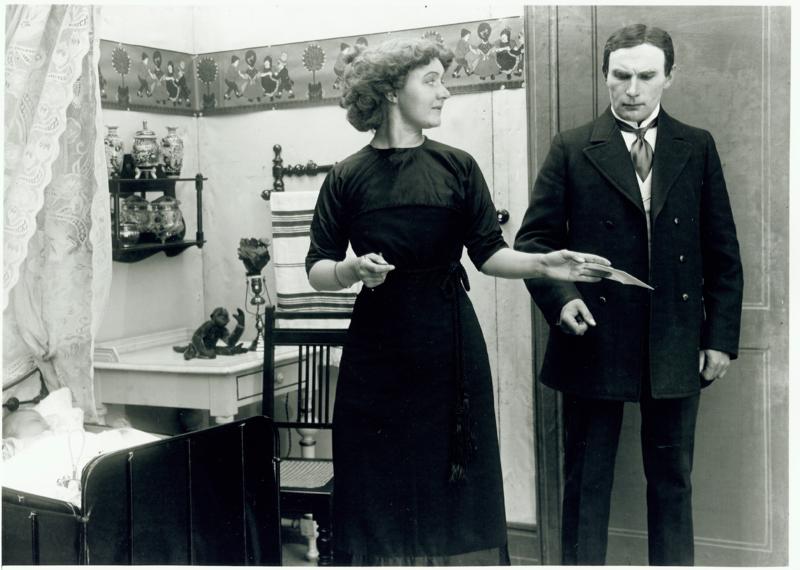
In the pantheon of early silent actresses, Helsengreen deserves a place alongside the more recognized names of the era. While her contemporaries might have leaned into the 'damsel in distress' trope, she imbues her character with a quiet resilience. She is not merely a victim of her circumstances; she is an observer of them. This agency, however limited by the social structures of 1911, gives the film its moral backbone. It is a performance of profound empathy, one that resonates even more strongly when viewed alongside the more stylized acting in Balletdanserinden.
The cinematography of En hjemløs Fugl is a masterclass in the use of natural light and shadow. The filmmakers utilize the gray, overcast skies of Denmark to create a palette of melancholia. There is a specific scene involving a window—a common motif in early Danish film—where the light filters through the glass, illuminating the dust motes in the air while leaving the protagonist’s face in partial shadow. This visual metaphor for the 'unseen' member of society is executed with a sophistication that belies the film's age.
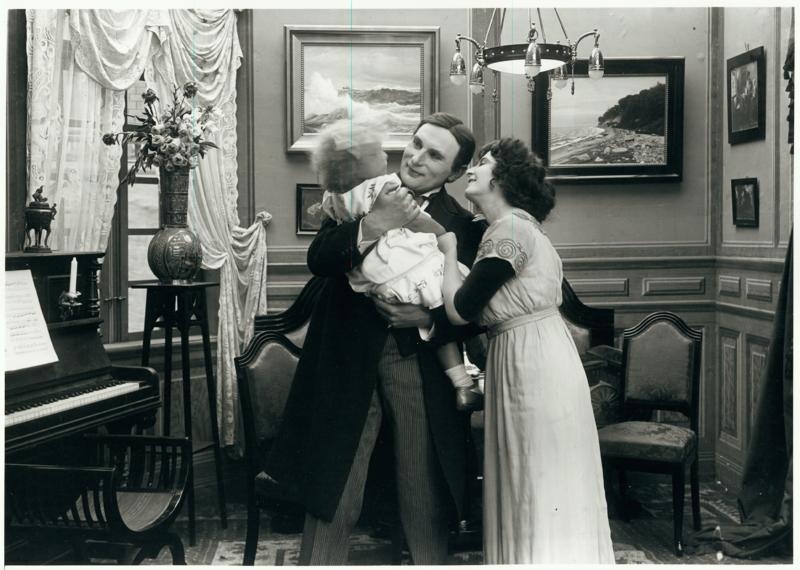
The blocking of the scenes often places the characters in wide, empty spaces, emphasizing their isolation. This is a sharp contrast to the crowded, bustling frames of films like Krybskytten, which focused more on action and external conflict. In En hjemløs Fugl, the conflict is internal, and the camera respects that by giving the actors the space to let their emotions breathe. The use of depth within the frame—placing characters in the foreground and background to create a sense of social hierarchy—is a subtle but effective technique that enhances the narrative's themes of exclusion.
To truly appreciate En hjemløs Fugl, one must look at the broader landscape of the time. The world was still reeling from the technological shocks of the previous decade. Cinema was no longer a novelty; it was becoming a language. While American films were beginning to experiment with cross-cutting and faster editing, the Danes were perfecting the 'tableau' style—long, static shots that invited the viewer to scan the entire frame for meaning. This film is a prime example of why the Danish style was so influential on the later German Expressionists.
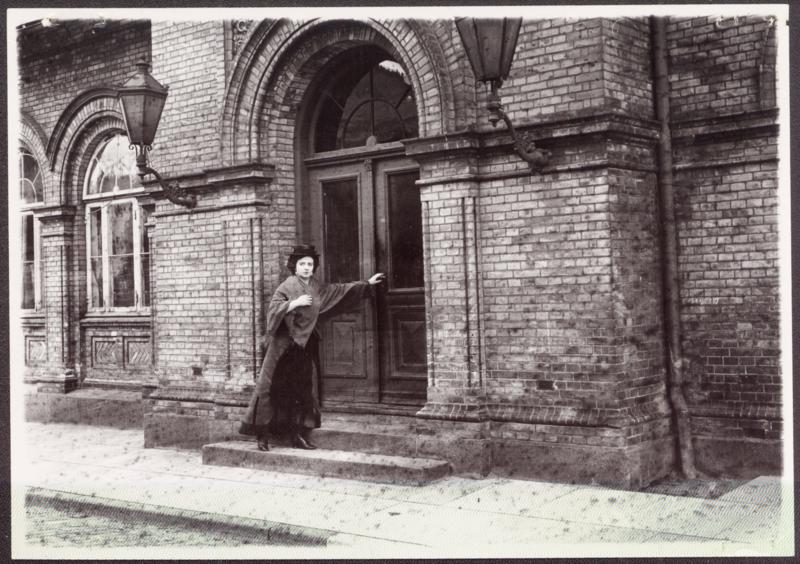
When we look at The Last Victim of the White Slave Trade, we see a film that deals with similar themes of female exploitation and social peril. However, En hjemløs Fugl feels more personal, less like a cautionary tale and more like a character study. It doesn't rely on the 'white slave' hysteria of the time to generate interest; instead, it relies on the universal human fear of being unloved and unwanted. This shift from the sensational to the psychological is what marks the transition of cinema into a true art form.
In the grand tapestry of film history, En hjemløs Fugl is a crucial thread. It represents the moment when the camera stopped being a mere recording device and started being a tool for empathy. The performances of Marie Niedermann and Kamma Creutz Nathansen provide the necessary supporting architecture for this emotional edifice, each adding a layer of complexity to the film’s social critique. Niedermann, in particular, offers a nuanced portrayal of the societal pressures that force individuals into impossible choices.
The film’s resolution is not a tidy one. It does not offer the easy comfort of a happy ending, nor does it indulge in the nihilism of total destruction. Instead, it leaves the viewer with a sense of the 'unresolved'—a reflection of the reality of the disenfranchised. This lack of closure is perhaps the film's most daring choice. It forces the audience to carry the weight of the 'homeless bird' long after the final frame has flickered out. It is a haunting, beautiful, and profoundly essential piece of cinematic history that demands to be seen not just as a relic, but as a living piece of art.
Ultimately, En hjemløs Fugl is a meditation on the ephemeral nature of belonging. In a world that is constantly shifting, where the old certainties of the 19th century were being replaced by the industrial coldness of the 20th, the film asks a simple but devastating question: Where does one go when there is nowhere left to land? It is a question that remains as relevant today as it was in 1911, proving that while the technology of cinema may change, the human heart remains the same. This is not just a film for historians; it is a film for anyone who has ever felt like an outsider looking in through a frosted window.
Review by the Cinematic Archeologist. All rights reserved. For more deep dives into the silent era, visit our archives.
IMDb —
1932
Community
Log in to comment.