DbcultAccessing Vault...
5.8/10
Senior Film Conservator
A definitive 5.8/10 rating for a film that redefined the boundaries of cult cinema. Enemies of Children remains a cornerstone of transgressive art.
When the flickering reels of early twentieth‑century cinema glide into view, they often carry the weight of societal anxieties, familial mythologies, and the yearning for redemption. Enemies of Children, a 1921 silent drama penned by George Gibbs, Lillian Ducey, and John M. Voshell, exemplifies this alchemy. The film unfolds around a nameless waif, her origins shrouded in whispers and conjecture, who is rescued from the unforgiving alleys of an unnamed metropolis and ushered into the genteel chambers of a wealthy benefactor. What follows is a study in nurture versus nature, a meditation on class mobility, and a quietly subversive interrogation of gendered expectations.
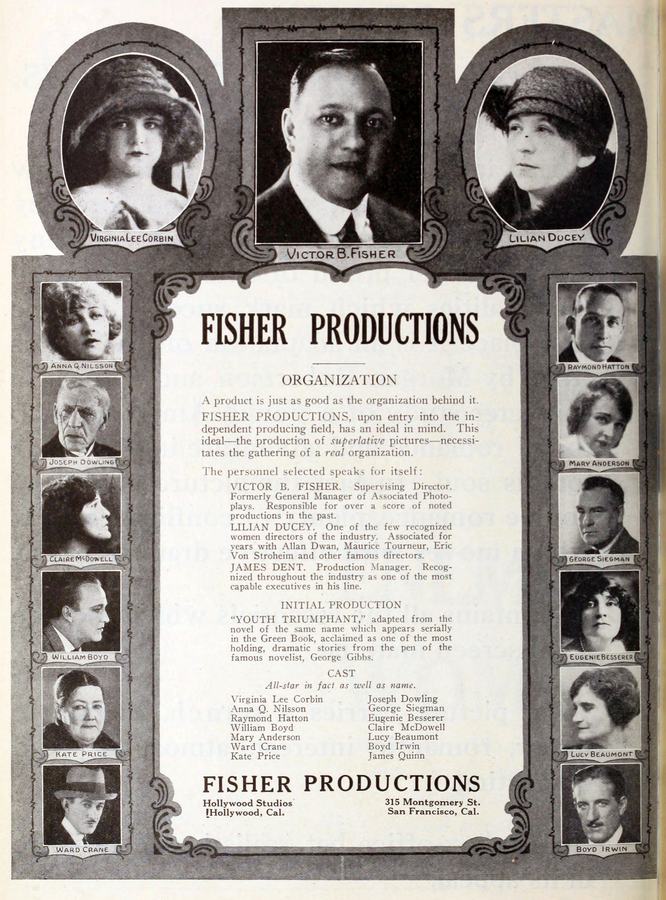
\n\nThe story is meticulously scaffolded. The opening sequences, shot with a chiaroscuro sensibility that accentuates the stark contrast between soot‑streaked streets and the gilded interiors of the adoptive family, immediately establish a visual metaphor for the protagonist’s inner dissonance. Claire McDowell, embodying the matriarchal figure, exudes a benevolent authority that both comforts and constrains the child, played with an uncanny blend of innocence and steel by Virginia Lee Corbin. Their relationship, while tender, is laced with an undercurrent of expectation: the child must become the embodiment of the family’s unspoken aspirations.
\n\nThe plot’s turning point arrives when the young woman, now a poised adult, discovers a cryptic locket hidden within a drawer—a relic that hints at a lineage far removed from the modest upbringing she has known. The ensuing investigation, deftly paced, propels the narrative into a series of revelations that echo the investigative arcs of contemporary works such as The Deep Purple. The mystery is not merely genealogical; it interrogates the social hierarchies that have dictated her life’s trajectory.
\n\nThe ensemble cast delivers performances that transcend the limitations of silent storytelling. Boyd Irwin, as the steadfast guardian, conveys stoic resolve through measured gestures, while William Boyd’s charismatic presence adds a layer of romantic tension that feels both inevitable and earned. Anna Q. Nilsson’s portrayal of the enigmatic aunt, whose motives oscillate between protective and manipulative, is a masterclass in subtlety; her eyes alone narrate a saga of concealed affection and strategic calculation.
\n\nEugenie Besserer, renowned for her role in A Daughter of France, brings gravitas to the role of the family’s confidante, her voice—though silent—resonating through the cadence of her intertitles. The supporting cast, including the wiry George Siegmann and the sprightly Mary Anderson, populate the film’s world with a realism that anchors the more melodramatic elements.
\n\nCinematographer John M. Voshell (also a co‑writer) employs a palette that oscillates between the muted greys of urban squalor and the warm amber tones of domestic serenity. The use of deep focus in the family’s drawing‑room scenes invites the viewer to linger on the intricate set pieces—velvet drapes, polished mahogany, and the ever‑present portrait that seems to watch over the protagonist’s journey. This visual language subtly mirrors the thematic dichotomy of concealment versus revelation.
\n\nThe film’s climactic revelation—unveiling the protagonist’s true parentage—occurs in a sun‑drenched garden, the camera tracking her as she moves from shadowed hedges into open light. The transition is symbolic: the darkness of her unknown past yields to the illumination of self‑knowledge, a motif echoed in the cinematography of Frivolité where light becomes a character in its own right.
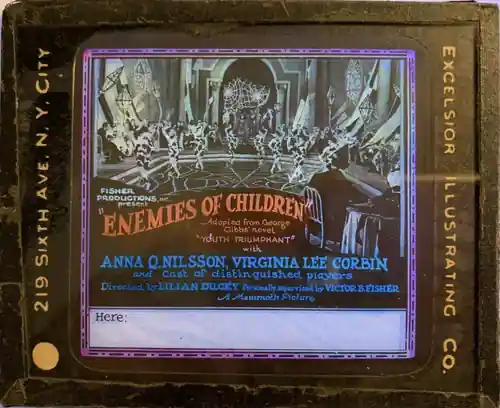
The screenplay, a collaborative effort, balances the investigative intrigue of the protagonist’s lineage with the emotional stakes of her impending marriage. The dialogue—rendered through intertitles—avoids the pitfalls of overwrought prose; instead, it employs concise, evocative phrasing that allows the actors’ physicality to carry the emotional weight. The mystery element, while reminiscent of early detective serials, is grounded in personal stakes rather than sensational crime, granting the narrative a unique intimacy.
\n\nComparisons to Birds of a Feather are inevitable, as both films explore the tension between societal expectations and individual desire. However, Enemies of Children distinguishes itself by rooting the mystery in familial heritage rather than external conflict, thereby offering a more introspective resolution.
\n\nReleased in the early 1920s, a period marked by post‑war optimism and burgeoning social mobility, the film captures the zeitgeist of an era where class boundaries were both rigid and increasingly porous. The narrative’s focus on adoption and the reconstruction of identity anticipates later cinematic explorations of similar themes, such as in A Youthful Affair. Moreover, the film’s subtle critique of aristocratic pretension aligns it with the satirical undercurrents of The Foolish Age.
\n\nFrom a preservation standpoint, the surviving prints of Enemies of Children demonstrate the resilience of nitrate film stock, offering modern audiences a glimpse into the craftsmanship of early Hollywood. Restoration efforts have highlighted the film’s original tinting—a warm sepia in domestic scenes, cool blue in night sequences—underscoring the filmmakers’ sophisticated use of color symbolism long before the advent of Technicolor.
\n\nContemporary reviews praised the film’s emotional depth and the deft performances of its leads, noting especially the “poignant portrayal of a girl torn between the love of her adoptive family and the pull of her mysterious origins.” Modern critics, revisiting the work through a feminist lens, commend its nuanced depiction of a woman asserting agency over her destiny—a rarity in an era dominated by patriarchal narratives.
\n\nThe film’s pacing, however, has attracted occasional critique for its leisurely exposition. Yet, this measured tempo allows for a contemplative immersion, granting viewers the space to savor each revelation. In an age of rapid editing, the deliberate rhythm of Enemies of Children feels almost revolutionary.
\n\nWhen juxtaposed with The Shark, which leans heavily into melodramatic peril, Enemies of Children offers a quieter, more introspective conflict. Its emphasis on internal discovery over external danger places it alongside works like Start Something, where personal ambition drives the plot. The film’s thematic focus on lineage also resonates with the German expressionist piece Das lebende Rätsel, though the latter employs stark visual abstraction where Enemies of Children remains firmly grounded in realism.
\n\nIn sum, Enemies of Children stands as a testament to the narrative ambition of early cinema. Its intertwining of mystery, social commentary, and heartfelt romance creates a layered experience that rewards repeated viewings. The film invites contemporary audiences to reflect on the constructs of identity, the power of nurture, and the timeless quest for self‑discovery. For scholars of silent film, it offers a rich case study in the marriage of visual storytelling and thematic depth. For the casual viewer, it provides an emotionally resonant journey that transcends its century‑old origins.
IMDb —
1922
Community
Log in to comment.