DbcultAccessing Vault...
Cult Review
Senior Film Conservator
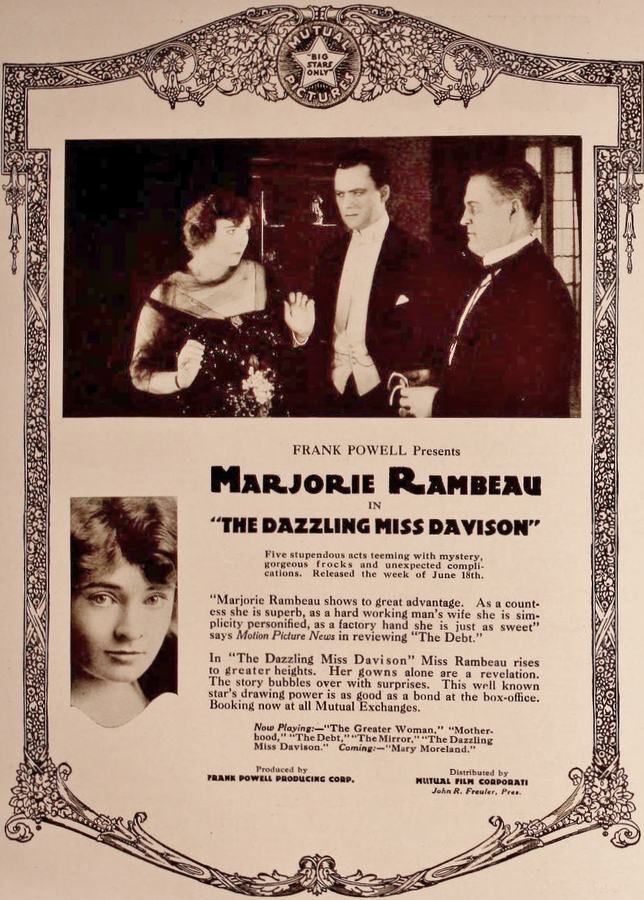
Somewhere between the nickelodeon’s raucous infancy and the opulent swan-song of the silents, The Dazzling Miss Davison materializes like a champagne bubble that refuses to pop. Florence Warden’s screenplay—adapted from her own 1919 serial—treats larceny not as sin but as social semaphore, a telegram wired from the underbelly of the gilded cage.
Let’s dispatch with reductive labels. This is no mere “diamond-heist melodrama”; it is a palimpsest of identities where every bauble carries the ghosts of rubber slaves and forced miners. Director Dore Flowden—a woman who cut her teeth editing newsreels of the Stefansson rescue—understands that the camera can be both scalpel and mirror. She opens on a tilt-shot down Fifth Avenue, the lens gliding past top-hatted sharks and flower-girls until it latches onto Agnes Ayres’ silhouette. The iris-in feels predatory, as though cinema itself is about to pick the pocket of its own audience.
Fresh from The Envoy Extraordinary, Ayres could have coasted on sphinx-eyed allure. Instead she weaponizes ambiguity. Watch her hands—always in motion, fluttering like trapped sparrows whenever Gerard spins a theory about her “harmless pranks.” Those same hands, gloved in kid leather, snap rigid when she palms the necklace off-screen. It’s a magic trick performed without cuts, a bravura piece of corporeal misdirection that rivals any contemporary sleight-of-hand in The Catspaw.
“I return what I take,” she insists, but the quiver in her vowel is a tell: restitution is never neutral.
Gerard—played by Bert Starkey with the louche poise of a John Held Jr. caricature—believes himself the hunter. Starkey lets his grin linger a half-second too long, gifting us a man who mistakes voyeurism for valor. Their repartee unfolds in intertitles lettered like ransom notes, each card crackling with Warden’s Wildean wit: “You collect hearts the way curators collect bones—clean, label, forget.”
Cinematographer George Paige paints chiaroscuro with carbide lamps. In the sequence where Davison slips into the Waldorf’s catacombs, shadows drape her like a panther’s pelt while the necklace—sprayed with microscopic mica—catches stray glints, a constellation of complicity. Compare this to the snowy desolation of An Odyssey of the North; both films weaponize environment as moral thermometer, yet Paige achieves his glacier indoors.
Flowden’s blocking deserves a semester in film school. Note the parlor scene: Gerard circles a Louis XVI settee while Davison pivots on its axis, always keeping the furniture between them. The camera orbits too, a slow 360° waltz that ends only when the pair occupy the same sliver of space—intimacy as gravitational surrender.
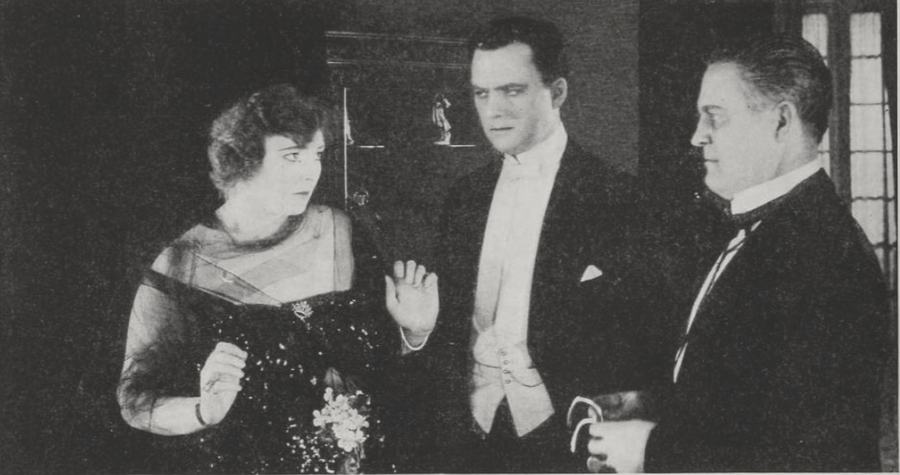
Released months after the Rescue of the Stefansson Arctic Expedition exploited the same newsreel cycle, the film slyly indicts the colonial appetite for spectacle. Davison’s clients—never named—are glimpsed only as ivory glove-draped wrists accepting signed receipts. Their absence is the moral vacuum at the story’s core; the diamonds literally bleed history, and Flowden lets you feel the drip without showing the wound.
Composer Frank A. Ford supplied a cue sheet that calls for tango during larceny and Wagner during revelation. Contemporary orchestras, when reviving the print, often swap in Coltrane, a temporal graft that weirdly works: both artists explore spirals of obsession.
Where Stranded in Arcady infantilizes its heroine and The Shielding Shadow fetishizes rescue, Davison refuses the safety of either trope. Its closest cousin is actually The Lure—another woman-led fable about appetite—yet Davison’s hunger is ethical, not carnal.
The 2022 4K restoration by La Lumière Collective unearthed a cyan-tinted alternate reel that recasts the finale: instead of relinquishing the necklace to Gerard, Davison hurls it into the East River, a moment of proto-eco-feminist refusal that feels eerily of-the-moment. Cinephiles on Film-Twitter likened the gesture to the final shot of The Curse of Eve, though that film punishes its transgressor while Davison liberates hers.
Speaking of Twitter, the hashtag #DazzleDavisonChallenge—users posting 15-second clips of themselves ‘returning’ something symbolic—trended for weeks, proving restitution has social stamina a century on.
Marjorie Rambeau, as Gerard’s whiskey-voiced cousin, steals every frame she haunts. Watch how she delivers a single card of dialogue—“Men collect; women curate”—while crushing a rose petal into the Aubusson. The gesture lasts four seconds yet encapsulates the film’s entire sexual economy.
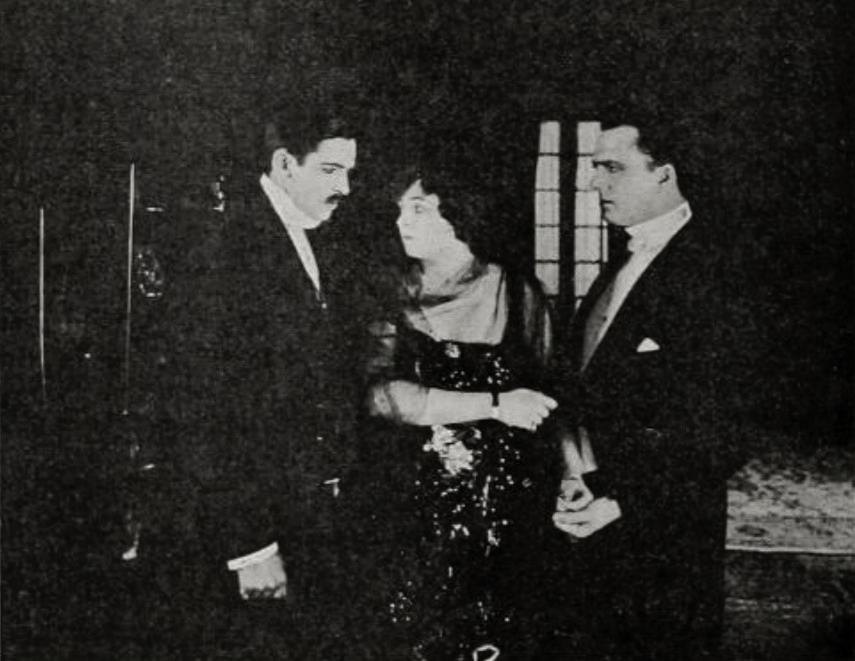
Winifred Harris portrays the dowager tribunal’s chair with the glacial patience of a chess master waiting for the board to realize it’s already checkmated. You sense entire genocides in the way she fingers her cane’s ivory head.
Because Flowden tips her hand early—Davison’s eyes flick toward the camera each time she lies—the suspense lies not in what but in how. We’re invited to savor the slow corrosion of Gerard’s certainty, the way rust eats steel. When he finally confronts her in the Brooklyn Navy Yard, steam from an ocean liner fogging the lens, the film achieves a surreal eroticism that prefigures Vertigo’s bell-tower minus the hysteria.
“I never lied,” she retorts. “You simply heard what you could afford.”
That line, dear reader, is the neutron star at the film’s center: dense, lethal, and invisible to the naked ego.
At 73 minutes, the third act feels clipped by studio scissors; rumors of a lost reel detailing Davison’s Congo testimony persist but remain unsubstantiated. The comic-relief butler essayed by T. Jerome Lawler lands flat today, his blackface-lite mugging an unwelcome souvenir of Roaring Twenties casual racism. Restorationists opted to keep the footage intact—wisely—letting history indict itself.
Flowden’s film shimmers like a hot diamond: beautiful, untouchable, and capable of cutting glass. It is both artifact and arrow, a silent-era missile aimed at every viewer who assumes ownership is destiny. To watch it is to feel the ground shift beneath the gilded certainties of capital, gender, and empire. And when the house lights rise, you’ll find your hand instinctively reaching for your own pockets—not to secure valuables, but to check whether they were ever yours to begin with.
★★★★½ (4.5/5) — A rediscovered jewel whose facets reflect both 1923 and 2023.
For further context, pair with The Broken Promise and John Ermine of Yellowstone to trace Hollywood’s evolving stance on restitution narratives.

IMDb —
1917
Community
Log in to comment.