DbcultAccessing Vault...
Cult Review
Senior Film Conservator
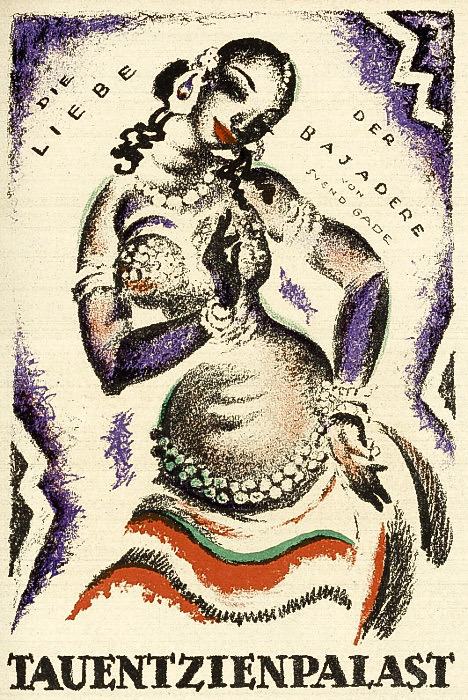
The opening tableau of blazing horizons and swaying palms immediately immerses the viewer in a world where the desert’s relentless heat mirrors the simmering tension between tradition and desire. Svend Gade’s direction, though silent, speaks in a language of gestures and glances that feels as articulate as any modern screenplay.
Ferdinand von Alten inhabits the nobleman with a brooding intensity that borders on the operatic. His eyes, often half‑closed, convey a storm of conflicting loyalties: the weight of his family’s expectations and the magnetic pull of the Bajadere’s luminous presence. The dancer herself, though never named on screen, becomes an emblem of artistic freedom; her movements are choreographed with a delicate precision that suggests both reverence for ritual and a yearning to transcend it.
The film’s narrative architecture is built upon a series of visual motifs. The recurring image of a lotus blooming in a stagnant pond serves as a metaphor for love attempting to flourish in an environment hostile to its very existence. Each time the protagonists meet, the camera lingers on the lotus, its petals unfurling in slow motion, underscoring the fragile beauty of their connection.
Gade’s use of chiaroscuro is nothing short of masterful. In the palace’s dimly lit corridors, shadows stretch like elongated fingers, reaching for the lovers and threatening to engulf them. The interplay of light and darkness is not merely aesthetic; it reflects the societal forces that loom over the couple—light representing the fleeting moments of intimacy, darkness embodying the oppressive caste system.
When the nobleman is summoned to a council of elders, the scene is shot from a low angle, emphasizing the towering authority of the assembly. The elders’ faces are obscured by heavy drapery, a visual cue that their identities are less important than the institution they represent. This technique resonates with the thematic concerns of According to the Code, where law and morality intersect in a similarly oppressive manner.
The Bajadere’s performances are intercut with moments of stark realism. In one sequence, she dances before a crowd of devotees, her silhouette illuminated by a single oil lamp. The camera captures the flickering flame, its wavering light casting a golden aura that seems to sanctify her art. Yet, as the crowd disperses, the dancer is left alone on the stage, the silence echoing the isolation she feels within the rigid social hierarchy.
Comparatively, the emotional stakes in "Die liebe der Bajadere" echo those of Little Meena's Romance, where love is similarly constrained by familial expectations. However, Gade’s film distinguishes itself through its visual poetry; where "Little Meena's Romance" relies heavily on dialogue, "Die liebe der Bajadere" communicates through composition, gesture, and the rhythmic cadence of its intertitles.
The film’s pacing is deliberate, allowing each scene to breathe. The audience is given ample time to absorb the weight of each glance, each sigh. This measured tempo mirrors the languid flow of the monsoon rivers that occasionally appear in the background, reinforcing the notion that love, like water, can be both gentle and destructive.
A particularly striking sequence occurs when the nobleman, torn between duty and desire, rides a horse across the desert at dusk. The camera follows him from a side‑profile, the setting sun painting the sky in shades of amber and violet. As he approaches the Bajadere’s secluded pavilion, the music—though unheard—seems to swell, a silent symphony that heightens the emotional crescendo.
The film’s climax is a masterclass in visual storytelling. The lovers, cornered by the nobleman’s betrothed and the relentless march of tradition, make a desperate bid for freedom. The scene is shot in a single, unbroken take, the camera circling the trio as they move through a maze of arches. The fluid motion of the camera mirrors the frantic heartbeat of the protagonists, and the final frame freezes on the Bajadere’s outstretched hand, a visual promise that love, even when thwarted, leaves an indelible imprint.
Beyond its narrative, the film’s technical achievements deserve commendation. The cinematographer employs a palette dominated by earthy ochres and deep indigos, punctuated by the occasional flash of sun‑kissed gold that draws the eye to moments of emotional significance. This color strategy aligns with the film’s thematic dichotomy: the warm hues symbolize passion and vitality, while the cooler blues suggest melancholy and restraint.
The intertitles, though sparse, are crafted with a lyrical quality that enhances the poetic atmosphere. Phrases such as "the heart knows no caste" and "the soul's yearning outlasts the empire's edicts" linger long after the screen fades to black, echoing the film’s central thesis that love transcends societal boundaries.
In terms of performance, von Alten’s portrayal is complemented by the Bajadere’s expressive physicality, which, despite the absence of spoken dialogue, conveys a spectrum of emotions ranging from ecstatic joy to crushing despair. Their chemistry is palpable, a testament to the director’s ability to coax nuanced performances from actors accustomed to the silent medium.
When placed alongside contemporaneous works such as The Hunting of the Hawk and The She Devil, "Die liebe der Bajadere" stands out for its refusal to succumb to melodramatic excess. Instead, it opts for a restrained elegance that invites contemplation rather than catharsis.
The film’s legacy persists in modern cinema’s exploration of forbidden love across cultural divides. Its influence can be traced to later masterpieces that grapple with similar themes, proving that Gade’s vision was ahead of its time.
The final moments linger in the viewer’s mind like the echo of a distant drum. The Bajadere, silhouetted against a moonlit sky, raises her arms in a gesture that is simultaneously a surrender and a proclamation of resilience. The nobleman, his silhouette receding into the darkness, leaves behind a trail of unanswered questions, embodying the perpetual tension between personal desire and collective duty.
For scholars of silent film, "Die liebe der Bajadere" offers a rich tapestry of visual symbolism, performance nuance, and thematic depth. Its exploration of love’s capacity to challenge entrenched hierarchies remains as relevant today as it was a century ago, cementing its status as an essential work for anyone interested in the evolution of cinematic storytelling.

IMDb —
1924
Community
Log in to comment.