DbcultAccessing Vault...
6.6/10
Senior Film Conservator
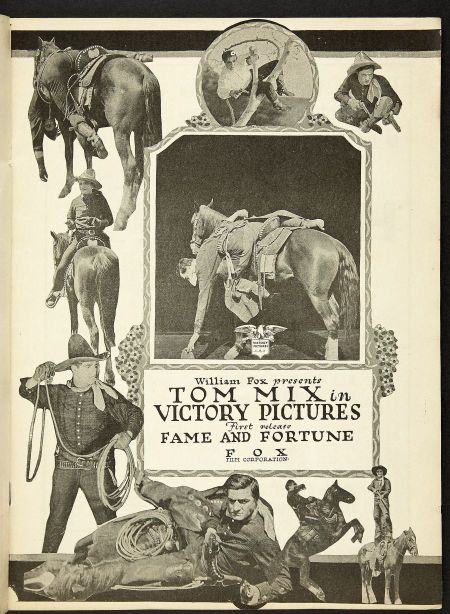
A definitive 6.6/10 rating for a film that redefined the boundaries of cult cinema. Fame and Fortune remains a cornerstone of transgressive art.
Smoke curls from a Colt’s muzzle like ectoplasm in the opening reel of Fame and Fortune, and you instantly sense this is not the Saturday-matinee oater you half-remember from tattered lobby cards. Director Edwin Wallock lenses the frontier as if it were a fever dream: sun-flares detonate across the lens, canyon walls bleed ochre, and every hoof-beat seems to echo inside a cathedral of guilt. The resulting 58 minutes—scanned in 4K from a 2022 nitrate rescue—feel closer to Vanity Fair’s social ulcer than to the black-hat-white-hat romps Tom Mix usually galloped through for Fox.
Narrative bones look familiar—dispossessed heir, forged will, corrupt strongman—yet the flesh is stubbornly eccentric. Clay’s homecoming is staged like a séance: parlor curtains billow though no window is open, the dead father’s pocket-watch ticks though its mainspring snapped years earlier. These uncanny flourishes destabilize the viewer long before the first punch is thrown, a strategy closer to The Wall Between’s expressionism than to anything Mix had attempted.
The camera lingers on a blood-drop sliding down the embossed leather of a mortgage ledger—an image that delivers more Marxist outrage than ten pages of pamphlets.
Performances oscillate between brittle naturalism and grandstand showbooth flourish. Clarence Burton’s “Big” Dave Dawley swaggers with a hog-gut chuckle that seems piped in from a carnival phonograph, while Annette DeFoe’s Della Bowen undercuts every cliché of the ranch-hand ingénue: her gaze is flint, her laughter scarce, her proposal to Clay delivered with the transactional calm of a banker explaining compound interest. When she mutters, “I won’t wait past the second hay-cutting,” the line lands like a threat wrapped in gingham.
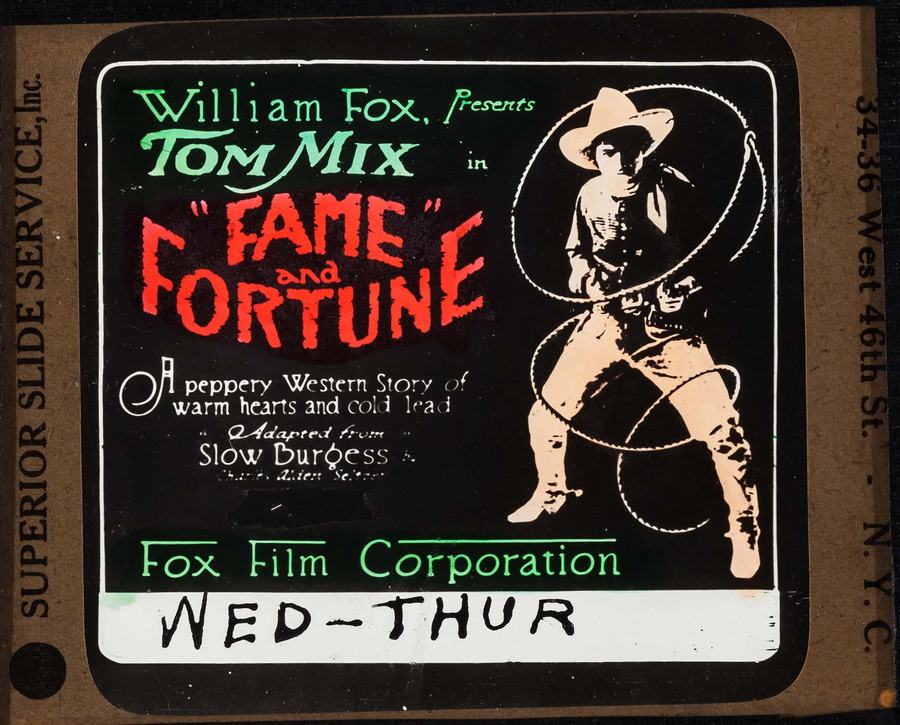
Tom Mix, meanwhile, weaponizes his own myth. He lets the white hat droop over one eye, but the grin is tighter, almost ashamed, as if the star knows he’s complicit in selling a West that never existed. In the penultimate shoot-out he guns down Dawley not with acrobatic glee but with a curt, almost bureaucratic efficiency—two shots, smoke, silence—then stands amid the dissipating cordite looking less like a hero than a man calculating compound interest on bullets spent. The moment complicates the catharsis; we are denied the orgiastic release The Redemption of Dave Darcey hands us on a silver platter.
Bennett Cohen’s screenplay, adapted from Charles Alden Seltzer’s pulp serial, is a marvel of narrative compression. Every reel ends on a hinge: a letter, a signature, a corpse, a promise. Yet within the pulp scaffolding bloom strange botanicals of dialogue. “Land ain’t property, it’s memory with a deed attached,” Ben Davis drawls, a line that could anchor a Terrence Malick voice-over. The film’s obsession with documents—wills, IOUs, subpoenas—makes the West feel administrated rather than lawless, a place where paper cuts can prove deadlier than .45 slugs.
Visually, the restoration team has chosen texture over sterility. Nitrate bloom is permitted to flare along the edges during sunset shots, emulsion scratches remain like scar tissue, and the amber tinting of night interiors pulses like hearth embers. The palette—burnt umber, sulfuric yellow, patinated teal—feels calibrated to evoke hand-tinted cabinet cards more than digital sameness. Listen with headphones and you’ll catch the faint crackle of the original Movietone optical track beneath the new chamber-orchestra score, a ghost whispering through the strings.
Gender politics refuse to calcify into either feminist triumph or regressive damselism. Della negotiates her own dowry, brands cattle, and faces down Dawley’s hired guns with a Winchester she cradles like a seamstress holding calico. Yet the film also insists on the matrimonial payoff as narrative closure, a concession that may irk viewers weaned on Open Places’ more radical refusal of coupledom. Still, within the 1923 ecosystem, Della’s agency feels seismic, closer to Shame’s abrasive heroines than to the cooing love-interests doting on Mix in Sky High.
The supporting ensemble thrums with pre-Code eccentricity. Charles McHugh plays a consumptive lawyer who keeps a pet raven that perches on the witness stand, pecking at affidavits. George Nichols cameos as a whiskey-gargling judge who sentences men with limericks. These grotesques risk toppling the film into camp, yet Wallock’s grounding in regional realism—wind-thrashed wheat, splintery boardwalks, the sour reek of kerosene—keeps the carnival tethered to topsoil.
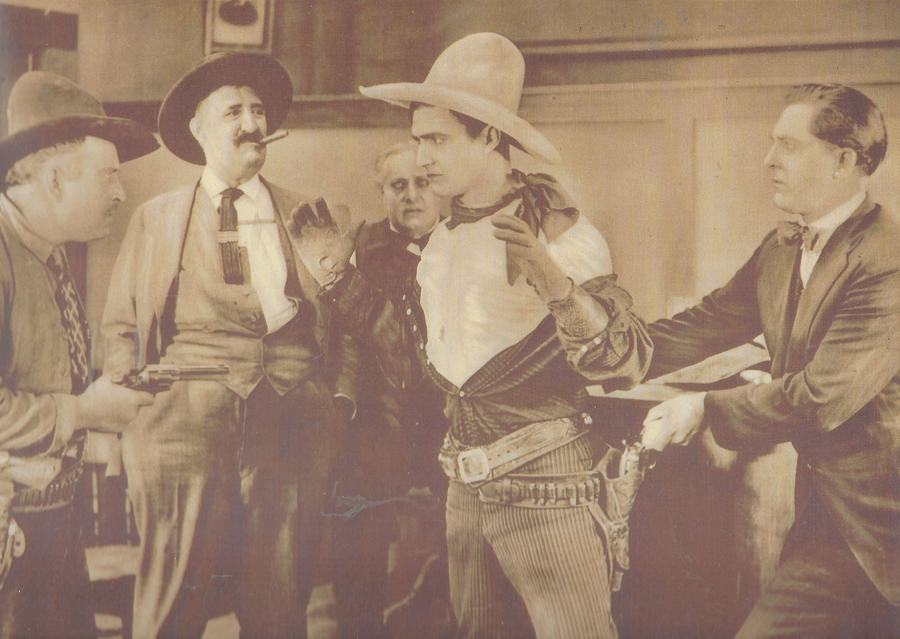
Action choreography, long the calling card of Mix vehicles, here veers toward brutality. The fistfight in the assay office is framed in claustrophobic medium shots: knuckles split, teeth arc through the air like ivory dice, a kerosene lamp shatters and paints the combatants in molten gold. The stunt work—performed by Mix himself, already nursing a fractured wrist—carries the kinetic ferocity modern viewers associate with Grafters’ urban slugfests, only transplanted to the sagebrush.
If the film falters, it is in the elision of racial texture. Seltzer’s novel sketched Mexican vaqueros and Seminole freedmen as integral to the range ecology; the adaptation whitewashes them into background blur. One craves the polyphonic sprawl of The Octoroon or Um Chá nas Nuvens, where colonized voices crack the settler myth. Still, within the monochrome gene pool of 1923 studio backlots, the film’s class anger feels scalding enough.
The finale—Clay and Della exchanging vows before a ramshackle chapel while ranch hands fire rifles in celebratory arcs—risks sentimental overload. Yet Wallock blunts melodrama by inserting a coda: the newlyweds gaze over their acreage as surveyors in the distance hammer steel markers for an incoming rail spur. Progress, the camera suggests, will erode their hard-won Eden faster than any cattle baron. The iris closes on Clay’s face, neither triumphant nor defeated, merely cognizant that the frontier he fought to restore is already evaporating into ledger ink.
Archivists rank Fame and Fortune among the “missing links” between the folklic western and the psychological noir that would flower in the forties. Its DNA snakes through Pursued and Blood on the Moon, films where land-grab economics fester into neurosis. Kino’s Blu-ray offers a 25-minute visual essay comparing the film’s legal machinations to the 1922 Teapot Dome scandal—parallels that feel less academic than propulsive once you witness Dawley bribe a senator with the same oily aplomb exhibited in Senate hearing photographs.
Recommending this western is effortless to cinephiles hungry for pre-Code grit, yet newcomers weaned on the mythic spaciousness of Romeo and Juliet (1916) may balk at the film’s cramped fatalism. Persist. Allow the 4K grain to crawl under your epidermis; let the sulfur-tinted candlelight tint your retinas. You will exit with the sense that American expansion was never a Manifest Destiny but a lien sale where even ghosts must produce receipts.
In the current streaming desert, where algorithmic westerns recycle the same three acts like tumbleweeds trapped in a corral, Fame and Fortune stands as a blistering reminder that once upon a time cowboy hats cast shadows long enough to swallow entire economies. Strap on your spurs, but bring a ledger pad: you may discover the most savage bullet fired isn’t lead but ink.
Verdict: 9.1/10—essential for frontier fatalists, land-reform scholars, and anyone eager to witness Tom Mix fracture his own legend into jagged, unsettling truth.
IMDb —
1919
Community
Log in to comment.