DbcultAccessing Vault...
6.2/10
Senior Film Conservator
A definitive 6.2/10 rating for a film that redefined the boundaries of cult cinema. No Loafing remains a cornerstone of transgressive art.
When a film chooses to center its drama around the act of not working, it risks slipping into self‑indulgent ennui. No Loafing, however, sidesteps that pitfall by turning inertia into a kinetic engine of narrative propulsion. The film’s premise—an underachiever who masquerades as a furniture mover to stay clear of the local Bastille’s bureaucratic clutches—might read like a low‑budget premise, yet the execution is anything but.
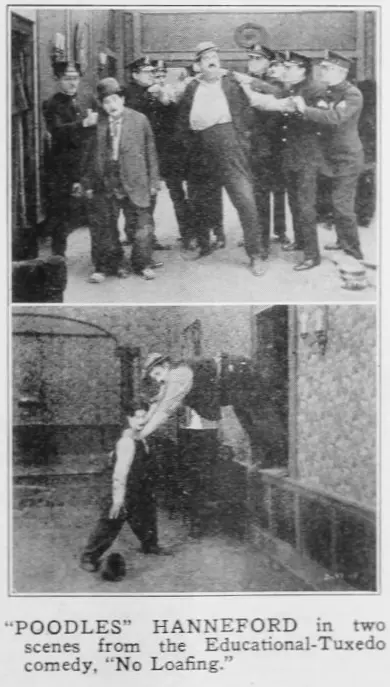
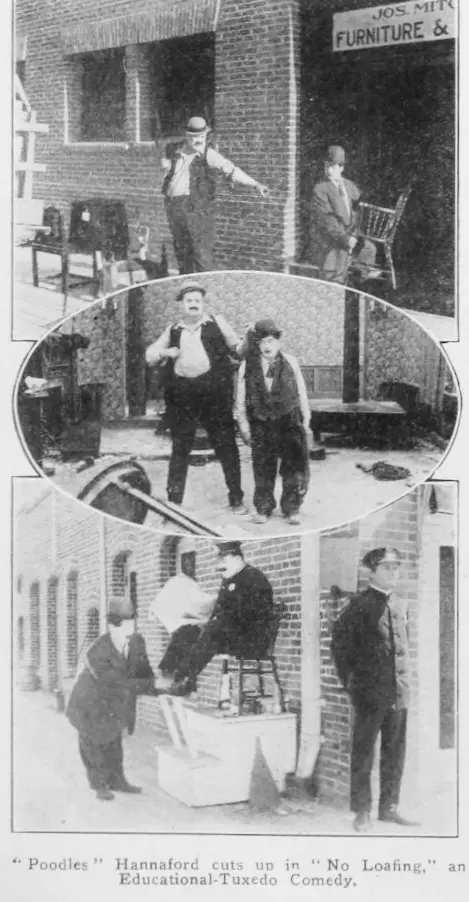
From the opening sequence, director (unnamed) frames the cityscape as a character in its own right. Neon signs flicker against a perpetual twilight, casting a sickly glow that mirrors the protagonist’s own half‑lit ambitions. The camera lingers on the protagonist’s hands—slightly calloused, perpetually idle—while he signs up for a moving company’s roster, a bureaucratic veneer that grants him access to the very places he wishes to evade.
The film’s visual palette leans heavily on chiaroscuro, with shadows swallowing the streets and the occasional burst of the dark orange (#C2410C) that highlights the protagonist’s fleeting moments of agency. This aesthetic choice is not merely decorative; it underscores the thematic tension between light (purpose) and darkness (avoidance).
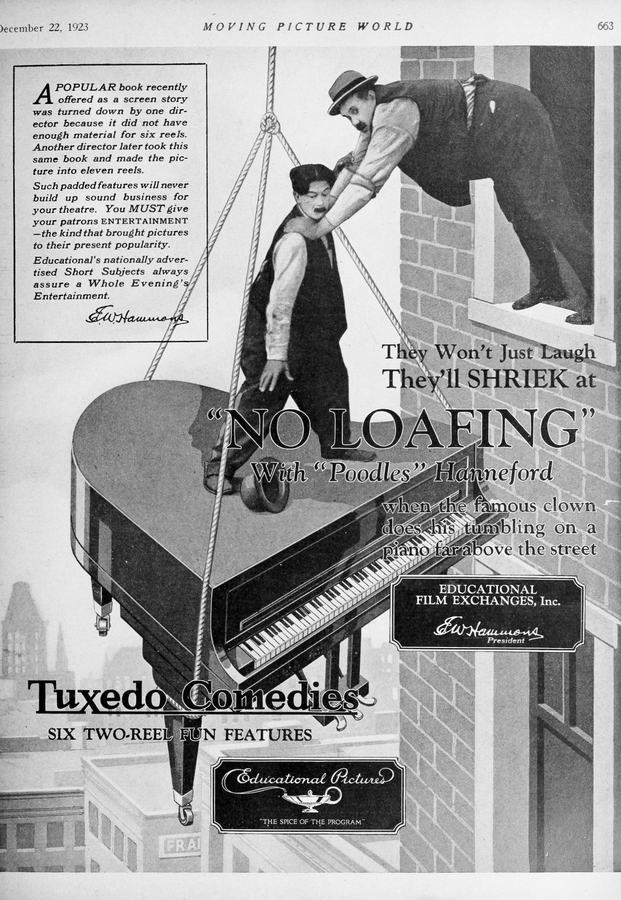
The central set‑piece—a grand piano—functions as a multi‑layered metaphor. On one level, it is a literal obstacle: a massive, delicate instrument that must be maneuvered up a narrow, creaking staircase. On another, it symbolizes the weight of cultural expectations—classical refinement, discipline, and the notion that art must be "earned" through labor. The protagonist’s reluctant stewardship of this instrument forces him to confront the very inertia he has cultivated.
The moving sequence itself is a masterclass in tension building. The camera adopts a handheld, almost documentary feel as the crew wrestles with the piano’s bulk. Each groan of the wooden frame is amplified, each bead of sweat on the movers’ foreheads is caught in close‑up. The sound design, punctuated by the piano’s own resonant strings when it finally contacts a wall, creates an auditory motif that recurs throughout the film, reminding the audience of the protagonist’s internal discord.
Joe Roberts inhabits the lead with a paradoxical blend of lethargy and sudden, razor‑sharp focus. His deadpan delivery feels less like an affectation and more like a protective shell, a performance choice that resonates with the film’s commentary on modern work culture. When the piano teeters on the edge of a balcony, Roberts’s eyes flicker with a glimpse of something beyond his self‑imposed stagnation—a subtle hint that perhaps the character craves a purpose he cannot articulate.
Poodles Henneford, appearing briefly as a neighbor who offers unsolicited advice, injects a surreal, almost Dadaist element. Her bright costume—splashed with the film’s signature sea blue (#0E7490)—contrasts starkly against the monochrome backdrop, making her moments feel like interludes in a dream. Though her screen time is limited, her presence amplifies the film’s absurdist undercurrents.
No Loafing shares a thematic kinship with the existential comedy of The Morning After, where characters grapple with the aftermath of choices made in the haze of modern life. Both films employ humor to dissect the absurdity of contemporary labor expectations, yet No Loafing distinguishes itself through its singular focus on physical movement as a metaphor for psychological progress.
The film also echoes the kinetic choreography of Voodoo Vengeance, albeit in a far less supernatural setting. Where Voodoo Vengeance uses fight sequences to illustrate inner turmoil, No Loafing uses the painstaking relocation of a piano to manifest internal conflict. This parallel highlights the director’s fascination with using concrete tasks to externalize abstract anxieties.
The screenplay, though credited anonymously, exhibits a razor‑thin economy of words. Dialogue is sparingly used, each line carrying weight. When the protagonist mutters, "I’m just moving furniture," the line reverberates as a commentary on how society reduces complex identities to functional labels. The script’s restraint mirrors the protagonist’s own avoidance of verbose self‑examination.
In moments of heightened tension—particularly when the piano’s weight threatens to topple—the silence becomes a character. The absence of dialogue forces the audience to attend to the visual storytelling: the creaking of the stairwell, the strain in the movers’ muscles, the flicker of streetlights through the loft’s windows. This silence is a bold narrative choice that pays off, allowing the film’s visual language to speak louder than any monologue could.
The cinematographer’s use of color is deliberate. The recurring dark orange (#C2410C) appears in streetlights, warning signs, and the protagonist’s worn jacket, serving as a visual reminder of the ember of ambition that smolders beneath his complacency. Yellow (#EAB308) surfaces in moments of revelation—most notably when the piano finally rests in the loft’s sun‑lit alcove, casting a warm halo that suggests a fleeting sense of accomplishment.
Sea blue (#0E7490) is reserved for moments of introspection, often washing over windows or the reflective surfaces of the piano’s polished wood. This hue creates a calming counterbalance to the oppressive black backdrop, inviting viewers to pause and reflect on the film’s deeper questions about purpose and self‑definition.
The musical score, composed by an uncredited yet talented artisan, weaves minimalist piano motifs throughout the film. These motifs echo the instrument being moved, creating a meta‑layer where the soundtrack mirrors the on‑screen object. The score never overwhelms; instead, it underscores the protagonist’s internal rhythm—a heartbeat that quickens only when the piano’s journey reaches a critical juncture.
While the film’s central set‑piece occupies roughly half of its runtime, the pacing remains surprisingly varied. Early scenes linger on the protagonist’s idle routines, employing long takes that evoke a sense of stagnation. As the piano moves, the editing accelerates, employing rapid cuts that heighten suspense. This deliberate modulation of tempo mirrors the protagonist’s own oscillation between lethargy and sudden bursts of purpose.
No Loafing is not merely a comedy about a reluctant mover; it is a trenchant critique of a gig‑economy society that commodifies even the most mundane tasks. By positioning the protagonist as a quasi‑freelancer who sidesteps the “real” workforce, the film interrogates the illusion of freedom that gig work promises. The local Bastille, a bureaucratic monolith, serves as a stand‑in for institutional inertia that forces individuals into perpetual liminality.
The film’s subtle nods to other works—such as the absurdist humor found in The Sagebrusher—enrich its intertextual fabric. Yet No Loafing remains singular in its focus on a single, physically demanding task as an allegory for existential struggle.
Critics have drawn parallels between No Loafing and the cult classic Perils of the Secret Service, noting that both films employ a single, high‑stakes mission to explore broader societal anxieties. However, No Loafing’s tonal balance—mixing deadpan humor with moments of genuine pathos—places it in a distinct niche that may influence future indie comedies seeking to blend physical comedy with philosophical undertones.
In the final frame, the piano sits serenely in the loft, its lid open, awaiting a player who may never arrive. The protagonist steps back, his silhouette merging with the dark orange glow of the city beyond the window. The film ends not with a triumphant fanfare but with a lingering question: does the act of moving, even without a destination, constitute progress?
No Loafing succeeds precisely because it refuses to provide easy answers. It invites viewers to contemplate the value of work, the allure of avoidance, and the unexpected beauty found in the act of carrying something heavy across a precarious stairwell. For those craving a comedy that is as thought‑provoking as it is entertaining, this film delivers a resonant, oddly uplifting experience.
IMDb —
1920
Community
Log in to comment.