DbcultAccessing Vault...
Cult Review
Senior Film Conservator
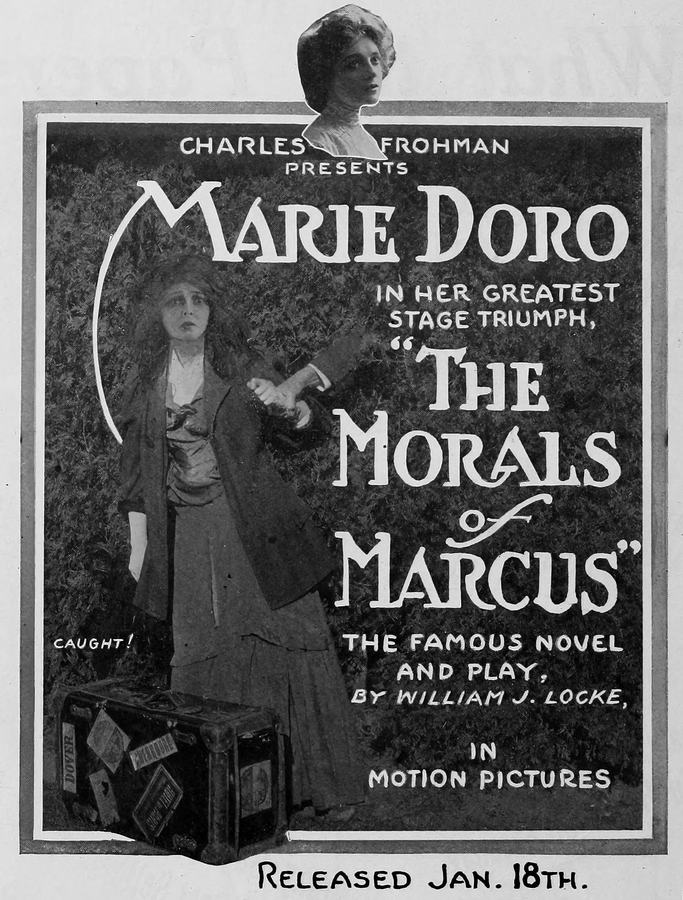
Gaslight flickers across Carlotta’s cheekbones like gold leaf on a Byzantine icon—only the icon has teeth. From the first tinted frame, The Morals of Marcus announces itself as no ordinary damsel-in-peril programmer, but a scalpel pricking the corset of 1915 morality. Director Julian L’Estrange—better known before this for boulevard farces—suddenly pivots into chiaroscuro, letting the camera linger on shackles, cashboxes, and the wet shine in a merchant’s eyes when he appraises a human being.
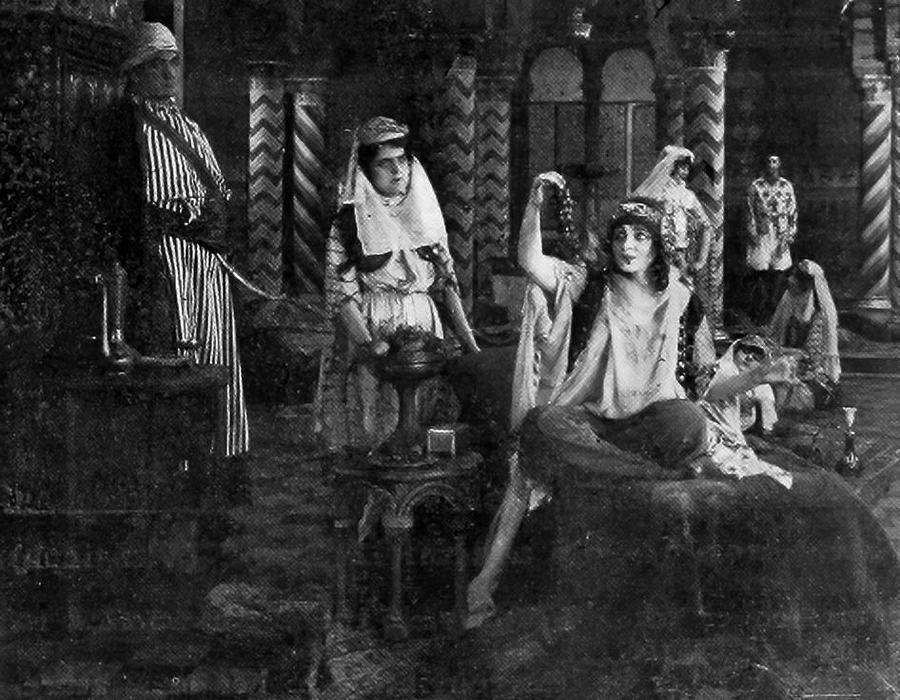
Locke’s source novella was already a provocation—an Anglican sermon inverted into a white-slave thriller—but scenarist Eve Unsell hacks away the colonial reassurance, leaving the viewer stranded between two auction blocks. The Turkish sequence, shot on a Brooklyn back-lot draped in muslin, feels subterranean: every pillow looks damp, every eunuch’s smile a paper-cut. When Carlotta learns the price of her virginity, the intertitle burns white-on-black: "A purse of rubies—so weighs the soul." No exclamation mark; the chill is the point.
Cut to a Mersey dock swarming with fog thick enough to chew. Marcus—Frank Andrews channeling a dissolute Percy Bysshe Shelley—believes himself the hero of a boy’s-own yarn. Customs officers disagree; the camera tilts down to his wrists as iron closes, and the film’s axis tilts with it. From here the narrative fractures into three braided strands: Carlotta’s education in occidental hypocrisy, Marcus’s legal purgatory, and a Greek-chorus of London gadflies who treat philanthropy like baccarat.
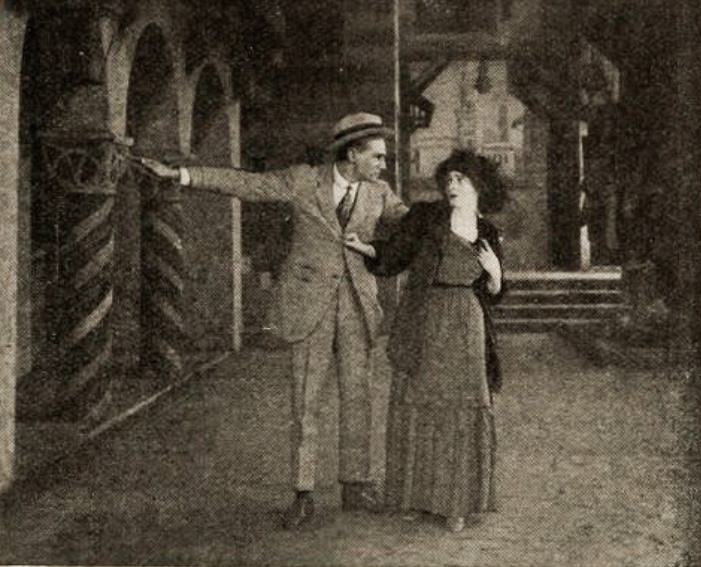
Marie Doro—previously the winsome ingénue of Niobe—here weaponizes her doe eyes. Watch the moment she first enters an English drawing room: shoulders squared, veil lifted like a gauntlet. The room’s matrons appraise her as if she were a poodle; Doro lets a micro-smirk flicker, half terror, half predatory glee. It’s the same expression she will wear in the climax, only by then the veil is gone and the teeth are literal.
Opposite her, Julian L’Estrange (pulling double duty as director and as the barrister Sir Christopher) stages a master-class in vocalized silence. Every close-up is calibrated for legibility: a swallow, a flinch of the nostril, the way his fingers worry the hem of his wig. You leave convinced that silent cinema never needed spoken words; it needed better glands.
Unlike the candy-box amber of Life and Passion of Christ, Marcus employs a restricted palette: bruise-violet for Turkish interiors, cadaverous teal for prison corridors, sulphur-yellow for society soirées. The hues are hand-tinted, yes, but chosen with symbolic sadism. When Carlotta finally slaps a diamond necklace onto a pawn-shop counter, the gems flash the same canary-yellow as the ballroom chandeliers—wealth’s color remains constant; only the architecture of power shifts.
Cinematographer Wellington A. Playter (also essaying the rabid prosecutor) stretches 1915 orthochromatic stock to its limit. In one courtroom tableau, he silhouettes Carlotta against a noon window so her face becomes a crescent moon of white in an ocean of black. The effect anticipates the expressionist voids of Lost in Darkness, yet arrives three years earlier.
Scholars love to pit this against A Fool There Was, claiming both trade in the same vampiric seductress. False genealogy. Carlotta never vamps; she counter-purchases. Her body has already been bartered once; she spends the film clawing back equity. Note the pivotal scene in Lincoln’s Inn: she bargains with a solicitor, offering intelligence on Turkish trade routes in exchange for Marcus’s release. The parchment, not the petticoat, is her currency.
Meanwhile, Britain’s imperial gloat is lampooned via peripheral caricature—tea-tables groaning under the weight of sugar, tobacco, and gossip about "the Sultan’s new electric harem." The empire’s appetite for the exotic is shown as a digestive tract: swallow the Ottoman, excrete the odalisque, polish the residue into parlour anecdote.
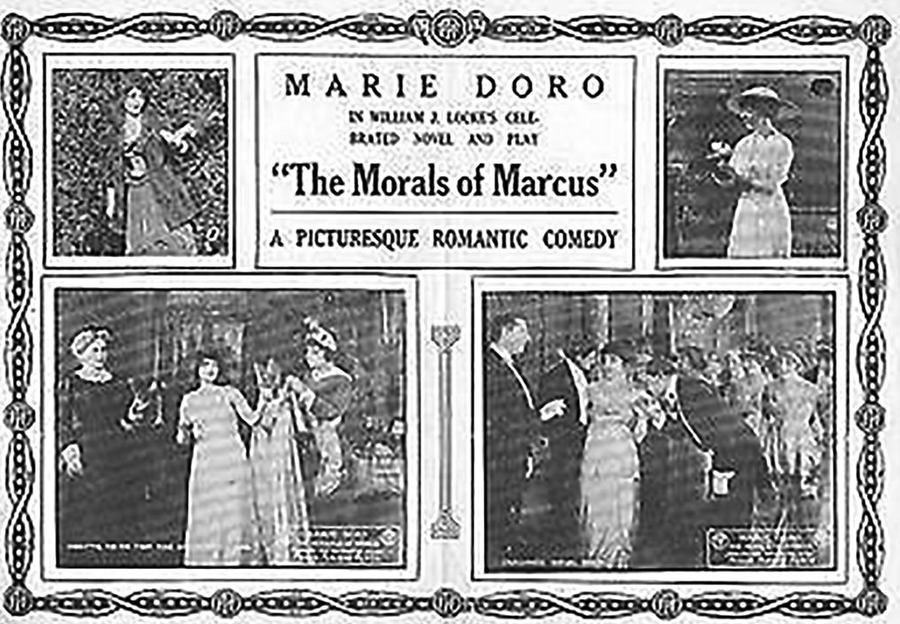
Editor Helen Freeman (billed coyly as "Continuity Matron") splices scenes with a staccato that feels proto-Soviet. Compare the cut from Carlotta’s first ballroom waltz—arms rigid with borrowed grace—to the smash of a gavel in a debtors’ court. The montage anticipates Eisenstein’s Strike by a decade, yet serves a domestic melodrama rather than proletarian agit-prop. The dialectic: leisure funded by invisible chains.
Though the nitrate is mute, cue sheets survive in the Library of Congress. Exhibitors were advised to interpolate Saint-Saëns’s Danse Macabre during the escape sequence, then switch to a parlour ballad titled I Would Rather Be a Canary Than a Swallow when Carlotta first tastes English tea. The juxtaposition is so deranged it circles back to Brechtian genius—empire’s terror scored as twee whimsy.
Trade papers of 1915 split along predictable axes. Moving Picture World lauded it as "a tonic for the thinking classes," while the New York Dramatic Mirror fretted that Doro’s performance might "corrupt the finer instincts of our daughters." In London, the censor demanded the excision of any reference to harem auctions; the print duly shredded, British audiences saw a truncated tale of an "Oriental princess" rescued by "Imperial chivalry"—a lie so bland even the title cards yawned.
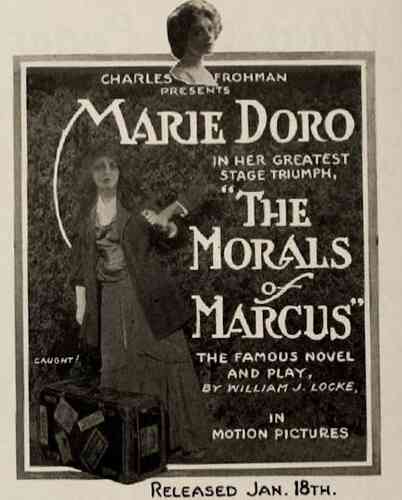
Yet the film slipped into feminist discourse. Suffrage orator Ida Darling (also in the cast as Lady Belgrave) reportedly carried stills of Carlotta’s courtroom speech to rallies, proclaiming, "Here stands the new woman—no longer supplicant, but stakeholder."
Like much of pre-1920 Paramount, the original camera negative was junked for its silver content during WWI. For decades only a French Pathé abridgment circulated, riddled with nitrate rot and intertitles that read like absinthe hallucinations. Then in 2018 a 35mm paper-print surfaced at the Cinémathèque de Toulouse. The 4K restoration premiered at Pordenone, revealing textures previously unseen: the fuzz on Marcus’s tweed, the goose-pimples on Carlotta’s arms during her dockside arrest. The tinting was recreated using chromogenic dyes matched under electron microscopy; the result glows like stained glass soaked in petrol.
The restored edition streams on Criterion Channel in 2K, accompanied by a new score from Kronos Quartet that replaces Saint-Saëns with pulsing minimalism. For purists, the BFI’s dual-format Blu-ray offers both the resto and the truncated UK version, letting you toggle between feminist manifesto and imperial bedtime story. Physical media nerds should note the limited-edition booklet: essays by Laura Mulvey and Philippa Gates, plus a facsimile of Eve Unsell’s shooting script with her pencilled marginalia: "Remember—Carlotta’s victory is not marriage but liquidity."
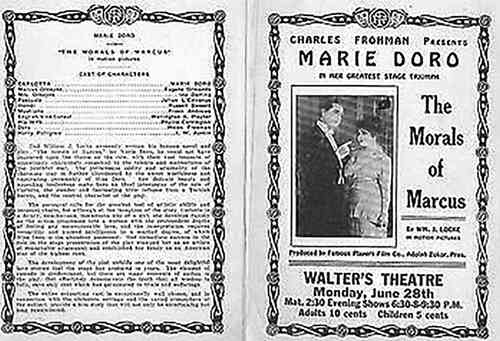
Great art doesn’t moralize; it metabolizes. The Morals of Marcus swallows the viewer whole, then asks who exactly is digesting whom. One hundred and nine years on, Carlotta’s last glance—straight down the barrel of the lens, half challenge, half promise—still feels like a dare. Accept it, and you’ll never again watch a heritage costume drama without sniffing the whiff of auction-houses under the lavender water.
TL;DR for the scroll-weary:
Pre-Code feminism smuggled inside a maritime chase; silent acting so visceral you can smell the mildew; restoration gorgeous enough to make a cinephile weep into their popcorn. Mandatory viewing if you think The Wild Olive pushed envelopes—Marcus shredded and origami-folded them first.
IMDb —
1913
Community
Log in to comment.