DbcultAccessing Vault...
Cult Review
Senior Film Conservator
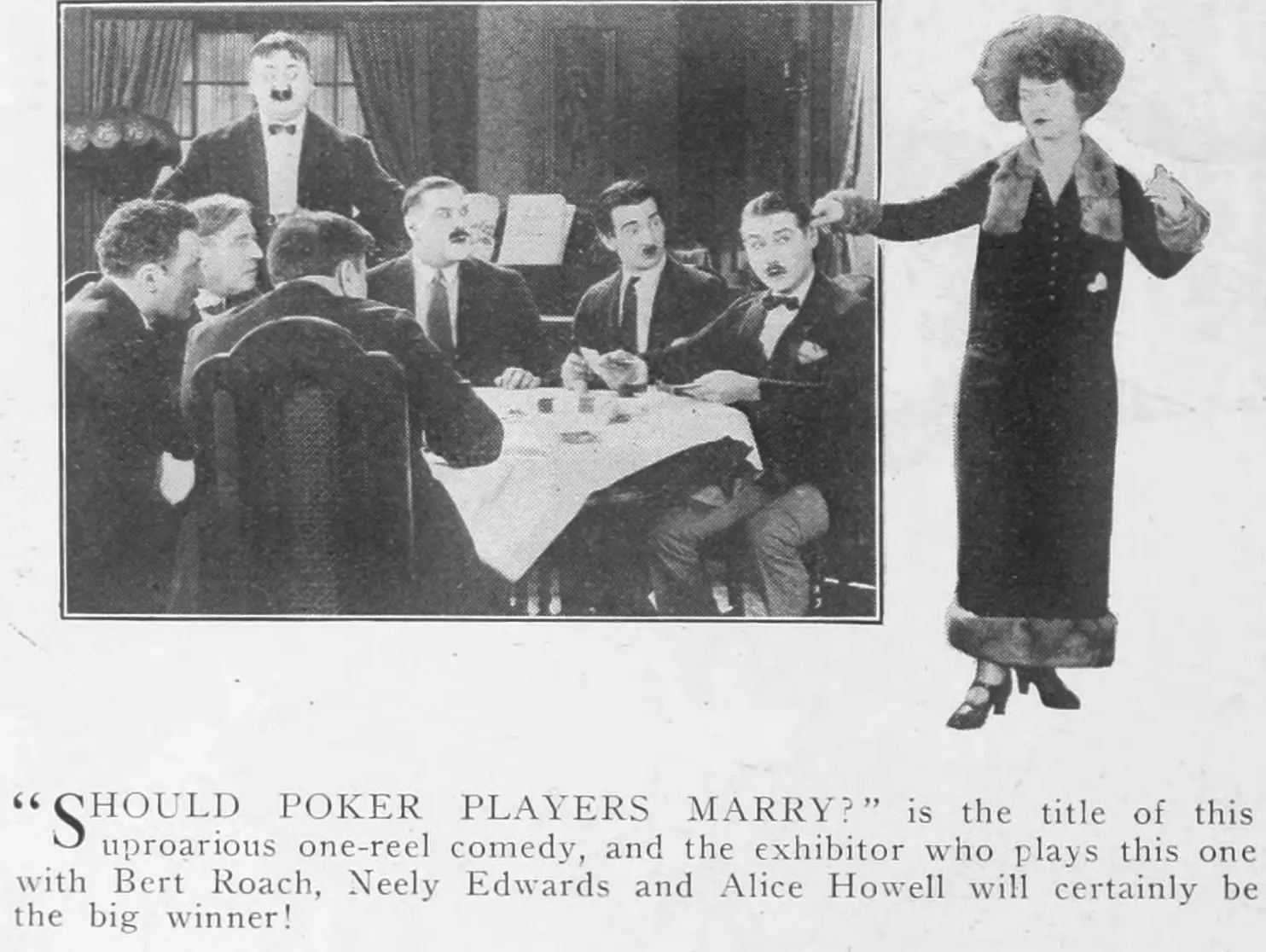
Ah, the silent film era! A time when physical comedy reigned supreme, when exaggerated gestures and elaborate gags spoke volumes, and when domestic discord often served as the fertile ground for cinematic hilarity. Amidst this vibrant landscape, a curious little gem from 1918 emerges: Should Poker Players Marry? The title alone, a rhetorical query laden with the promise of marital strife and male indiscretion, sets the stage for a delightful, albeit farcical, exploration of conjugal dynamics. Directed with a keen eye for slapstick and a playful understanding of human folly, this picture, starring the expressive Neely Edwards and the formidable Alice Howell, offers more than just a few chuckles; it provides a fascinating, albeit caricatured, glimpse into the anxieties and absurdities of early 20th-century relationships.
The premise is deceptively simple, yet its execution is a masterclass in escalating comedic tension. We are introduced to Nervy Ned, a character whose very moniker hints at his perpetually flustered state. His wife, having been away on a visit, makes an untimely return, catching Ned in the immediate aftermath of a raucous poker night with "the boys." The scene is set: a dishevelled parlour, perhaps the lingering scent of stale cigars, and the undeniable evidence of clandestine revelry. One might expect a "first-class valet" to have meticulously scrubbed away all traces of transgression, but alas, the universe conspires against Ned. The ensuing confrontation is not merely a domestic spat; it's a declaration of war, a battle of wills between a husband desperate for autonomy and a wife determined to exert absolute control.
What truly elevates Should Poker Players Marry? beyond a mere slapstick short is the sheer inventiveness of the wife's retaliatory measures. This isn't just a spouse giving a stern lecture; this is a woman who has clearly reached her breaking point and is now operating on a plane of strategic genius, albeit one rooted in extreme absurdity. Her solution to Ned's nocturnal wanderings is nothing short of ingenious: a minefield of tacks scattered across the floor, a cruel but effective deterrent to any furtive escape. But even more striking is the psychological and physical tether she employs – a rope tied firmly around her husband's neck, transforming him into a literal domestic animal, a pet on a leash. This visual gag, both shocking and hilarious, speaks volumes about the power dynamics at play, a clear inversion of traditional patriarchal control, satirizing the lengths to which a frustrated partner might go.
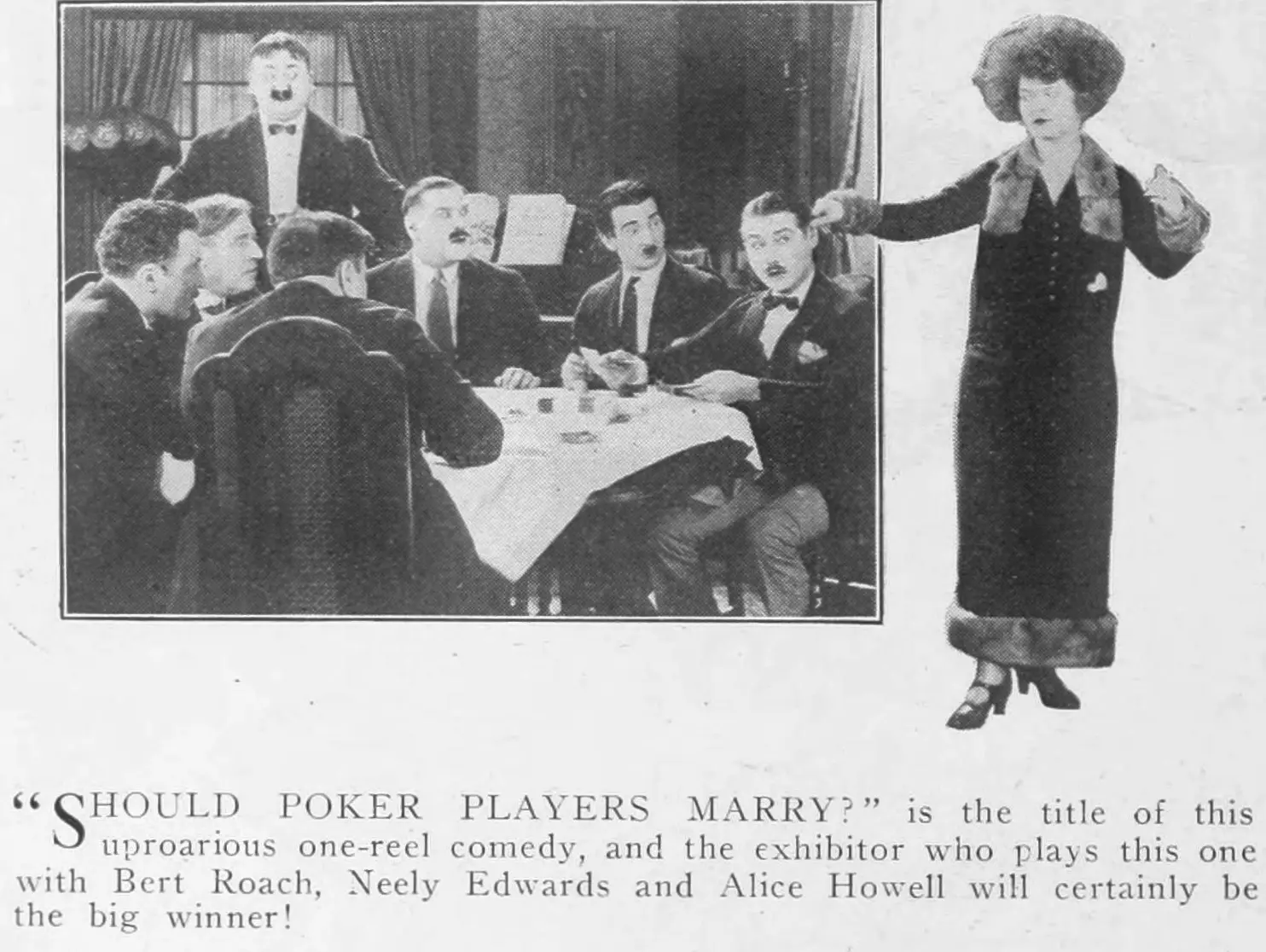
Yet, Ned, despite his "nervy" disposition, possesses an indomitable spirit of defiance. The rope and tacks, far from imprisoning him, merely serve as an elaborate challenge. His subsequent escape, a feat of silent-era ingenuity, is a testament to the human (or perhaps, specifically, the male) desire for freedom, however fleeting. The physical comedy inherent in navigating a floor of tacks while tethered to an unseen force is undoubtedly where Neely Edwards shines, his contorted expressions and exaggerated movements conveying both pain and determination. When his wife awakens to find her tethered bird has flown, her reaction is not one of despair but of resolute pursuit. The image of her following the taut cord, a domestic Ariadne tracing her way through a labyrinth of urban architecture, is a brilliantly conceived visual punchline that builds anticipation for the inevitable confrontation.
The performances of Neely Edwards and Alice Howell are the beating heart of this comedic offering. Edwards, as Nervy Ned, embodies the archetype of the henpecked husband with a mischievous streak. His physical comedy is precise, his reactions priceless. He doesn't just act; he contorts, he stumbles, he grimaces with an earnestness that makes his plight both pitiful and uproarious. One can almost feel the phantom pain of the tacks through his exaggerated winces. His attempts at bravado, particularly when confronted by his wife "several floors above," are a study in comedic futility. He tries to project an air of nonchalance, a defiant masculinity, but it crumbles under the weight of his wife's unwavering gaze and the sheer absurdity of his situation. This is classic silent film acting: every gesture, every twitch of an eyebrow, every slump of the shoulders is meticulously crafted to convey emotion and drive the narrative.
Alice Howell, on the other hand, is a force of nature. Her portrayal of Ned's wife is a magnificent blend of exasperation, determination, and righteous fury. She is not merely a nag; she is an architect of domestic justice, a woman whose patience has worn thin and whose methods have become gloriously unconventional. Her expressive face, a canvas for silent film emoting, perfectly captures the transition from simmering resentment to volcanic indignation. The "awful trimming" she delivers, culminating in that iconic, admonishing finger, is a moment of pure comedic triumph. It’s a visual shorthand for female agency pushing back against perceived male irresponsibility, exaggerated to a degree that makes it universally relatable, even a century later. Howell’s performance ensures that while Ned is the primary target of our laughter, his wife is not just a one-dimensional antagonist but a formidable character in her own right, commanding both fear and a certain perverse admiration.
The directorial choices in Should Poker Players Marry? are astute, maximizing the comedic potential of every situation. The pacing is brisk, a hallmark of early silent comedies designed to keep audiences engaged with a rapid succession of gags. The film effectively uses its setting, particularly the multi-story apartment building, to facilitate the chase sequence, adding a vertical dimension to the already absurd pursuit. The camera angles, while largely static
IMDb —
1916
Community
Log in to comment.