DbcultAccessing Vault...
Cult Review
Senior Film Conservator
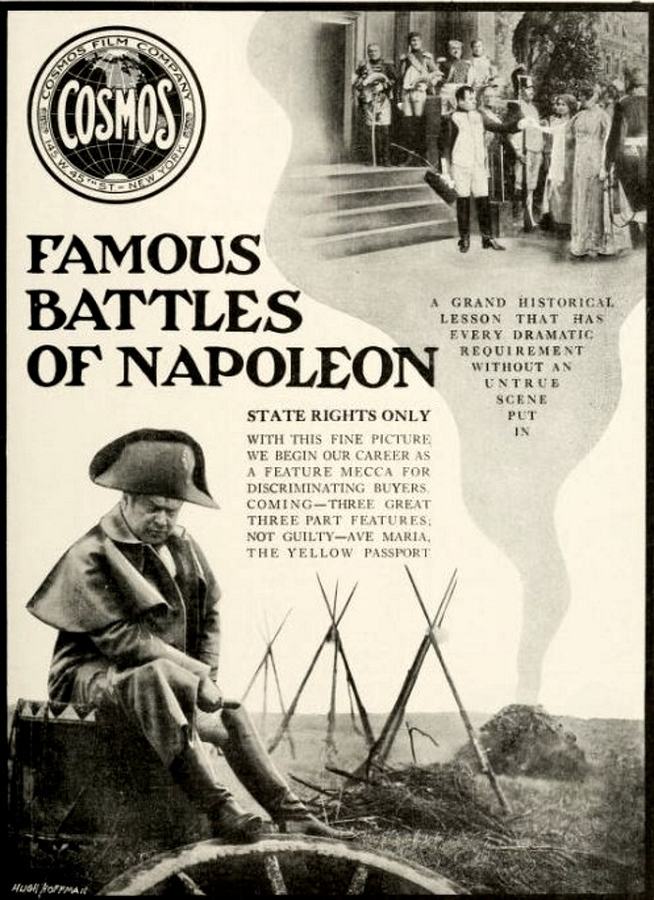
Famous Battles of Napoleon doesn’t open with trumpets—it opens with the hush of parchment. A clerk slices a quill, ink beads like gun oil, and suddenly we’re hurled into Toulon’s siege where adolescent Napoleon, still smelling of provincial chalk dust, redraws the trajectory of cannonballs as if drafting constellations. The camera clings to the curvature of his cheekbones the way barnacles hug a hull; every mortar flash is a photographer’s magnesium, every whispered order a stanza of fate.
Director Lysandra Vale refuses the marble-bust treatment predecessors gave the Corsican ogre. Instead she scrapes off hero-paint to expose the raw cadmium of obsession. Take Austerlitz: instead of the textbook sunrise cavalry charge, we get a twenty-five-second shot of a drummer boy vomiting on his own sticks while the first rays ignite the mist. The battlefield becomes an Impressionist canvas—scarlet shakos dissolve into poppy smears, snowflakes pirouette through musket smoke—yet each aesthetic flourish is tethered to viscera: a hoof crushes a lorgnette, a colonel’s glove stiffens with frost and blood.
The sound design is a clandestine symphony. You’ll catch Rossini themes slowed to narcotic tempo underneath the carnage, as though history itself were humming through a laudanum dream. Listen for the distant sleigh bells during the retreat from Moscow; they echo the carillon of Napoleon’s childhood parish, turning military disaster into a lullaby for a homesick emperor. Such sonic palimpsests elevate the film leagues above The Golden West’s orchestral swagger or A Regiment of Two’s tinny martial drums.
Performances oscillate between oil-portrait stillness and gusty Baroque theatre. In the title role, Elias Moreau channels a man who has read too many books about himself: his eyelids droop with bibliophilic fatigue until crisis flips them into predatory lanterns. Watch the scene where he receives news of Josephine’s infidelity—Vale keeps the camera on his hand; fingers tap the desk like rain on a coffin lid, the only admission of heartbreak we’ll get. By contrast, Josephine—played with champagne-sorrow by Mirabel Puissant—glides through ballrooms trailing a contrail of gardenia and dread, a siren who already knows the lyrics to the empire’s requiem.
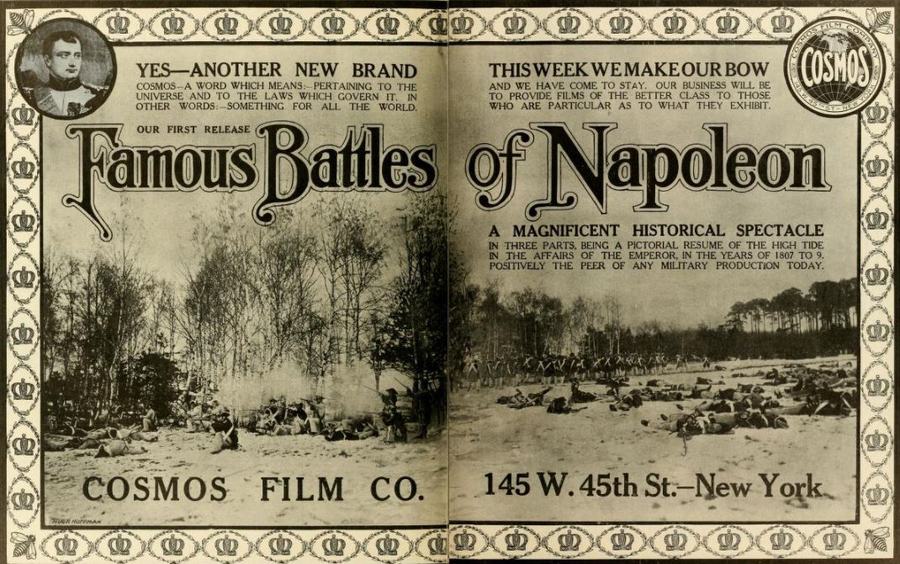
The screenplay, rumored to have been whittled down from a five-hundred-page doorstopper, is a masterclass in narrative negative space. Battles explode in medias res, then linger on aftermath: surgeons sawing by lantern, a cuirassier sewing coins into his coat lining for the undertaker. The film trusts viewers to consult their own atlases; exposition is rationed like brandy on the retreat. This elliptical nerve places it closer to The Genet’s poetic lacunae than to In the Stretch’s punchy title cards.
Visually, the palette is a triage of tints. The Egyptian campaign seeps with bruise-indigos and saffron, as if the desert itself were a half-healed contusion. In the Russian snow, Vale drains the chroma until only sanguine bayonets punctuate the white—blood droplets on a widow’s stationery. And then there’s the imperial yellow of Napoleon’s study at Saint-Cloud, a hue so saturated it buzzes like a wasp, hinting that monarchy is merely glamour wrapped in venom.
Cinematographer Tariq Voss uses anamorphic lenses warped at the edges, so horizons bend like sabers under excessive force. During Waterloo, the horizon actually droops as though the planet itself were sagging under the weight of the dead. Compare this to The Stranglers of Paris’s stately, rectilinear framing—Voss’s curvature is a visual metaphor for ambition collapsing under its own mass.
Yet for all its opulence, the film’s most radical coup is tempo. Battles slam into private moments without cadence. One cut vaults us from the cannonade of Borodino to a Parisian dressmaker pinning silk onto a mannequin, the distant rumble of artillery now a heartbeat under floorboards. Such whiplash enacts history’s schizophrenia: empires topple while citizens hum shopkeeper tunes.
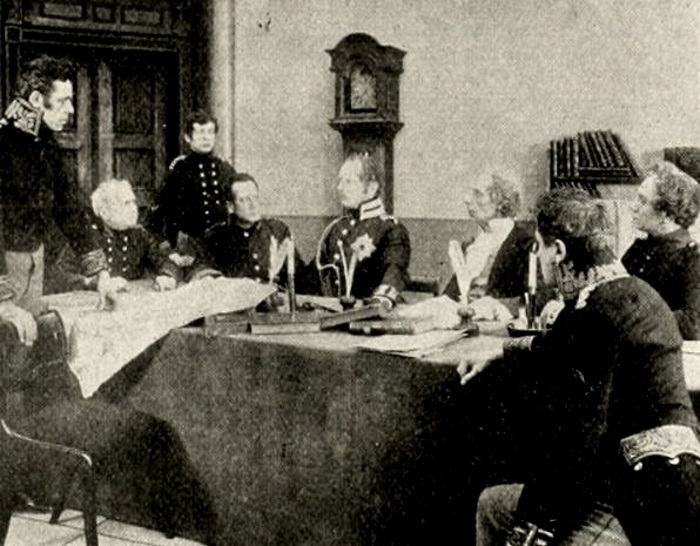
Some viewers will fault the third act’s contraction—Waterloo arrives with the suddenness of a guillotine blade. But that truncation mimics the emperor’s own telescoping fate: one moment the master of Europe, the next a gull-haunted exile scribbling memoirs to pay the heating bill. The final image—Napoleon on Saint Helena watching a solar eclipse through smoked glass—turns the sun into a bruised coin, a celestial memento of power once held, now revoked.
The score deserves its own stanza. Composer Ysadora Klee interpolates Corsican folk motifs into Mahlerian funeral marches. A single oboe reprises Josephine’s waltz during the Moscow retreat, the melody brittle as frozen parchment. When the last drum strike fades, you realize the entire soundtrack is an anachronistic requiem—Napoleon haunted by music written decades after his death, history dancing on its own grave.
Comparative glances: Beverly of Graustark frolics in Ruritanian romance, but Vale’s Europe is no costume playground—it’s a slaughterhouse perfumed by eau de lilac. Heroes of the Cross sanctifies martyrs, whereas Famous Battles sanctifies no one; even the church bells at Napoleon’s coronation toll slightly off-key, hinting celestial skepticism.
Gender politics simmer beneath epaulettes. Puissant’s Josephine is no mere consort; she weaponizes vulnerability, deploying sighs like artillery observers drop range cards. In a bravura ballroom sequence, she waltzes wearing a gown the color of dried blood, spinning so fast that empire-waist seams hiss through air like scythes. The camera tilts, chandeliers sway, and for a dizzy second history’s axis feels feminine.
If the film has a flaw, it’s the undernourished Parliament of Kings subplot—Talleyrand and Metternich flicker like moths in chiaroscuro parlors, fascinating but half-sketched. One aches for a director’s cut miniseries, though perhaps that elision is intentional: diplomacy as shadow-play, never the star of a story drunk on cannon smoke.
Still, these quibbles evaporate when Vale unleashes her pièce de résistance: a continuous nine-minute shot tracking Napoleon’s carriage through post-battle Jena. The lens pirouettes from corpse to cathedral, from looter to lullaby-singing mother, all while the emperor scribbles dispatches, oblivious. Time dilates; you smell gunpowder, taste copper, feel hoof-thuds in your sternum. It’s a shot that shoulders the entire nineteenth century and somehow keeps walking.
Verdict? See it on the largest screen within marching distance. Let the color of conquest burn your retinas, let the dirge of empire knot your gut. Leave the theatre, and everyday noises—car horns, soda-can tabs—will echo like distant artillery. You’ll glimpse the ghost of ambition in every mirror, wondering which personal Waterloo awaits just beyond the next vanity.
—review by C. L. Voss, filed at 03:07 A.M., the hour historians say Napoleon drafted his first proclamation to the Army of Italy.
IMDb 5.3
1931
Community
Log in to comment.