DbcultAccessing Vault...
Cult Review
Senior Film Conservator
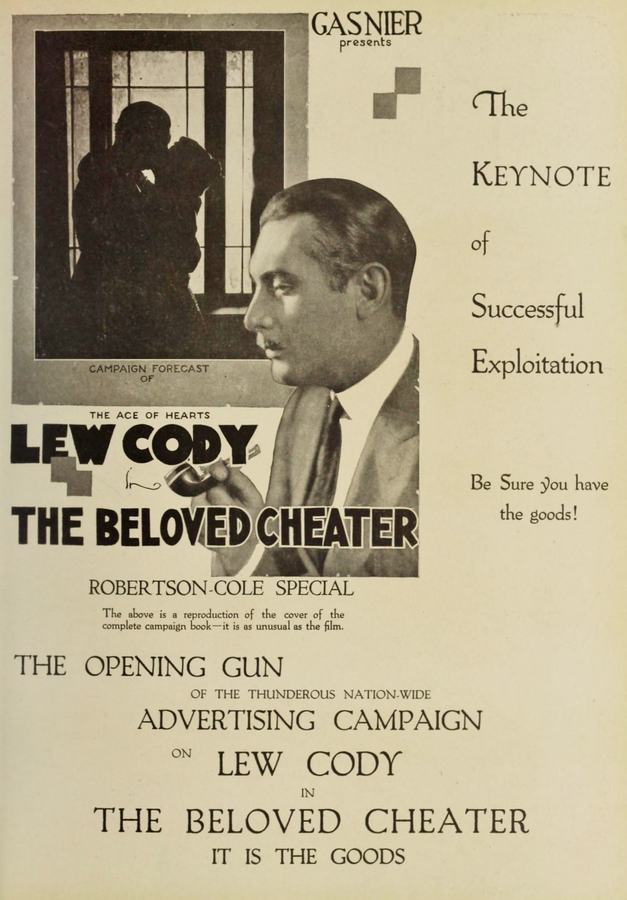
Stepping back into the flickering glow of a 1920s silent film often feels like unearthing a forgotten treasure, a glimpse into a cinematic language both familiar and exquisitely alien. Among these unearthed gems, The Beloved Cheater emerges as a delightful, if somewhat scandalous, confection, a testament to the era's burgeoning fascination with romantic intrigue, social satire, and the magnetic allure of a charismatic rogue. Directed by Louis J. Gasnier and penned by the formidable trio of Jules Furthman, Louis J. Gasnier himself, and the film's own star, Lew Cody, this picture is more than just a simple romantic comedy; it’s a playful interrogation of societal norms, the nature of affection, and the curious pathways of the human heart.
At its core, The Beloved Cheater plunges us into a world where a kiss is not merely a kiss, but a moral dilemma, a sacred vow, or perhaps, a weapon of romantic subversion. Our protagonist, Eulalie Morgan, brought to vivacious life by Doris Pawn, is a member of the rather quaintly named 'Anti-Kiss Cult.' This peculiar affiliation dictates a rigid abstinence from osculation, a stance that naturally vexes her fiancé, Kingdon Challoner (Andrew Robson). Kingdon, a man clearly more accustomed to traditional expressions of affection, finds himself in a romantic cul-de-sac. His frustration, however, paves the way for the film's central conceit, introducing the roguish Bruce Sands, portrayed with effortless charm by the inimitable Lew Cody.
Sands, a man whose very existence seems to defy convention, proposes a scheme as audacious as it is morally ambiguous: he will steal a kiss from Eulalie in the dark, a momentary transgression, only to be replaced by Kingdon, who will then reap the credit for breaching Eulalie's anti-kiss resolve. What could possibly go wrong? Everything, as it turns out, and in the most gloriously cinematic fashion. The ensuing discovery that it was Bruce, not Kingdon, who delivered the illicit kiss, ignites a spark of unexpected passion within Eulalie, leading her to break off her engagement and declare her love for the very man who deceived her. This sudden shift, a delightful comedic pivot, sets the stage for a series of complications that are both humorous and surprisingly insightful for their time.
Doris Pawn's portrayal of Eulalie Morgan is a revelation. She navigates the character's journey from rigid adherence to her cult's principles to a woman awakened by an unexpected, even forbidden, passion, with a remarkable blend of innocence and burgeoning sensuality. Her expressions, often subtle yet profoundly impactful, convey a gamut of emotions – confusion, indignation, and ultimately, a captivating surrender to her heart's impulses. It’s a performance that grounds the more farcical elements of the plot, reminding us that beneath the comedic surface lie genuine human desires and dilemmas. One might even draw a parallel to the spirited independence seen in characters from films like The Woman Who Dared, albeit with a lighter, more romantic comedic touch. Eulalie's defiance, though born of deception, is still a powerful act of self-determination.
Lew Cody, of course, is the lynchpin of the film. As Bruce Sands, he embodies the 'beloved cheater' with such disarming charisma that one can almost forgive his manipulative machinations. Cody possesses that rare, magnetic quality that transcends the silent screen, a twinkle in his eye and a suave demeanor that makes him utterly irresistible. He's not merely a cad; he's a charming rogue, a man who understands the intricacies of human desire and isn't afraid to bend the rules to achieve his ends. His performance here is a masterclass in silent film acting – subtle gestures, expressive eyes, and a confident physicality that commands attention. Comparisons to other leading men of the era are inevitable, but Cody carves out a unique niche, often playing characters with a moral flexibility that made them all the more intriguing. His playful villainy here is reminiscent of the complex figures he often essayed, making him a fascinating presence on screen, much like how one might appreciate the nuanced portrayal of characters in dramas like The Taint, where moral lines are often blurred.
Andrew Robson, as Kingdon Challoner, admirably plays the straight man to Cody's flamboyant trickster. His character's initial frustration, followed by bewildered heartbreak and eventual resignation, provides a necessary emotional anchor for the audience. Kingdon is the victim of circumstance, a man outmaneuvered not by malice, but by a cunning scheme and the unpredictable nature of love. Robson’s portrayal elicits sympathy, preventing the film from becoming a mere celebration of deception and instead injecting a layer of emotional complexity that elevates the narrative beyond simple farce. The supporting cast, including Alice Fleming, Kathleen Kirkham, Frederick Vroom, Eileen Percy, and Jack Mower, all contribute to the film’s vibrant tapestry, each adding a brushstroke to the social milieu that frames the central romantic triangle.
The screenplay by Jules Furthman, Louis J. Gasnier, and Lew Cody himself is remarkably astute for its time. It’s not just about the physical act of a kiss, but what that act represents: intimacy, commitment, and the breaking of personal boundaries. The 'Anti-Kiss Cult' is a clever device, allowing the film to explore themes of puritanical restraint versus burgeoning sexual freedom, a topic that was undoubtedly resonant in the Roaring Twenties. The intertitles, crucial to silent film storytelling, are witty and well-paced, driving the narrative forward with clarity and often injecting comedic timing that would be right at home in a modern screwball comedy. The writing manages to be both lighthearted and subtly subversive, questioning the arbitrary rules society places on human emotion and interaction. This intellectual undercurrent, hidden beneath a delightful surface, is what gives The Beloved Cheater its enduring appeal.
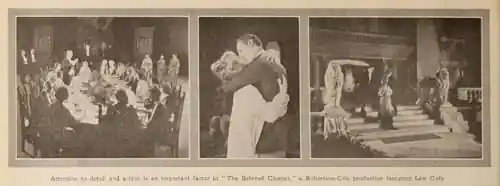
Louis J. Gasnier's direction is competent and effective, utilizing the visual language of silent cinema to maximum effect. The pivotal kiss scene, shrouded in darkness, is masterfully orchestrated, building suspense and surprise. Gasnier understands how to frame his actors to emphasize their expressions and reactions, ensuring that the audience is always connected to the emotional core of the scene. The pacing is brisk, never lingering unnecessarily, but allowing moments of dramatic tension and comedic payoff to breathe. While perhaps not as visually experimental as some of his contemporaries, Gasnier's work here is solid, providing a clear and engaging narrative flow that keeps the audience invested in the characters' predicaments. His work here showcases a keen understanding of popular entertainment, much like the direct and engaging style seen in films such as Pauline.
The film's thematic exploration of deception in romance is particularly noteworthy. Is a love born of deceit less valid? The Beloved Cheater dares to suggest that perhaps, in some cases, it can be the catalyst for a more profound connection, one that transcends initial appearances. Eulalie's attraction to Bruce is not merely physical; it's an attraction to a man who challenged her preconceived notions, who stirred something within her that Kingdon, for all his earnestness, could not. This exploration of unconventional attraction and the breaking of social taboos aligns with the spirit of the Jazz Age, a period characterized by a loosening of moral constraints and a questioning of traditional values. It’s a fascinating counterpoint to more straightforward melodramas of the era, offering a nuanced perspective on what constitutes 'true' love.
The social commentary, though subtle, is palpable. The 'Anti-Kiss Cult' itself can be seen as a satirical jab at the various moralistic movements prevalent at the time, particularly those attempting to regulate personal conduct and expressions of affection. By showing Eulalie's eventual liberation from its strictures, the film implicitly champions individual freedom and the pursuit of genuine emotional connection over arbitrary rules. This kind of social observation, wrapped in an entertaining package, is a hallmark of many enduring silent films, from the stark realism of The Regeneration to the more overt social critiques found in Within Our Gates, though The Beloved Cheater approaches it with a decidedly lighter touch and a focus on romantic entanglement rather than systemic injustice.
The aesthetic choices, while perhaps not groundbreaking, are effective. The sets and costumes reflect the fashionable sensibilities of the early 1920s, immersing the viewer in the era's glamour. The use of light and shadow, particularly in the intimate moments, adds a layer of depth and atmosphere, essential for conveying emotion without spoken dialogue. While not a spectacle in the vein of grand historical dramas, The Beloved Cheater demonstrates how well-crafted smaller stories could captivate audiences through strong performances and clever plotting.
Comparing The Beloved Cheater to other films of its period reveals its unique flavor. While romantic comedies were certainly not new, the specific premise of a 'kiss cult' and the explicit celebration of a 'cheater' as the romantic lead feels distinctly modern. It steps away from the more conventional romantic narratives found in films like Flor de durazno, which often focused on more straightforward, albeit dramatic, romantic tribulations. Instead, it leans into the kind of playful subversion that would become more common in later decades, making it a precursor to the sophisticated romantic comedies of the sound era. It’s a film that asks us to reconsider our judgments, to look beyond the surface of a 'scandalous' act and find the genuine connection that can sometimes emerge from unexpected places.
The performances by the ensemble cast, though centered around the trio, are uniformly strong. Alice Fleming as Mrs. Challoner and Kathleen Kirkham as Mrs. Sands add layers of societal expectation and comedic relief, their reactions often mirroring the audience's own incredulity and amusement. Frederick Vroom and Eileen Percy also contribute to the film’s rich tapestry, creating a believable social world for the characters to inhabit. Even Jack Mower, in a smaller role, helps flesh out the narrative, demonstrating the collaborative nature of silent film production where every actor contributed to the overall effect.
In retrospect, The Beloved Cheater is a film that deserves more attention than it typically receives in silent film discourse. It’s not just a historical curiosity; it’s a genuinely entertaining and surprisingly insightful piece of cinema that speaks to enduring human themes. It celebrates the unexpected, challenges conventions, and offers a charmingly cynical take on the pursuit of love. For fans of silent film, particularly those who appreciate the lighter side of the era, it’s a must-see. It offers a wonderful opportunity to witness the effortless charisma of Lew Cody and the understated brilliance of Doris Pawn, both of whom shine in this delightful romantic romp. It's a reminder that silent films were not just about grand spectacles or heavy dramas; they were also masters of subtle comedy and nuanced character studies, capable of exploring complex emotions with a captivating grace. The film's ability to blend humor with genuine emotional stakes, and to feature a 'bad boy' who ultimately wins the heart of the heroine, makes it a surprisingly modern viewing experience. It's an enduring example of how early cinema, even without spoken dialogue, could convey intricate plots and explore the complicated dance of human relationships with wit and charm, much like the timeless appeal of a well-crafted narrative such as Colonel Carter of Cartersville.
Ultimately, The Beloved Cheater is a testament to the enduring power of a good story, well-told. It’s a film that, despite its age, feels remarkably fresh, its themes of love, deception, and the pursuit of happiness resonating across the decades. It offers a wonderful opportunity to experience the unique magic of silent cinema, where gestures, expressions, and intertitles combine to create a world that is both captivating and deeply human. Don't let its relative obscurity deter you; this is a film that deserves to be rediscovered and cherished for its cleverness, its charm, and its beloved cheater.
IMDb 7.1
1927
Community
Log in to comment.