DbcultAccessing Vault...
7.4/10
Senior Film Conservator
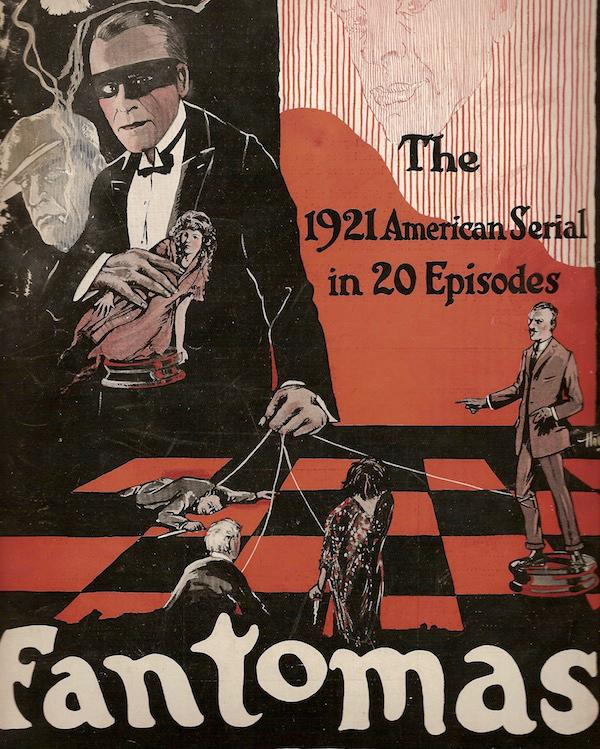
A definitive 7.4/10 rating for a film that redefined the boundaries of cult cinema. Fantomas - On the Stroke of Nine remains a cornerstone of transgressive art.
Stepping into the spectral void left by a lost film is an inherently melancholic endeavor, yet it's also an invitation to a unique form of critical archaeology. 'Fantomas - On the Stroke of Nine,' a title that echoes with both menace and a certain temporal urgency, represents more than just a missing piece of cinematic history; it embodies a cultural artifact whose very absence amplifies its mythical stature. The mere premise, a master criminal offering a truce only to declare war upon its refusal, speaks volumes about the early 20th century's fascination with the arch-villain, a figure who transcends mere criminality to become a societal force. This wasn't merely about good versus evil; it was about the very definition of order in an increasingly complex urban landscape.
Fantômas, as a character, existed long before this specific cinematic iteration. Born from the minds of Marcel Allain and Pierre Souvestre, he was a literary phenomenon, a phantom of crime whose exploits captivated an entire generation. To translate such a figure to the screen, particularly in the nascent years of cinema, required an understanding of visual spectacle and psychological tension. One can only imagine the impact of John Willard’s portrayal, or the gravitas brought by Lionel Adams, and the resilience embodied by Rena Parker, as they grappled with this elusive antagonist. The film, even in its spectral form, speaks to a time when moral ambiguities were beginning to seep into public consciousness, challenging the clear-cut heroics that often dominated popular entertainment. The choice to portray Fantômas not as a simple thief, but as a strategic mastermind capable of negotiating with, and then terrorizing, an entire city, elevates the narrative beyond mere genre confines. It suggests a more profound commentary on power, authority, and the societal contract itself.
The core conceit of 'Fantomas - On the Stroke of Nine' is Fantômas's extraordinary offer: a promise to abandon his life of crime if the authorities grant him immunity for his past. This is not the desperate plea of a cornered man, but the calculated move of someone who views the legal system as a set of rules to be exploited, a game to be won. It's a breathtaking display of hubris, a challenge to the very foundation of justice. When this audacious proposal is, quite rightly, rejected, the film pivots dramatically. Fantômas doesn't merely lash out; he embarks on a campaign designed to systematically dismantle civic peace, to instill such profound terror that the city itself begs for his original terms. This escalation from negotiation to outright psychological warfare is what would have made the film so compelling, exploring the thin line between order and anarchy. The sheer scale of his ambition, to hold an entire metropolis hostage, is a testament to the character's enduring appeal and the narrative's potential depth.
Consider the implications of such a plot in its historical context. Early 20th-century audiences, grappling with rapid industrialization, burgeoning urban centers, and the lingering shadows of societal unrest, would have found Fantômas's threats eerily resonant. His ability to infiltrate, to manipulate, to strike at the very heart of public safety, would have tapped into deep-seated anxieties. This is a villain who doesn't just steal jewels; he steals peace of mind. The narrative structure, as described, suggests a relentless, almost existential dread, a concept that would later be explored in various forms of noir and psychological thrillers. The film, even in its absence, serves as a powerful reminder of how early cinema engaged with complex themes, often using sensational plots to explore profound societal questions.
While we can no longer witness the performances of John Willard, Lionel Adams, Rena Parker, Ben Walker, Eve Balfour, Edward Roseman, Rita Rogan, Henry Armetta, Edna Murphy, Johnnie Walker, and Irving Brooks, their very names on the cast list evoke a sense of the era's acting styles. Early cinema often relied on exaggerated gestures and facial expressions to convey emotion, given the limitations of silent film. One can imagine Willard imbuing Fantômas with a chilling stillness, an almost supernatural calm amidst the chaos he orchestrates. Adams, perhaps as the beleaguered chief of police or a dogged detective, would have had to convey mounting frustration and desperation. Parker, possibly as a brave heroine or a victim caught in the crossfire, would have represented the human element, the vulnerability that Fantômas seeks to exploit. The ensemble cast, including character actors like Armetta and Murphy, would have filled out the cityscape, creating a vibrant, if terrified, backdrop for Fantômas's reign.
The collaboration between writers Edward Sedgwick, George Eshenfelder, Marcel Allain, and Pierre Souvestre is particularly intriguing. The original literary creators, Allain and Souvestre, provided the foundational character and world, while Sedgwick and Eshenfelder adapted it for the screen. This blend of original vision and cinematic interpretation is crucial. It suggests a faithfulness to the source material's darker, more complex elements, while also translating them into a visually dynamic format. The challenge would have been to maintain Fantômas's elusive nature without rendering him an abstract concept. The very title, 'On the Stroke of Nine', implies a ticking clock, a deadline, a moment of reckoning that would have heightened the narrative's tension. The dramatic stakes, therefore, were not just personal but civic, a city's very soul hanging in the balance.
Considering 'Fantomas - On the Stroke of Nine' in relation to other films of its era, even those that survive, offers a glimpse into its potential impact. While films like The Valley of the Giants might have showcased grand natural landscapes and heroic struggles against nature, 'Fantomas' delves into the urban jungle and the struggle against a man-made terror. The psychological depth, even if conveyed through silent film's broad strokes, would have distinguished it from simpler morality tales. One might draw parallels to the enigmatic figures found in films like Mr. Wu, where an imposing, often mysterious character drives the narrative through their sheer force of will or intellect. The way Fantômas challenges societal norms and legal structures could also resonate with themes of justice and its failures, as explored in films like The Law That Failed, albeit from the perspective of the law-breaker rather than the law enforcer.
The film's exploration of crime and punishment, and the very definition of morality, places it in a fascinating dialogue with other contemporary works. Unlike the clear-cut resolutions often seen in melodramas such as Love's Pay Day or Paid in Full, where transgressions are met with direct consequences, Fantômas's ability to dictate terms, or to terrorize when those terms are rejected, subverts conventional justice narratives. His character embodies a force that operates beyond the usual confines, making him a truly formidable cinematic creation. The film’s focus on terrorizing an entire city into submission is a bold thematic choice, one that prefigures later works where collective fear becomes a weapon. It speaks to the power of a single, determined individual to destabilize an entire system, a concept that finds echoes in various forms of political and social commentary throughout cinematic history.
The tragedy of 'Fantomas - On the Stroke of Nine' being a lost film cannot be overstated. Each lost film represents a silent gap in our understanding of cinematic evolution, a missing link in the chain of artistic and technical progression. For a film centered around such a pivotal and influential character as Fantômas, its disappearance is particularly poignant. It means we cannot fully appreciate how the character was rendered visually in this specific iteration, how the suspense was built, or how the actors brought these iconic roles to life. We are left to piece together its essence from plot descriptions and cast lists, like archaeologists reconstructing a magnificent edifice from scattered fragments.
This loss deprives us of a direct window into the early cinematic interpretation of urban terror and the psychology of the master criminal. How did the film visually articulate Fantômas's omnipresence? What cinematic techniques were employed to convey the city's mounting fear? These are questions that, regrettably, remain unanswered. The comparison to other lost or rarely seen films, like The Naulahka or A Texas Steer, highlights the precarious nature of early film preservation. Each title on the list of lost films represents a unique narrative voice, a specific aesthetic, and a particular cultural moment that has vanished from direct experience. The very act of discussing 'Fantomas - On the Stroke of Nine' becomes an exercise in historical imagination, a critical engagement with absence.
Even without the visual evidence, the narrative of 'Fantomas - On the Stroke of Nine' resonates with timeless themes. The struggle between an individual's will and institutional authority, the psychological impact of terror, and the societal cost of refusing to compromise with an overwhelming force are all concepts that remain highly relevant. Fantômas, as a character, embodies the ultimate anti-hero, a figure who compels both fear and a perverse admiration for his intellect and audacity. This fascination with the 'super-criminal' is a thread that runs through cinematic history, from early serials to modern blockbusters. His methods, though perhaps less overtly violent than some contemporaries, focused on psychological leverage and the systematic undermining of public trust. This makes him, in a way, a more insidious and therefore more terrifying figure.
The film's premise, particularly the idea of a city being terrorized into submission, explores the fragility of societal structures. It asks profound questions: What price is too high for order? Is there a point where an authority must bend to avoid total collapse? These are not simple inquiries, and a film that dared to pose them so directly, especially in the early 20th century, would have been remarkably potent. The comparison to films that deal with societal friction, even those with different themes like A Gentleman's Agreement (though much later and on a different subject), can highlight how cinema has always grappled with the mechanisms of social pressure and systemic response. Fantômas forces society to confront its own vulnerabilities, making him a mirror reflecting collective fears rather than just a simple antagonist. His promise to relinquish crime in exchange for absolution also raises philosophical questions about redemption and justice. Is true justice about punishment, or about the prevention of future harm, even if it means an uncomfortable compromise? This is the moral labyrinth that 'Fantomas - On the Stroke of Nine' likely navigated.
In the grand tapestry of cinema, 'Fantomas - On the Stroke of Nine' remains a tantalizing ghost. Its plot summary alone paints a vivid picture of a film that was ahead of its time in exploring the psychology of terror and the strategic brilliance of its villain. It compels us to reflect not just on the narrative itself, but on the fragility of film as a medium and the countless stories lost to the ravages of time. The enduring power of Fantômas as a character, his ability to inspire fear and fascination, ensures that even a lost film bearing his name continues to exert a pull on the imagination. It's a testament to the power of storytelling, that even in absence, a narrative can stir such vivid conjecture and critical contemplation. The film's legacy, therefore, is not just in what it was, but in what it represents: the ultimate, ungraspable phantom of early cinema, a compelling narrative that continues to haunt the collective memory of film enthusiasts, reminding us of the rich, often ephemeral, history of the silver screen.
IMDb —
1920
Community
Log in to comment.