DbcultAccessing Vault...
Cult Review
Senior Film Conservator
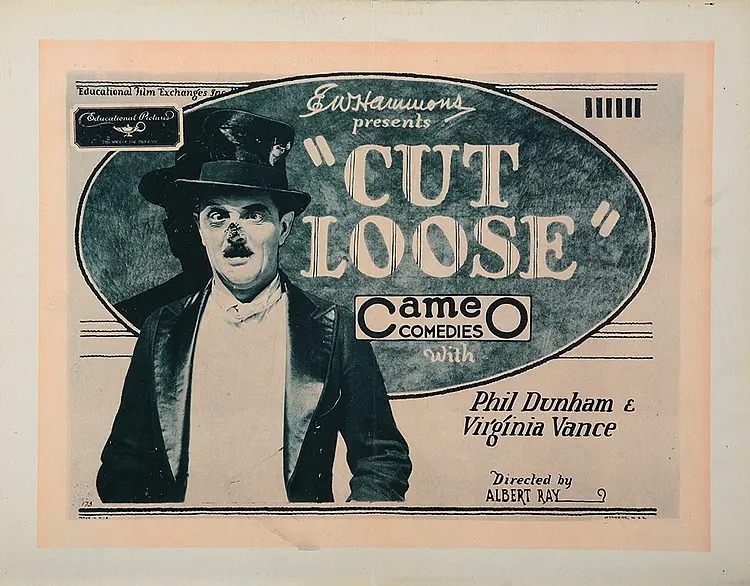
There's a certain unadulterated joy in revisiting the primordial soup of cinema, especially when it comes to the exuberant, often anarchic world of silent comedy. These films, stripped of dialogue, relied entirely on the universal language of physical expression, perfectly timed gags, and the sheer, unbridled charisma of their performers. Among the myriad shorts that populated the silver screens of the early 20th century, 'Cut Loose' emerges as a particularly spirited example, a whirlwind of slapstick propelled by the effervescent Phil Dunham. It’s a testament to the era’s knack for distilling comedic chaos into its purest form, delivering a compact yet utterly memorable experience that still tickles the funny bone today.
Phil Dunham, the undisputed maestro of this particular symphony of silliness, embodies a character so thoroughly soused and misguided that his every movement becomes a potential catastrophe, a veritable magnet for comedic misfortune. From the moment he stumbles onto the screen, his gait a precarious dance between gravity and the intoxicating effects of his libations, the audience is immediately clued into the brand of humor about to unfold. Dunham doesn't just play a drunk; he becomes the very essence of inebriated futility, his eyes wide with a bewildered innocence even as he systematically dismantles the fabric of polite society around him. It's a performance that transcends mere mimicry, delving into the psychological landscape of someone perpetually a step behind reality, yet stubbornly determined to forge ahead, however clumsily.
The premise itself is deceptively simple: a chap, having imbibed too freely, sets out to visit a friend. But in the hands of Dunham and the uncredited creative forces behind 'Cut Loose,' this simple objective transforms into an epic quest fraught with hilariously insurmountable obstacles. The initial struggle to gain entry to the bungalow is a masterclass in escalating frustration. Every doorknob becomes a personal affront, every window a mocking portal. Dunham’s character cycles through an increasingly outlandish repertoire of attempts – pushing, pulling, prodding, peering – each one more futile than the last. His physical comedy here is precise, almost balletic in its ineptitude. He bounces off walls, tangles with shrubbery, and engages in a silent, exasperated dialogue with the inanimate objects that stubbornly refuse to cooperate with his inebriated logic. It’s a foundational piece of slapstick, echoing the timeless struggle of man versus environment, albeit with a decidedly self-inflicted handicap.
The true stroke of comedic genius arrives when Phil, utterly defeated by conventional entry, spots a bus. Not just any bus, but one that, through a serendipitous alignment of circumstances, offers an unconventional solution. His decision to mount this public conveyance and use it as an impromptu elevator to the second story of the bungalow is a moment of pure, illogical brilliance. It’s a gag that defies all reason, yet within the heightened reality of silent comedy, it feels perfectly, gloriously right. The sheer absurdity of the image – a bus, typically a grounded vehicle of public transport, repurposed as a vertical ascent mechanism – is enough to elicit guffaws. Dunham’s commitment to this ridiculous act sells it completely; his determined, slightly cross-eyed focus as he clambers aboard and makes his perilous climb is utterly captivating.
Once inside, the chaos only intensifies. The bungalow, intended as a refuge, becomes a labyrinth of new terrors for the disoriented protagonist. The animal skins, likely meant as decorative rugs or wall hangings, transform into menacing, snarling beasts in Phil's alcohol-addled perception. His reactions are priceless – a series of exaggerated jumps, terrified yelps (implied, of course), and frantic dodges. This sequence capitalizes on the power of suggestion and the character’s compromised state, turning mundane objects into sources of genuine, if misplaced, fear. It’s a subtle yet effective way to deepen the comedic well, moving beyond simple physical gags to explore the psychological humor of a mind unravelling under pressure.
Following this zoological nightmare, Phil encounters the quintessential slapstick hazard: a slippery floor. The ensuing sequence is a masterclass in controlled chaos, as Dunham executes a series of slides, skids, and near-falls. His limbs flail wildly, his body contorts into impossible angles, and he seems to defy gravity for moments before inevitably succumbing to its pull in a spectacularly undignified manner. This kind of physical comedy requires immense skill and precise timing, and Dunham delivers it with aplomb. It's not just about falling; it's about the art of falling, the anticipation, the struggle, and the inevitable, hilarious surrender. The way he mixes things up generally, inadvertently displacing furniture, knocking over vases, and creating a general state of domestic pandemonium, adds another layer to the comedic tapestry. He is a bull in a china shop, but a bull who genuinely believes he is navigating with utmost decorum.
The film's pacing is relentless, a rapid-fire succession of gags that leaves little room for a breath. This kinetic energy is a hallmark of many silent comedies, which often had to pack maximum impact into limited runtimes. While not possessing the grand narrative sweep of an epic like The Queen of Sheba, 'Cut Loose' masterfully distills pure comedic chaos into its brief runtime, a testament to the power of focused slapstick that often felt more immediate than the sprawling dramas of the era. It shares a certain anarchic spirit with other shorts, a defiance of logic that perhaps echoes the early experimentation seen in films like This Way Out, though 'Cut Loose' leans more heavily into the sheer physical absurdity rather than a narrative puzzle. The direction, though uncredited, demonstrates a keen understanding of comedic timing and visual storytelling, ensuring that each gag lands effectively and contributes to the overall escalating absurdity.
The climax of Phil’s misadventure sees him, quite fittingly, making his escape on a bus that literally runs away. It’s a final, triumphant flourish of chaos, a perfect encapsulation of the film’s madcap spirit. His journey began with a bus as an unlikely ladder, and it ends with a bus as an uncontrollable escape vehicle, bringing his topsy-turvy day full circle. This symmetrical absurdity provides a satisfying, albeit utterly nonsensical, conclusion to his drunken odyssey. It leaves the audience with a lingering image of Phil, still bewildered, still slightly tipsy, being carried off into the cinematic sunset by forces entirely beyond his control.
Comparing 'Cut Loose' to its contemporaries reveals its unique charm. While films like The Old Nest might have explored more sentimental or dramatic narratives, 'Cut Loose' firmly plants its flag in the territory of pure, unadulterated farce. It doesn't aim for character depth or profound social commentary, unlike perhaps the more nuanced portrayals in something like Mr. Opp. Instead, its brilliance lies in its commitment to a single, escalating comedic premise. It's closer in spirit to the immediate, situation-driven humor of shorts like The Skipper's Narrow Escape, where the plot serves primarily as a vehicle for a series of escalating physical predicaments. The film showcases a particular brand of early 20th-century humor that found its zenith in the silent era, relying on visual gags that transcend linguistic barriers.
Phil Dunham's performance is truly the linchpin here. Without a strong central comedic presence, such a film could easily devolve into mere silliness. But Dunham imbues his character with a certain endearing vulnerability, a pathos beneath the slapstick that makes him more than just a caricature. His wide, expressive eyes communicate volumes, conveying confusion, alarm, and a dogged, if misguided, determination. He’s a sympathetic figure, despite the chaos he wreaks. This ability to make the audience root for the stumbling, bumbling protagonist is what separates truly great silent comedians from the merely competent. His presence elevates 'Cut Loose' from a simple short to a memorable comedic experience, demonstrating the power of a performer who understands the nuances of physical expression.
The enduring appeal of 'Cut Loose' lies in its timeless brand of humor. Slapstick, at its core, is universally understood. The sight of someone slipping on a banana peel, or in this case, a polished floor, elicits an immediate, visceral reaction. It taps into a primal sense of schadenfreude mixed with empathy. This film, though nearly a century old, retains its ability to provoke genuine laughter because its comedic foundations are so robust. It doesn't rely on dated references or complex narrative structures. It’s pure, distilled mirth, a delightful escape into a world where logic takes a backseat to laughter.
In a cinematic landscape often dominated by grand narratives and complex character arcs, 'Cut Loose' serves as a refreshing reminder of the simple, potent power of unadulterated comedy. It's a small film with a big heart, a testament to the ingenuity of early filmmakers and the magnetic charm of performers like Phil Dunham. While it may not command the historical gravitas of The Sea Wolf or the epic scope of The Dawn of Freedom, its contribution to the legacy of comedic cinema is undeniable. It’s a film that asks nothing more than for its audience to suspend disbelief and revel in the joyous absurdity unfolding before their eyes. Its charm is infectious, its gags meticulously crafted, and its legacy, while perhaps not widely heralded, is firmly cemented in the annals of delightfully chaotic silent cinema. For anyone seeking a dose of pure, unadulterated laughter, 'Cut Loose' is an absolute gem, a brief but brilliant explosion of comedic brilliance that proves that sometimes, all you need is a drunk man, a bungalow, and a runaway bus to create cinematic magic.
The ingenuity of the gags, particularly the bus-as-ladder sequence, speaks volumes about the creative minds working in the early days of film. They were pioneers, constantly experimenting with what the new medium could achieve. This isn't just a series of random mishaps; there’s an underlying structure to the chaos, a progression of comedic obstacles that builds to a satisfying crescendo. The film serves as a valuable artifact, showcasing the foundational elements of physical comedy that would influence generations of performers and filmmakers. It highlights how much could be conveyed without a single spoken word, relying instead on exaggerated expressions, precise movements, and the universal language of human folly. It’s a joyous ride from start to finish, a splendid little piece of cinematic history that reminds us of the timeless appeal of a good, old-fashioned laugh. The film is a wonderful example of how even a simple premise, when executed with talent and a keen eye for humor, can create something truly memorable and enduring. It's a must-see for aficionados of silent cinema and anyone who appreciates the pure art of slapstick.
IMDb —
1925
Community
Log in to comment.