DbcultAccessing Vault...
Cult Review
Senior Film Conservator
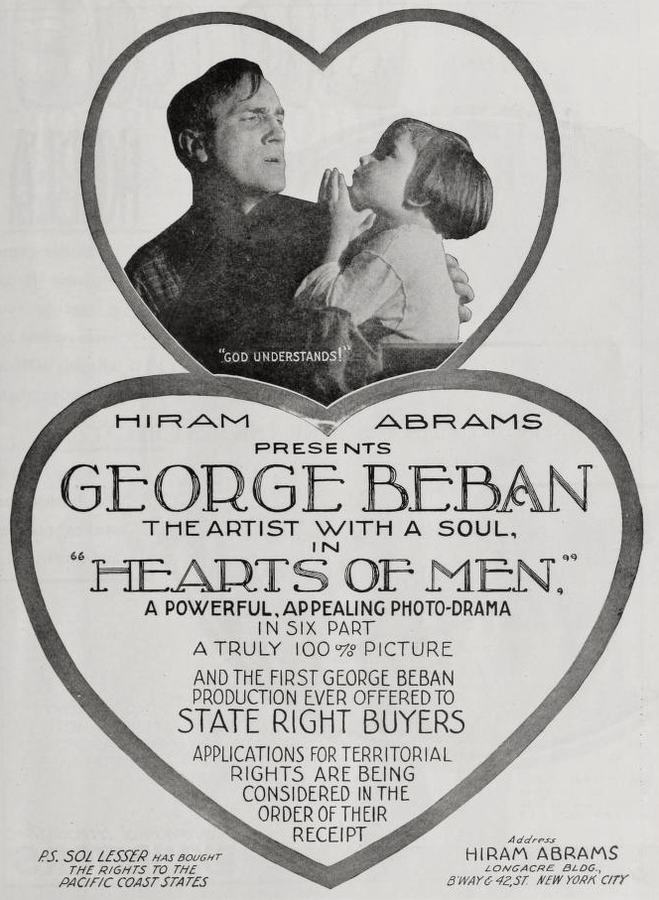
In the pantheon of early twentieth-century cinema, few figures navigated the treacherous waters of ethnic caricature with as much pathos and dignity as George Beban. In his 1919 opus, Hearts of Men, we witness a profound distillation of the immigrant’s odyssey—a narrative that eschews the simplistic tropes of the era to present a multifaceted exploration of grief, communal integration, and the fickle nature of the American Dream. Unlike the more fantastical or exoticized depictions of foreign cultures seen in contemporary works like The Forbidden City, Beban’s portrayal of Nicolo Rosetti is grounded in a gritty, palpable realism that resonates with the sweat of the brow and the salt of the tear.
The film opens with a sequence of bucolic serenity that serves as a stark contrast to the industrial cacophony that follows. Nicolo’s life as a florist is not merely a profession; it is an extension of his internal equilibrium. When the necessity of his mother’s health forces a migration to the Arizona desert, the cinematography shifts from soft, filtered light to a harsh, high-contrast aesthetic that underscores the unforgiving nature of the frontier. This is not the romanticized West of The Border Legion; rather, it is a landscape of existential dread where the soil refuses to yield life, and the human elements are equally sterile and hostile.
The initial confrontation between Nicolo and the railroad gang is a masterclass in social commentary. The laborers, fearing the erosion of their economic standing by what they perceive as 'cheap Italian labor,' embody a nativist anxiety that was rampant in post-WWI America. This tension is palpable, yet the film deftly navigates away from prolonged conflict through the introduction of Beppo. George Beban Jr.’s performance provides a bridge of innocence that spans the chasm of cultural distrust. The transition of the railroad workers from antagonists to architects of Nicolo’s home is a narrative arc that mirrors the optimistic, albeit idealistic, melting-pot philosophy of the time. It suggests that while the 'hearts of men' may be easily swayed by fear, they are equally susceptible to the gravitational pull of shared humanity.
This communal bonding is reminiscent of the sentimental structures found in Little Miss Happiness, yet it possesses a darker, more textured undercurrent. The death of Nicolo’s mother is handled with a restraint that amplifies its emotional weight, avoiding the mawkishness that often plagued silent-era melodramas. It is this tragedy that precipitates the film’s most harrowing segment: the arrival of Tina Ferronni.
Mabel Van Buren delivers a performance of chilling duplicity as Tina. In a cinematic landscape where female characters were often bifurcated into the categories of the pure ingenue—think Snow White—or the exotic temptress, Tina represents a more modern, domestic villainy. She is the anti-mother, a figure who exploits the sacred bond of the family for personal liberation and material gain. Her decision to abduct Beppo and falsely report his death is an act of psychological cruelty that elevates the film from a simple drama to a proto-thriller. The scenes of Nicolo’s grief are agonizingly rendered by Beban, whose face becomes a canvas of topographical despair, every wrinkle and shadow telling the story of a man who has lost his anchor in the world.
The deception practiced by Tina is far more insidious than the overt villainy found in Bella Donna. While the latter deals with the allure of the forbidden, Tina’s treachery is a betrayal of the very foundation of the immigrant’s hope: the promise of a better life for the next generation. The film’s detour to Italy, though brief, highlights the disconnect between the idealized 'Old Country' and the harsh realities of the 'New World,' a theme that echoes through the corridors of cinematic history.
The final act of Hearts of Men is a whirlwind of serendipity and justice. The discovery of oil on Nicolo’s 'wasteland' is a quintessential American trope—the sudden transformation of the disenfranchised into the elite. However, the film avoids the cynicism often associated with sudden wealth. Instead, Nicolo’s fortune is framed as a tool for communal restoration. His willingness to share his wealth with the railroad workers who once sought to expel him completes the circle of reconciliation. It is a thematic resonance that one might find in the more redemptive moments of The Show Down, where character is tested by the sudden influx of power or resources.
The return of Beppo, orchestrated by the clandestine efforts of the laborers, serves as the film’s emotional crescendo. The reunion scene is a triumph of silent storytelling, relying on the physical language of relief and the visual metaphor of the oil well—a geyser of prosperity mirroring the eruption of joy in Nicolo’s heart. The technical execution of the oil strike, likely a sophisticated practical effect for 1919, adds a layer of spectacle that rivals the high-stakes tension of The Flying Circus.
To view Hearts of Men today is to engage with a piece of cultural archaeology that remains surprisingly relevant. While some of the narrative beats may seem convenient by modern standards, the underlying empathy for the 'other' is remarkably progressive. George Beban’s commitment to portraying the Italian experience with nuance—avoiding the stereotypical 'hand-wringing' or 'organ-grinder' caricatures—was a revolutionary act in a period dominated by films like The War of the Tongs, which often leaned into sensationalized racial tropes.
The film’s pacing is deliberate, allowing the audience to inhabit the stasis of Nicolo’s grief before the frantic energy of the finale. This rhythmic variance is a testament to the directorial vision of the era, where the camera was beginning to find its voice as a psychological tool rather than just a theatrical observer. In comparison to the more episodic nature of Perils of the Secret Service, Hearts of Men feels like a cohesive, symphonic whole.
The lighting in the Arizona sequences deserves particular mention. By utilizing the natural, harsh sunlight of the desert, the filmmakers created an atmosphere of exposure. Nicolo has nowhere to hide his grief; the landscape is as empty as his heart after Beppo’s 'death.' This use of setting as a psychological mirror is a technique that would be refined in later years, but here it feels raw and instinctive. It lacks the stylized gloom of Manya, die Türkin, opting instead for a sun-bleached despair that feels uniquely American.
Furthermore, the intertitles in the film are more than just narrative bridges; they are infused with a poetic sensibility that enhances the visual storytelling. They capture the vernacular of the time while maintaining a dignified tone that respects the characters' struggles. This linguistic care is often overlooked in silent film analysis but is essential to understanding the film’s impact on its contemporary audience. It provides a level of interiority that matches the depth found in European imports like Mellan liv och död.
In the grand tapestry of 1919 cinema, Hearts of Men stands as a vibrant thread. It is a film that dares to ask what makes a man—is it his lineage, his labor, or his capacity for forgiveness? Through Nicolo Rosetti, George Beban answers that it is the latter, fortified by the bonds of community. The film’s conclusion, while ostensibly about the acquisition of wealth, is truly about the restoration of the family unit. The oil is merely the lubricant for a life that can now be lived without the crushing weight of poverty or the fear of displacement.
While it may not have the surrealist allure of Lorelei of the Sea or the gritty crime elements of The Criminal, its emotional honesty gives it a timeless quality. It is a reminder that the immigrant story is the foundational story of the American experience—one of loss, labor, and the eventual, hard-won light. Even when compared to the lighter fare of The Little Rowdy, Beban’s work carries a gravitas that demands our attention and respect over a century later. Hearts of Men is not just a title; it is a profound observation on the capacity for the human spirit to bloom, even in the most barren of deserts.
Note: For those exploring the evolution of the melodrama and the 'mail-order bride' trope, a comparison with The Wanderer and the Whoozitt provides an interesting contrast in how silent cinema handled the themes of nomadic existence and domestic longing.
IMDb —
1933
Community
Log in to comment.