DbcultAccessing Vault...
6.4/10
Senior Film Conservator

A definitive 6.4/10 rating for a film that redefined the boundaries of cult cinema. Felix Comes Back remains a cornerstone of transgressive art.
Stepping back into the golden age of animation, one encounters a pantheon of characters whose indelible ink shaped the very fabric of cinematic storytelling. Among these venerable figures, Felix the Cat stands as a particularly fascinating icon, a testament to the power of mischievous charm and visual ingenuity. His latest escapade, "Felix Comes Back," isn't merely another entry in his illustrious filmography; it’s a profound, albeit whimsical, exploration of desire, consequence, and an unyielding will to overcome adversity. This isn't just a cartoon; it's a vibrant, kinetic ballet of ambition and retribution, played out against a backdrop that stretches from a bustling butcher shop to the desolate, unforgiving expanses of the Arctic.
The narrative commences with Felix, a creature of boundless energy and insatiable appetite, fixating his gaze upon a veritable treasure trove: a butcher’s display of plump, glistening sausages. This isn't a mere snack; it's an epicurean Everest, a challenge that ignites the very core of his being. Otto Messmer, the visionary hand behind Felix's movements, masterfully imbues our protagonist with a palpable sense of purpose. Every twitch of his tail, every calculated glance, every sly maneuver speaks volumes about his cunning. The scene of the sausage capture is a marvel of silent comedy, a meticulously choreographed sequence of stealth and improvisation. Felix doesn't just take the sausages; he outwits, outmaneuvers, and ultimately, triumphs in a fleeting, glorious moment of gastronomic liberation. It's a ballet of thievery, where the stakes are deliciously high, and the reward, for a moment, is utter satisfaction.
This initial triumph, however, is a double-edged sword, highlighting not just Felix's resourcefulness but also the inevitable repercussions of his actions. The butcher, a figure of imposing stature and righteous indignation, represents the societal order that Felix, in his pursuit of immediate gratification, so casually disrupts. The conflict between Felix's primal desires and the butcher's proprietary fury is the emotional core of the film's first act. It’s a classic David vs. Goliath scenario, albeit one where David is a mischievous cat and Goliath wields a cleaver. The tension is expertly built, leading to the inevitable confrontation, a moment of reckoning that is both comedic and surprisingly poignant.
The capture of Felix by the enraged butcher is a pivotal moment, shifting the film's tone from lighthearted caper to a more dramatic, almost allegorical, narrative. The butcher's punishment isn't a simple slap on the wrist; it's an act of extreme, almost theatrical, banishment. Sending Felix to the Arctic isn't just about getting rid of him; it’s about a complete severing of ties, a spatial excommunication intended to break his spirit and ensure his permanent absence from the world of tempting charcuterie. This extraordinary sentence elevates the film beyond a simple chase sequence, infusing it with a sense of epic journey and survival. It transforms Felix from a mere prankster into a reluctant adventurer, thrust into an environment utterly alien to his usual urban haunts.
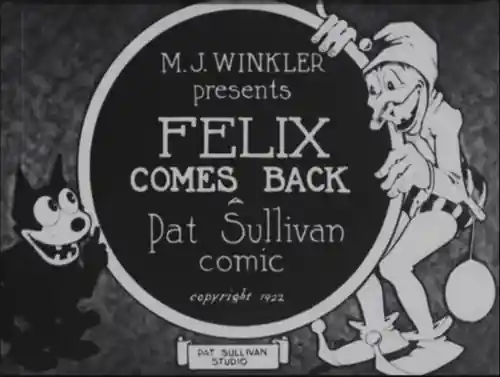
The Arctic setting itself becomes a character, a vast, white canvas against which Felix's small, black form stands in stark contrast. It represents isolation, hardship, and the ultimate test of resilience. Unlike the domestic setting of, say, The Poor Rich Cleaners, where the struggle is societal and internal, Felix's challenge is elemental, a direct confrontation with nature's indifference. This stark contrast in environments allows Messmer to explore new visual possibilities, moving from the bustling energy of the city to the quiet, formidable grandeur of the polar landscape. The visual gags, while still present, take on a new dimension, often highlighting Felix's struggle against the cold and the absurdity of his predicament.
"Felix Comes Back" is a masterclass in early animation, showcasing the unparalleled genius of Otto Messmer. His distinctive style, characterized by clean lines, expressive character design, and innovative use of visual gags, is on full display here. Felix himself, with his iconic black body, wide grin, and detachable tail, is a testament to the power of simple yet effective character animation. Messmer understood how to convey complex emotions and narratives through minimalist design, a skill that many contemporary animators still strive to emulate. The fluidity of Felix’s movements, the way he interacts with his environment, and his ability to conjure solutions out of thin air (often literally, with his tail) are all hallmarks of Messmer’s pioneering approach.
The pacing of the film is another noteworthy aspect. Messmer expertly balances moments of frenetic action with periods of more contemplative, character-driven animation. This dynamic rhythm keeps the audience engaged, preventing the narrative from becoming monotonous. The visual gags are not merely slapstick; they often serve to advance the plot or reveal something new about Felix’s character. For instance, his attempts to stay warm in the Arctic, or his resourceful methods of finding food, are both humorous and illustrative of his indomitable spirit. This film, much like Man and Beast, albeit in a vastly different genre, delves into the essential nature of survival and the ingenuity required to face overwhelming odds, but with a distinctly comedic twist.
The film's title itself, "Felix Comes Back," is not just a promise but a thematic declaration. It speaks to the universal human (or, in this case, feline) capacity for resilience, the inherent drive to return to one's origins, to overcome setbacks, and to reclaim one's place. Felix's journey through the Arctic is a crucible, a trial by ice that

IMDb —
1912
Community
Log in to comment.