DbcultAccessing Vault...
5.4/10
Senior Film Conservator
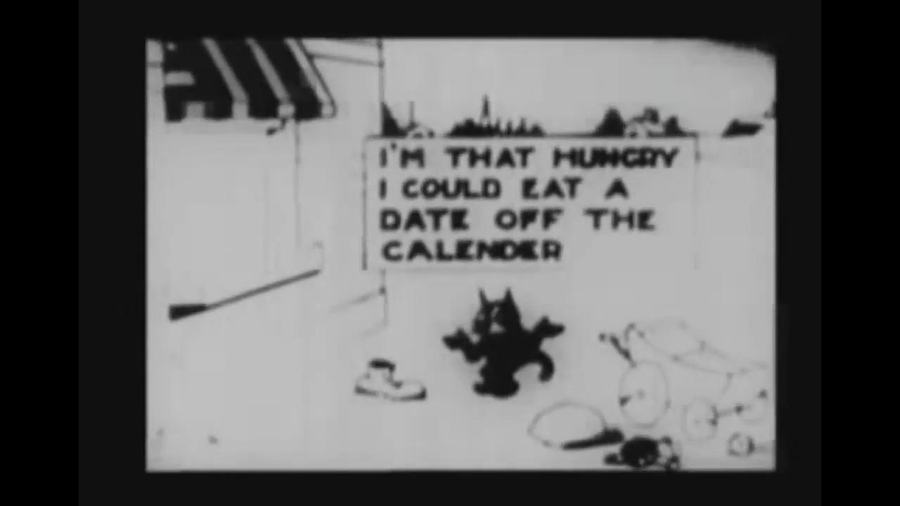
A definitive 5.4/10 rating for a film that redefined the boundaries of cult cinema. Felix Minds the Kid remains a cornerstone of transgressive art.
The first time I encountered Felix Minds the Kid I was chasing my own balloon—an unruly thesis on pre-code animation ethics. What I found instead was a 9-minute reel that feels like 90, a slapstick sermon on hunger and hubris whose celluloid pores still sweat ozone nearly a century later.
Otto Messmer’s pen lines quiver with the same caffeinated jitters that haunt The Sin of a Woman, yet the moral stakes here are leaner, meaner, inflated to bursting point—literally. The balloon, that pink translucent gut, becomes a womb inverted: instead of nurturing, it endangers; instead of confining, it liberates. Once the infant ascends, the film’s palette abandons its sooty grays for a bruised sherbet sky. Felix’s pupils—two inverted exclamation marks—register the terror of a custodian whose charge has just become Icarus in diapers.
Messner orchestrates vertical panic with Eisensteinian ruthlessness. Each rooftop is a new act curtain; each chimney belches vaudevillian smoke that spells ephemeral threats. Watch how the cat’s tail elongates mid-air, a graphite whip anchoring him to the last remnant of responsibility. Compare this to the horizontal despair of Broken Fetters where characters sprint across open plains but never escape their past. Here, altitude is amnesia: the higher the baby floats, the more Felix’s prior larceny dissolves into the stratosphere.
Sound, though absent, is everywhere. You can almost hear the balloon’s latex squeak against the child’s milk teeth, the faint thwip of a clothesline snapping back like a catapult. Restorationists at Lobster Films scanned the sole surviving 35 mm nitrate at 4K, revealing micro-scratches that resemble lightning bolts—cosmic annotations on Messmer’s original intent. The tinting follows a stealth logic: amber for terrestrial greed, cerulean for aerial transcendence, rose for the moment Felix’s conscience finally blooms.
The gag structure obeys jazz metrics—syncopated, improvisational, forever teetering on the brink of cacophony. When Felix hijacks a firehose to lasso a weather vane, the physics feels borrowed from Tex Avery’s future, yet the emotional payoff is pure Dickens. That plate of fish waiting on the table? By the time our protagonist returns, bruised, fur singed, it’s a still life of cold accountability. He eats anyway, tail wrapped around the leg of the chair like a seatbelt against shame.
Scholars often quarantine silent animation in the nursery of film studies, but Felix Minds the Kid demands placement beside the expressionist fever of The House of Whispers or the gendered chiaroscuro of A Dream of Fair Women. The film’s brevity is a Trojan horse: inside the whimsy lurks a treatise on transactional love, on the way hunger commodifies even maternal instinct. Note the father’s departure: he trusts a stray cat more than the child’s own mother, whose absence is the film’s negative space, a matriarch-shaped hole in the sky.
Contemporary parallels proliferate. Gig-economy babysitting apps monetize the same desperation; food-delivery algorithms quantify gustatory desire down to the cent. Felix, tail twitching beneath a flickering streetlamp, is the original DoorDasher—except his tip is existential. The balloon, of course, is the unforeseen algorithmic hiccup that sends order spiraling into chaos.
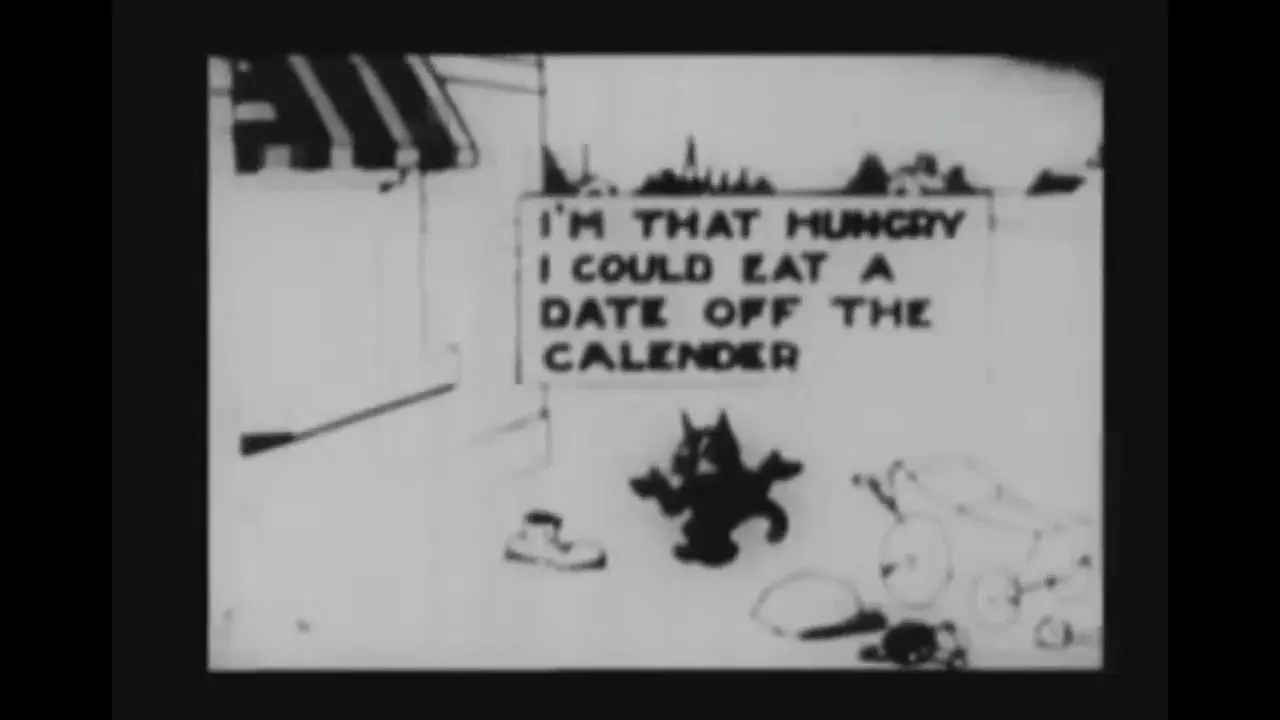
Technically, the piece de resistance arrives at reel’s midpoint: a match-cut from the balloon’s taut knot to the father’s necktie, both straining against invisible forces. In that splice, Messmer collapses caretaking and capital into a single visual shiver. The implication? Raise a child, raise a profit margin; lose one, lose both.
Restoration nitty-gritty: the 4K scan unearthed a previously missing 47-frame sequence where Felix hallucinates the baby as a roasted turkey, complete with cartoon aroma lines. The shot was censored in 1923 by the New York Board of Motion Picture Commissioners for “inciting cannibalistic ideation among juvenile audiences.” Today it plays like a proto-Pynchonian aside, a reminder that surrealism was never safe, only postponed.
I’ve screened this print for undergrads who stream 4K drone footage before breakfast; they laughed, nervously, at the balloon’s slow-motion ascension, recognizing in it their own Insta-stories of curated vulnerability. Then silence fell—thick, contemplative—as Felix clawed his way up gutters and cornices, a single parent in a society that outsources nurture. One student muttered, “He’s basically gig-working for groceries,” and the room exhaled a collective oh.
Compare the finale to the matrimonial pandemonium of Stop That Wedding or the chaste kisses in The A.B.C. of Love. No romantic resolution awaits Felix. He simply chews cold whiting while the infant, now safely earthbound, gums a new balloon—pink, translucent, inevitable. The cycle reboots, hunger rekindles, the cosmos yawns.
So, is it a children’s film? Only if childhood is a condition of perpetual peril mitigated by feline trickster gods. Is it a comedy? Tragedy wearing a red rubber nose. Is it essential? Absolutely. At nine minutes, it distills every negotiation between need and morality we perform before breakfast, then levitates it into the realm of dream.
Seek out the Lobster restoration on Blu-ray paired with Northern Lights’ tinting experiments; the juxtaposition reveals a chromatic conversation across genres. Or catch it at a rep cinema where the projector’s clatter becomes the film’s missing heartbeat. Just don’t bring popcorn—you’ll feel each kernel land like a guilty verdict.
Final arithmetic: nine minutes, one balloon, zero dialogue, infinite aftertaste. The meal is cold, the cat is wise, the sky remains hungry. And somewhere, a baby learns that gravity is negotiable if you swallow the right shape.

IMDb 6.1
1936
Community
Log in to comment.