DbcultAccessing Vault...
Cult Review
Senior Film Conservator
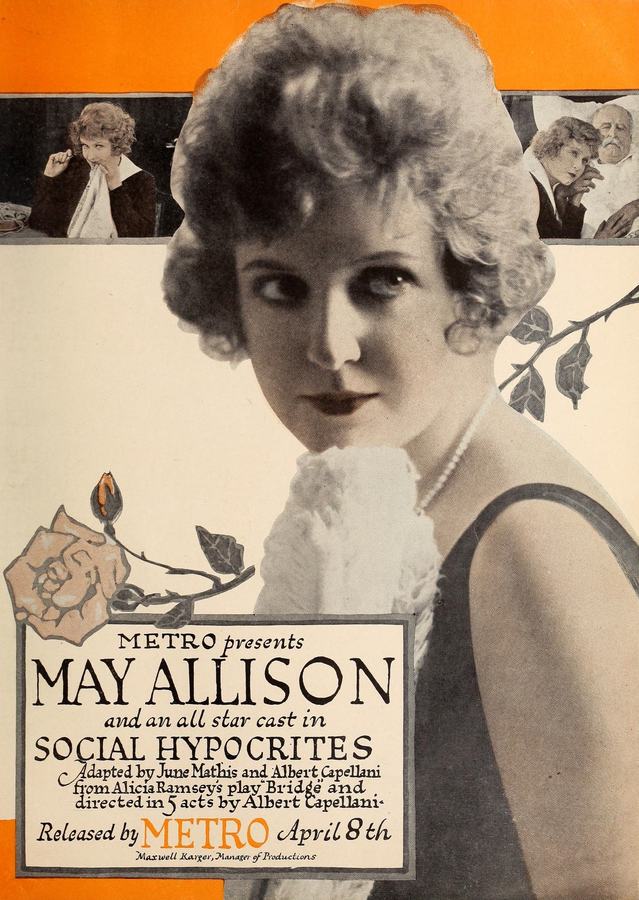
The cinematic landscape of 1918 was often a mirror to the crumbling edifices of Victorian rigidity, and Social Hypocrites stands as a particularly sharp shard of that mirror. The film opens not with a flourish of action, but with the quiet, tense atmosphere of a card room—a space where reputations are forged and incinerated with the flick of a wrist. When Colonel Francis Fielding is accused of cheating by the Earl of St. Albans, the camera captures more than just a dispute over stakes; it captures the ritualistic destruction of a human being. In this era, an accusation from a peer was not a legal matter but a metaphysical one. The subsequent shunning of Fielding by his parents is a chilling reminder of how the 'proper' society of the time valued the appearance of integrity over the reality of blood ties. Unlike the visceral lawlessness seen in The Story of the Kelly Gang, the violence here is psychological and systemic, a quiet erasure of a man’s identity.
Fielding’s flight to Paris is depicted with a somber naturalism that suggests the influence of Albert Capellani’s school of direction. The transition from the opulent halls of English aristocracy to the cramped, melancholic quarters of a Parisian expatriate is jarring. Here, the narrative shifts its focus to the collateral damage of social scandal: the innocent. Leonore, played with a haunting vulnerability by May Allison, becomes the vessel through which the audience experiences the 'sins of the father.' The death of Fielding’s wife and his own eventual demise are handled with a restraint that heightens the tragedy, avoiding the histrionics often found in lesser melodramas like The Fates and Flora Fourflush.
When Leonore is adopted by Lady Mountstephen, the film pivots into a masterful study of domestic tyranny. Marie Wainwright delivers a performance of chilling precision as the aunt who views her niece not as a ward to be protected, but as a living reminder of a family stain. This segment of the film resonates with the thematic weight of A Child of Mystery, where the orphan’s presence serves as a catalyst for buried familial tensions. The 'lady's' hatred is not merely personal; it is ideological. She represents the 'Social Hypocrites' of the title—those who maintain a facade of Christian charity while harboring a poisonous commitment to social hierarchy.
The cinematic space of the Mountstephen estate is filmed to feel like a gilded cage. The shadows are long, and the framing often isolates Leonore against the vast, cold interiors. This visual storytelling emphasizes her alienation. When she is finally disowned, it feels less like a punishment and more like an inevitable expulsion from a body that was never meant to house her. The script, co-written by the legendary June Mathis, meticulously builds the pressure, ensuring that when Lord Fitzmaurice enters the frame, his gesture of financial aid feels like a radical act of rebellion against the status quo.
The introduction of Lady Norton and her secret marriage to Lord Fitzmaurice injects a layer of noir-ish intrigue into the proceedings. This plot device, a staple of early 20th-century drama also explored in Five Nights, serves to expose the rot beneath the surface of the upper class. Lady Norton’s jealousy is not merely the result of a wounded heart; it is the frantic grasping of a woman whose social standing is precarious, tied to a marriage that cannot be acknowledged. Her reaction to Fitzmaurice’s loan to Leonore is a masterclass in petty vindictiveness.
The complications that ensue are handled with a narrative dexterity that keeps the viewer engaged without devolving into incomprehensible plot knots. The film examines how a single act of kindness can be weaponized by those with a distorted sense of ownership. In this regard, it shares a thematic DNA with Zaza, where the intersection of love and social expectation leads to inevitable friction. The tension between Leonore’s innocence and Lady Norton’s machinations creates a propulsive energy that drives the film toward its climax.
From a technical perspective, Social Hypocrites is a testament to the sophistication of 1918 cinematography. The use of lighting to differentiate the 'moral' spaces from the 'immoral' ones is subtle but effective. The Parisian sequences, in particular, utilize a softer, more diffused light that contrasts sharply with the high-contrast, almost surgical lighting of the English social gatherings. This visual dichotomy underscores the central theme: that the supposedly 'civilized' world is often the most barbaric. This exploration of moral ambiguity is also a hallmark of The Devil's Pay Day, though Social Hypocrites approaches it with a more refined, less overtly moralistic lens.
The writing by June Mathis, Alice Ramsey, and Albert Capellani is exceptionally tight. Mathis, who would later go on to discover Rudolph Valentino and write The Four Horsemen of the Apocalypse, displays her burgeoning talent for complex characterizations. No character is a mere caricature; even the villainous Lady Norton is given a motivation rooted in the systemic limitations placed upon women of her time. The film avoids the simplistic 'good vs. evil' tropes found in works like The Girl Who Didn't Think, opting instead for a nuanced critique of how social structures compel individuals to act against their better natures.
When comparing Social Hypocrites to its contemporaries, its superiority in pacing and emotional depth becomes evident. While L'orgoglio deals with similar themes of pride and fall, it lacks the intricate plotting of the Mathis/Capellani collaboration. Similarly, while The Devil-Stone uses a supernatural MacGuffin to drive its moral narrative, Social Hypocrites finds its 'devil' in the mundane cruelty of the dinner table and the drawing-room. It is a more grounded, and therefore more terrifying, exploration of human nature.
The film also stands in stark contrast to the procedural focus of Stuart Webbs: Das Panzergewölbe. Where the latter is concerned with the mechanics of crime and detection, Social Hypocrites is concerned with the mechanics of the soul. It asks what happens when the laws of a society are designed to protect the powerful and punish the vulnerable. This inquiry is also present in Penge, but here it is wrapped in a more compelling, character-driven narrative that ensures the audience's emotional investment remains high throughout.
May Allison’s portrayal of Leonore is the heart of the film. Her ability to convey a sense of weary resilience is remarkable for the era. She isn’t a passive victim; she is a survivor of a world that has repeatedly tried to erase her. Her interactions with the various figures of authority—from her father to her aunt to Lord Fitzmaurice—reveal a character who is constantly adapting to the shifting sands of her social standing. This performance is a precursor to the more modern, psychologically complex female leads we would see in the decades to follow. It carries a gravitas that is missing in more lighthearted fare like Frivolité.
The film’s conclusion, while offering a semblance of resolution, leaves the viewer with a lingering sense of unease. The 'hypocrites' are exposed, but the society that produced them remains intact. This refusal to provide a saccharine, all-encompassing happy ending is what elevates the film from a standard melodrama to a work of genuine artistic merit. It shares this somber, realistic outlook with La morte che assolve, where the resolution is tempered by the cost of the journey. Even in the face of Lord Fitzmaurice’s support, the scars of Leonore’s past remain visible, suggesting that while one can escape a situation, one can never truly escape the memory of ostracization.
Social Hypocrites is a vital piece of silent cinema that deserves greater recognition in the canon of early 20th-century drama. It is a film that understands the power of the gaze—how the way we look at others can be an act of either salvation or destruction. It anticipates the themes of social alienation that would dominate the works of later masters, yet it remains firmly rooted in the specific anxieties of its time. For those interested in the evolution of narrative structure and character development in film, it is an essential watch. It offers a more profound experience than the localized drama of Fyrvaktarens dotter or the more primal conflict of In the Python's Den.
In the end, the film serves as a cautionary tale about the dangers of a morality based on appearances. It exposes the 'proper' society as a collection of individuals who are willing to sacrifice truth on the altar of reputation. June Mathis and her collaborators have crafted a narrative that is as relevant today as it was in 1918, reminding us that the most dangerous hypocrites are often the ones sitting right across the card table from us, smiling with an Earl’s confidence. The enduring power of Social Hypocrites lies in its refusal to look away from the ugly truths of human behavior, making it a timeless exploration of the fragility of the social contract.
IMDb 6.8
1935
Community
Log in to comment.