DbcultAccessing Vault...
Cult Review
Senior Film Conservator
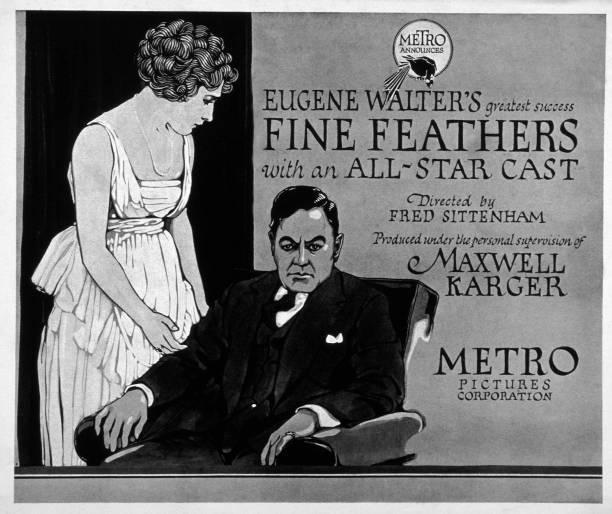
The silent era, often romanticized for its grand melodramas and nascent cinematic spectacle, also served as a stark mirror reflecting the anxieties and moral quandaries of a rapidly industrializing society. Amongst these forgotten gems, Fine Feathers, released in 1921, emerges as a particularly potent and unnerving examination of ambition’s perilous grip and the treacherous descent into moral compromise. Far from a mere curiosity of its time, this film, penned by Lois Zellner and Eugene Walter, delivers a narrative so acutely resonant with human frailty that it transcends its century-old vintage, offering a timeless cautionary tale. It’s a work that demands more than a passing glance, inviting a deep dive into its meticulously crafted tragedy and the performances that bring its grim reality to life.
At its core, Fine Feathers is a psychological thriller masquerading as a social drama, a meticulous dissection of a man’s undoing. We are introduced to Bob Reynolds, portrayed with a compelling blend of earnestness and burgeoning desperation by Thomas W. Ross, a construction engineer whose professional integrity is as robust as the dams he designs. Or so it seems. Reynolds is a man on the cusp, burdened by financial pressures that begin to erode the very foundations of his ethical resolve. The film masterfully sets this stage, painting a picture of a man dedicated to his craft, yet vulnerable to the siren call of expediency when his back is against the wall. This vulnerability is the fissure through which true malevolence enters his world.
Enter John Brand, played with chilling precision by Warburton Gamble. Brand is not merely an antagonist; he is a psychological predator, a puppeteer whose strings are woven from Reynolds’s financial woes and burgeoning desperation. His initial suggestion to replace the high-quality cement with a cheaper, demonstrably inferior alternative for the dam project is not just a business proposal; it’s an ethical litmus test, a subtle probe into Reynolds’s moral fortitude. The film portrays this pivotal moment with a quiet intensity, showing Reynolds’s internal struggle, the conflict between professional pride and the crushing weight of impending financial ruin. The decision to compromise, to cut corners on a structure meant to withstand immense pressure, is the first domino to fall, setting in motion a catastrophic chain of events.
Brand's manipulation doesn't stop at the construction site. His scheme is far more comprehensive, a calculated campaign to utterly dismantle Reynolds’s life. He lures Reynolds into a disastrous investment in worthless stock, a move designed not for profit, but for absolute financial obliteration. This sequence highlights the predatory nature of certain financial dealings in the early 20th century, a theme that, ironically, remains tragically relevant today. The silent film medium, with its reliance on exaggerated gestures and evocative intertitles, excels at conveying Brand's sinister glee and Reynolds's deepening despair without a single spoken word. The audience is left to witness the slow, agonizing strangulation of hope.
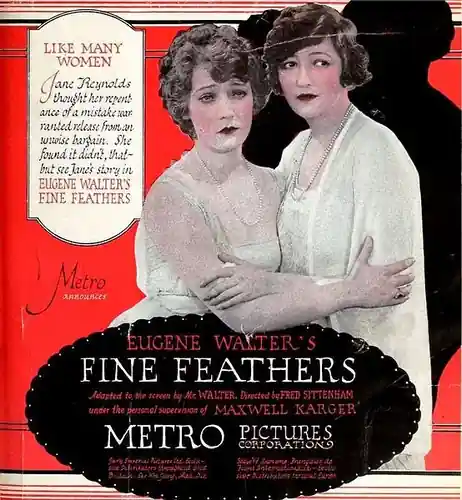
As Reynolds finds himself in increasingly desperate straits, cornered and with no apparent escape, he commits the ultimate act of self-destruction: forging a check in Brand's name. This act, born of utter desperation, is a stark testament to how far a man can fall once he has compromised his initial principles. It's a moment of profound psychological tension, rendered with remarkable clarity through Thomas W. Ross's performance, conveying the character's internal torment and the agonizing decision that seals his fate. This isn't a villainous act, but a tragic one, the desperate lashing out of a man losing everything.
The narrative then converges on its inevitable, devastating climax. The dam, built with inferior materials, succumbs to the forces it was meant to contain. The catastrophic break is not just a structural failure; it is a profound metaphor for Reynolds’s shattered integrity and the collapse of his moral universe. The ensuing loss of life is a brutal, visceral consequence, transforming Reynolds’s personal tragedy into a public catastrophe. The film doesn't shy away from the horrific impact, allowing the audience to feel the weight of his culpability. This dramatic payoff, though rooted in the silent film's visual language, resonates with the power of the most sophisticated modern thrillers. The scene of the dam breaking would have been a monumental undertaking for 1921 filmmaking, a testament to the era's ambition in special effects and large-scale set pieces.
The ensemble cast of Fine Feathers delivers performances that are both emblematic of the silent era’s expressive style and remarkably nuanced. Thomas W. Ross, as Bob Reynolds, carries the emotional weight of the film, his descent from hopeful engineer to desperate fugitive etched across his face with palpable anguish. His portrayal is a masterclass in silent acting, conveying complex emotions through gesture and gaze, allowing the audience to empathize with his plight even as they condemn his choices.
Warburton Gamble's John Brand is a truly memorable villain. He’s not overtly theatrical; rather, his
IMDb 6.1
1934
Community
Log in to comment.