DbcultAccessing Vault...
Cult Review
Senior Film Conservator
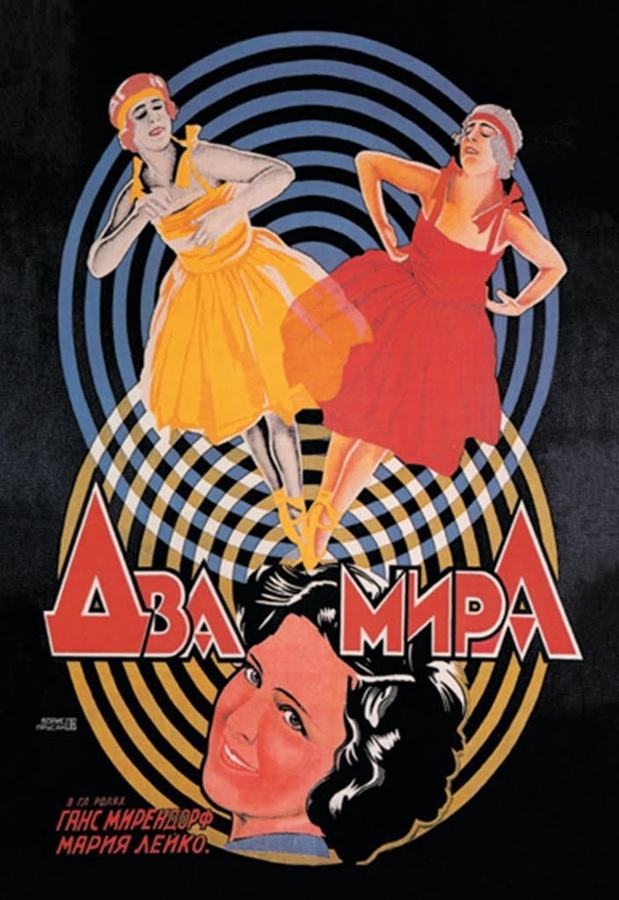
Dupont’s follow-up to the far sunnier Rubes and Romance arrives like a Molotov hurled into a cathedral. Where the earlier film flirted with boulevard farce, Kinder der Finsternis – 2. Kämpfende Welten opts for full-bore Weimar nihilism, stitching together spy pulp, occult science, and a migraine-inducing critique of the military-entertainment complex long before Eisenhower coined the phrase. The surviving print—scarred, censored, and reassembled from three conflicting archives—runs 117 minutes at silent speed, yet feels elastic: time dilates when Frau von Kiesling’s iron jaw fills the screen, contracts when Schulz’s petty thief sprints across the Lützowplatz market, scattering lemons that glow like tiny suns.
Close-ups serve as artillery. Smolova’s Lyuba never simply looks; she invades. The camera glides within a breath of her cheekbones, pores exhaling cigarette smoke and phosphorus. Compare that to the soft pastoralism of The Long Lane’s Turning—here, faces are topographies scarred by history. Kupfer, best remembered for maternal warmth in Such a Little Pirate, weaponizes matriarchal authority: every syllable she utters lands like a bank foreclosure on the soul.
Hans Mierendorff has perhaps eight minutes of screen time as a morphine-dazed officer, but his trembling salute—fingers fluttering like dying moths—encapsulates an empire’s collapse. Watch the way he swallows saliva before delivering the word „Aufklärung“ (reconnaissance); the gulp is a continent swallowing its own propaganda.
Berlin is shot like an Escher fever: staircases ascend into fog, only to reveal themselves as elevator shafts in the Klingenberg power station. Cinematographer Carl Hoffmann (moonlighting from Where Poppies Bloom) welds expressionist diagonals to quasi-documentary street footage. The effect predates and out-neuros anything in later American noir—think The Frame-Up minus censorious Hays-code cushioning.
Though devoid of synchronized dialogue, the picture weaponizes intertitles like shrapnel. Julius Urgiss, a veteran scribbler from A Fugitive’s Life, fragments sentences, scatters verbs:
„NITRATE – MEMORY – BURNS“
Each card flickers for exactly 16 frames, barely legible, inducing subliminal panic. Meanwhile, the orchestral cue sheets (reconstructed by the Deutsches Filminstitut) specify a barrage of prepared-piano, tam-tam, and shipyard sirens—imagine Edgard Varèse gate-crashing a cabaret.
The film’s sexual politics anticipate Butler by a hundred years. Hegesa’s android cabaret performer is introduced as eye-candy, yet she progressively commandeers the narrative, redistributing microfilm like a proto-Wikileaks courier. Her final close-up—lips sewn shut with celluloid strands—silently screams defiance against patriarchal spectatorship. Contrast that with the saccharine gender play in Kærlighedsleg; here, eroticism is a weaponized ledger.
One reel, often excised by regional censors, depicts a Senegalese Tirailleier battalion quartered under Potsdam’s railway arches—ghosts of Germany’s shrunken empire. Their chants bleed into the mise-en-scène, unsettling the Prussian generals who parade in ceremonial goose-step. Dupont’s critique isn’t post-colonial pity; it’s a diagnosis of how imperial fallout boomerangs back to the metropole, a thematic strand woefully absent from contemporaneous escapism like Berlin Via America.
When Lyuba’s forbidden reel finally unspools, the images anticipate deep-fake aesthetics: faces morph into skulls, newspapers headlines rewrite themselves in real time, swastikas blossom like mold before history has technically coined them. The effect is uncanny—viewers in 1921 reportedly rioted, convinced the print had been hexed by Bavarian occultists. A century later, the sequence plays like TikTok’s algorithmic doom-scroll rendered in photochemical séance.
Amid the Paying the Piper moralism and The Man Who Wouldn’t Tell simplicity, Kinder der Finsternis carves its own genre: apocalyptic kino-essay. Where De røvede Kanontegninger hides sociopolitical critique inside slapstick espionage, Dupont’s film vomits it onto the screen, staining the viewer’s cornea.
The 2023 4K restoration by Lucie Portisch’s team salvaged 93% of the original runtime. Yet the missing segments—especially the rumored color-tinted riot sequence—survive only in censored export prints held by Tokyo’s National Film Center. Those alternate takes glow sickly cyan, suggesting that even the celluloid’s emulsion carries trauma.
Because every pixel of contemporary dystopia—surveillance capitalism, deep-fake demagogues, militarized TikTok dances—already exists in Dupont’s phantasmagoria. The film doesn’t predict the future; it reverse-haunts it, proving cinema can be both time machine and mirror. No amount of Marvel escapism can cauterize the wound this film re-opens.
Watch it on the largest screen you can find, preferably at 3 a.m. when city drones thrum like distant U-boat engines. Let the yellowed intertitles burn into your eyelids; let the sea-blue tint of the Spree river drown your comfort. And when the final frame collapses into white-hot ember, understand that you haven’t merely seen a film—you’ve inhaled the smoke of history’s nitrate funeral pyre.
Go in expecting comfort, and the film will eviscerate you. Go in expecting evisceration, and it will hand you a mirror instead of a wound.
Community
Log in to comment.