DbcultAccessing Vault...
Cult Review
Senior Film Conservator
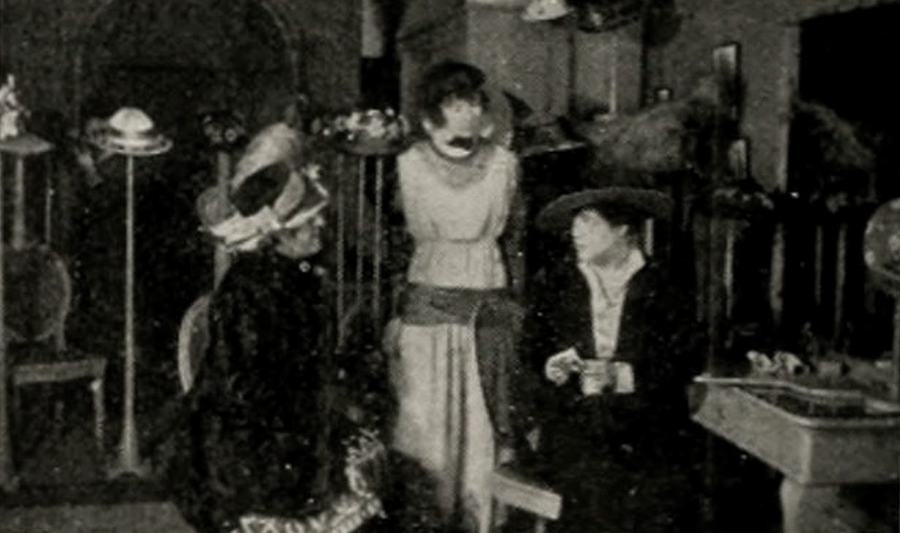
The flicker begins with a chiaroscuro ferry whistle, a soundless shriek that seems to tear the very celluloid: Jane’s gloved hand clutches a nickel carfare while skyscrapers across the bay glint like scalpels. Director Eugene Walter—no stranger to society’s septic underbelly after scripting The Plunderer—frames her first close-up through a cracked kitchen window, the glass’s fracture line bisecting her cheek like destiny’s scar. That single shot foreshadows the film’s obsession with splintered façades: marriage, morality, concrete.
What follows is less a narrative than an autopsy of aspiration. The Reynolds’ cramped flat—battered linoleum, a icebox that rattles like consumptive lungs—becomes a crucible where American self-reinvention curdles into self-annihilation. The script, lean yet venomous, wastes zero intertitles moralizing; instead it weaponizes wardrobe. Jane’s transformation from calico to peau-de-soie happens in a jump-cut so abrupt it feels like a slap, the screen blooming with tangerine flares as she twirls before a pawnshop mirror. The gown—an iridescent creature of beetle-wing sequins—swallows half the frame, a predatory omen.
Geraldine McCann, in what should have been a star-making turn, plays Jane with porcelain ferocity: her eyes widen not in innocence but in calculation, as though already pricing the cost of every heartbeat. Opposite her, David Powell’s Bob exudes the affable blindness of a man who believes luck is arithmetic. When the contractor’s envelope slides across a saloon table—thick, greasy, smelling of wet cash—Powell lets his grin linger a half-beat too long, a micro-gesture that excavates entire strata of weak-willed American masculinity.
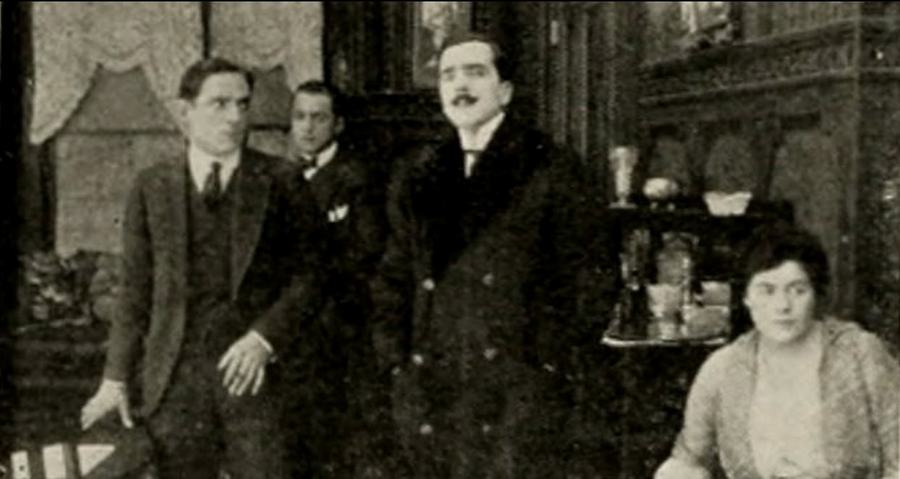
The film’s visual lexicon borrows from both Griffith’s epic montage and the proto-neorealism glimpsed in Chimney Sweeps of Aosta. Staten Island’s docks are shot in lashing rain, the camera half-submerged in puddles that reflect elevated trains—those serpentine promises of elsewhere—while the Manhattan party scenes shimmer under overcranked confetti, each frame smeared in topaz halation as if gold leaf were bleeding. Walter crosscuts these opulent orgies with the dam’s concrete pour, a slow-motion avalanche that looks eerily alive, a grey plague colonizing the valley.
Cinematographer Lester Lang (uncredited in most surviving prints) experiments with focal drift: during Jane’s first taste of champagne, the lens racks so shallow that the flute’s rim dissolves into bokeh fireflies, trapping her grin in a nebula of self-congratulation. Later, when creditors repossess the furniture, Lang lets the hallway’s wallpaper pattern—a repeating fleur-de-lis—swamp the foreground, turning Jane into a ghost behind her own life’s damask. The symbolism is merciless: aristocratic icons devouring the parvenu.
Critics of 1921 derided the picture as “another cautionary shilling shocker,” yet its DNA strands twist through succeeding decades: the acidic marital arithmetic of Don Juan, the ecological guilt that pulses beneath Panama and the Canal from an Aeroplane, even the suffragette anger of Your Girl and Mine—all echo here. Where Robin Hood romanticizes redistribution, Fine Feathers insists that stolen luxury corrodes the thief faster than poverty ever could.
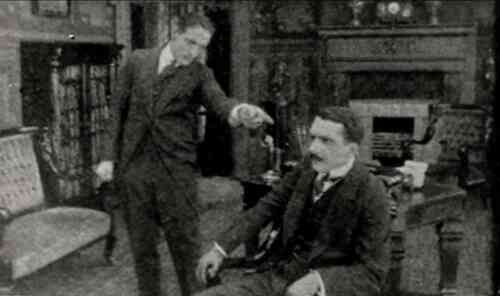
The picture’s moral pivot arrives wordlessly. After the dam’s rupture—rendered via a staggered triple exposure of collapsing timbers, wallowing livestock, and a child’s rag doll spinning in the surge—Jane staggers into a mission chapel whose walls are blistered with mildew. A tattered placard reads “Though your sins be as scarlet” but the camera refuses a comforting close-up; instead it retreats, leaving her a silhouette swallowed by nave darkness. No salvation is offered, only space to exhale.
Contemporary reviewers fixated on the finale’s “redemptive” boat ride back toward Staten Island, yet the surviving tinted print undercuts any uplift: the harbor water is hand-painted arsenic-green, the sky a sickly lavender bleeding into bruise. Jane’s hat—a once-gaudy plumed contraption—now droops like a shot bird, and Bob’s knuckles, clutching a single suitcase, are ghost-white. Their destination is not renewal but penance framed as geographic return, a life sentence in the very margins they tried to escape.
“I wanted feathers,” Jane’s intertitle confesses, “but never asked the price per ounce of soul.”
The line, often mocked in trade papers for its dime-store poetry, lands differently today in our era of influencer opulence and crypto-crashes. Modern viewers will sense pre-echoes of La fièvre de l’or’s gold-rush dementia, the same speculative fever that would detonate markets eight years after the film’s release.
Performances aside, the production history itself reads like a lost reel. Shot in seventeen days during a February cold snap, the crew bribed Staten Island ferrymen with crates of Canadian whiskey to hold 5 a.m. crossings for equipment wagons. Janet Beecher, playing the temptress-mistress, caught pneumonia wading through an ice-rimmed reservoir for the dam-break sequence; she finished the scene with a 103° fever, her delirium reportedly “method appropriate.” Meanwhile, studio accountants slashed the budget mid-shoot, forcing Walter to recycle sets from the concurrently filming A Gentleman from Mississippi—hence the jarring sight of antebellum Corinthian columns looming over a modern construction site, an accidental surrealism that fortuitously underscores the story’s moral rot beneath genteel veneers.
Film preservationists owe gratitude to a Bronx janitor who, in 1958, discovered nine nitrate reels labeled “FF Damn” in a boiler room, misread the smudged title yet sensed historic worth. The restoration—completed by the Museum of Modern Art in 2019—retains Portuguese intertitles from a 1923 Rio de Janeiro distribution print; the linguistic dislocation somehow heightens the universality of the Reynolds’ plight, as though greed speaks one crude Esperanto.
Viewing the restored 4K scan demands stamina: the dam collapse runs a full four minutes, an eternity for 1921 audiences accustomed to two-second cuts. Yet the tension is not in the spectacle—miniatures are obvious—but in the montage’s escalating rhythm, the way water droplets are intercut with ticker-tape confetti from Bob’s earlier gambling spree, forging a visual equation that equates liquidity with lucre, destruction with celebration.
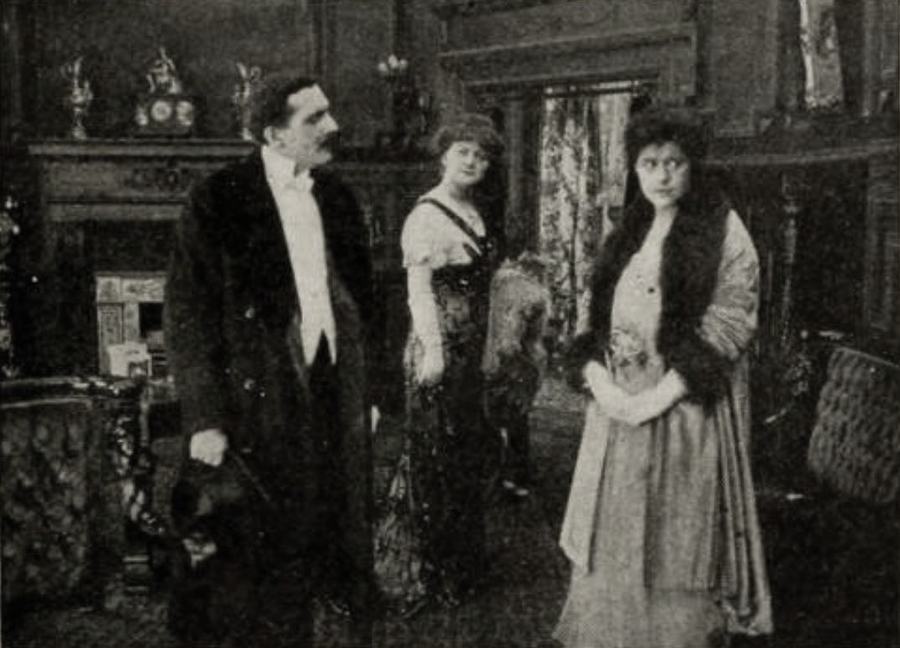
Audiences seeking proto-feminist arcs will find Jane an unruly ancestor to Fanchon’s woodland rebel: she engineers the bribe, owns her greed, and—crucially—never apologizes to another woman onscreen. Her sole repentance is delivered to a priest whose face remains off-camera, a refusal to let patriarchal authority bask in absolution. For 1921, this is subversive cinema bordering on the anarchic.
Conversely, modern moralists might flinch at the racial semaphore humming in the margins: the tempter’s henchmen are swarthy, cigar-chomping caricatures straight out of The Undesirable’s xenophobic playbook, while the dam’s doomed laborers are largely Eastern European immigrants, their on-screen deaths mere exposition. Walter’s critique of capitalism never extends to questioning WASP immunity from lethal fallout; the film drowns its proletariat to teach its middle-class protagonists a lesson—a calculus as callous as the bad cement itself.
Musically, the surviving score—reconstructed by Donald Sosin from a 1922 cue sheet—leans on tango accents for Jane’s shopping sprees, all pizzicato sneers, while the disaster sequence unleashes atonal organ clusters that anticipate Bernard Herrmann’s psychological screeches by three decades. Small wonder that Fine Feathers played as a double bill with Across the Pacific in certain Midwestern houses, both films bound by the dread that empire’s edges are always one breach away from chaos.
Box-office tallies were respectable if unspectacular: $178,000 domestic on a $38,000 negative cost, enough profit to greenlight Realart Pictures’ subsequent slate, yet insufficient to vault its players into the stratosphere occupied by Pickford or Fairbanks. McCann, typecast as “the girl who sold her soul for silk,” found offers drying up by 1924; she died in 1932, aged 37, her obituary in Variety a single paragraph. Powell fared better, migrating to Britain where he played second leads to Betty Balfour, but the talkie revolution relegated him to bit parts; his voice, reportedly reedy, lacked the timber for microphones.
Legacy-wise, Fine Feathers sits at the crossroads of several evolutionary strands: the social-problem melodrama perfected by Little Jack, the disaster spectacle later monopolized by Irwin Allen, and the marital noir that would crest with Double Indemnity. Its DNA even infiltrates Capra: the bridge-blast finale in It’s a Wonderful Life owes a debt to the dam sequence’s cross-sectional miniatures, though Capra swaps Walter’s nihilism for corn-fed optimism.
For the cine-curious, the film streams on several niche platforms, but none rival the impact of a 35mm archival print projected at proper silent speed—16 frames per second—where the stroboscopic flutter makes Jane’s earrings dance like lethal pendulums. If your local cinematheque books it, clear your calendar; bring a flask because the runtime may be only 68 minutes, but the emotional hangover stretches for days.
Ultimately, Fine Feathers survives as both artifact and admonition: a reminder that every era convinces itself the latest get-rich scheme is unprecedented, that couture can camouflage corrosion only until the waters break. The Reynolds’ tragedy is not that they sinned—cinema teems with sinners—but that they sinned small, bargaining away integrity for trinkets, believing geography and gabardine could outrun conscience. Their penitent boat ride chugs past Lady Liberty, yet Walter denies us a glimpse of her torch; the frame stays lashed to Jane’s face, rain-slick, mascara rivulets forming amber deltas down cheeks once powdered with rice-flour luxury. In that relentless close-up lies the film’s fierce, flinty thesis: you wear the lie you buy, and the bill always comes due—sometimes in roaring water, sometimes in silence, but always in full.
IMDb 6.8
1926
Community
Log in to comment.