DbcultAccessing Vault...
Cult Review
Senior Film Conservator
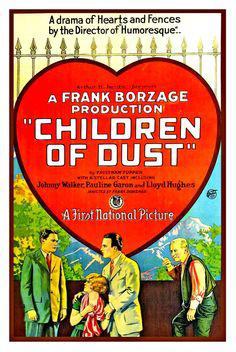
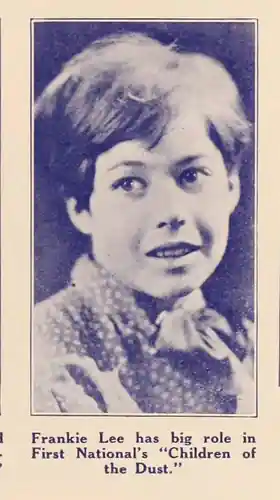
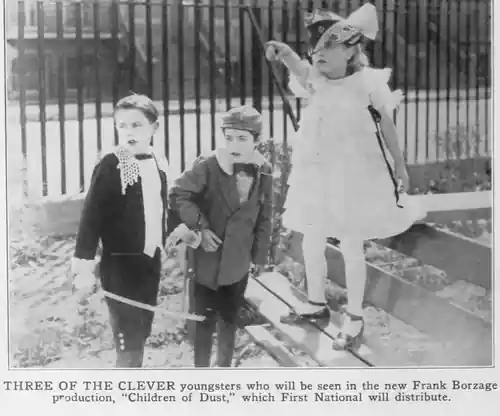
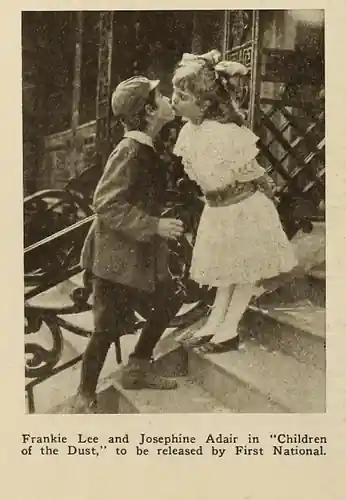
In the pantheon of silent cinema, few works manage to capture the intersection of social stratification and the raw, unvarnished human spirit as poignantly as the 1923 Frank Mitchell Dazey-helmed Children of Dust. This is not merely a chronicle of an orphan’s growth; it is a sprawling, atmospheric meditation on the cyclical nature of trauma and the restorative power of unconventional kinship. The film opens with a visual motif that defines the entire first act: the iron-wrought gates of Gramercy Park. These gates represent more than a physical barrier; they are a socio-economic precipice that the young Terwilliger, played with a haunting vulnerability, seeks to transcend for a reason as pure as it is tragic—the retrieval of a flower for his mother’s grave.
The cinematography here is steeped in the chiaroscuro of the era, utilizing deep shadows to emphasize the isolation of the city's disenfranchised. When Old Archer (Bert Woodruff) intervenes with a severity that borders on the atavistic, the film pivots from a simple tale of poverty into a complex psychological drama. Archer’s arrest for the battery of the boy is the catalyst for a narrative inversion that feels remarkably modern. Rather than harboring resentment, Terwilliger’s decision to 'adopt' his assailant suggests a profound understanding of the loneliness that drives men to cruelty. It’s a thematic resonance one might find in the legal complexities of The Celebrated Stielow Case, where the system’s rigidity often masks the underlying human truth.
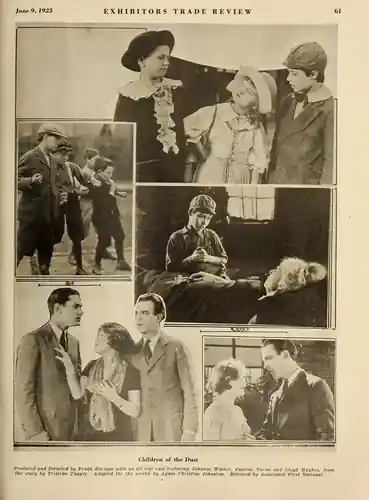
As the narrative clock winds forward, we see the transition of these 'children' into the burgeoning adults of a pre-war America. The introduction of Helen Raymond (Pauline Garon) injects a vibrant, almost ethereal energy into the proceedings. Garon’s performance is a masterclass in silent-era magnetism, balancing the flirtatious innocence of the age with a burgeoning realization of the power she holds over the two men in her orbit. The rivalry between Terwilliger (now Johnnie Walker) and Harvey Livermore (Lloyd Hughes) is framed not through histrionics, but through subtle shifts in posture and the lingering gazes that characterize the best of the decade’s output.
While La dame aux camélias explores the floral symbolism of doomed love through a European lens, Children of Dust grounds its romantic tensions in the grit of New York. The rivalry is a microcosm of the American experience—one man representing the struggle from the gutter, the other perhaps a more polished, yet equally desperate, yearning for the same prize. The writers, including the legendary Agnes Christine Johnston, weave a tapestry where every encounter feels laden with the weight of the past. The dust of the title begins to feel less like a metaphor for mortality and more like the very substance of their lives—the grit that gets in the eyes and the lungs of those trying to rise above their station.
The shift to the European theater of World War I is where the film achieves its most harrowing aesthetic heights. The transition is jarring, as it should be. The lush, albeit restricted, greenery of Gramercy Park is replaced by the monochromatic desolation of the front lines. The 'Children of Dust' are literally ground into the earth they once fought over. Here, the rivalry between Terwilliger and Livermore is forced into an uneasy truce by the existential threat of industrialized warfare. The direction during these sequences avoids the jingoism common in post-war cinema, opting instead for a visceral, mud-caked realism that mirrors the psychological unraveling of the protagonists.
In this regard, the film shares a certain DNA with the psychological tension found in Das Experiment des Prof. Mithrany, though it swaps the laboratory for the trench. The complications that ensue are not merely plot points; they are the inevitable result of placing fragile human egos into a meat grinder. The performance of Johnnie Walker reaches its zenith here, his face becoming a landscape of exhaustion and resolve. The war acts as a grand equalizer, stripping away the social distinctions that defined their lives in New York, proving that whether one comes from the park or the alley, they are all composed of the same fragile clay.
One cannot discuss Children of Dust without acknowledging the sophisticated screenplay. The collaboration between Johnston, Dazey, and Tupper results in a narrative structure that is surprisingly non-linear in its emotional progression. The film understands the rhythm of memory—how a single flower can trigger a cascade of trauma, or how the face of a rival in a trench can bring back the smell of a New York summer. This level of lexical diversity in visual storytelling was rare, and it elevates the film above the standard melodramas of the early twenties. It possesses a gravitas that makes contemporary efforts like Fortune's Mask or Torchy's Double Triumph seem light by comparison.
The technical aspects of the film—the set design that meticulously recreates the stratified neighborhoods of Manhattan, and the editing that seamlessly bridges the gap between the domestic and the martial—are exemplary. The use of tinting, often lost in modern transfers, originally provided a psychological layer to the viewing experience: amber for the warmth of the surrogate home, blue for the cold uncertainty of the night, and perhaps a searing red for the fires of the front. It is a visual language that speaks to the 'alien souls' mentioned in films like Alien Souls, depicting those who are perpetually out of place in their own environment.
As the film reaches its resolution, it avoids the easy catharsis of a typical Hollywood ending. Instead, it offers something far more profound: a recognition that while the war may end, the 'dust' remains. The characters return to a world that has moved on, yet they are irrevocably altered. The relationship between Terwilliger and Old Archer remains the emotional anchor, a testament to the idea that family is something we forge in the fires of adversity rather than something we are merely born into. It’s a theme that resonates with the rugged survivalism seen in The Ranger of Pikes Peak, though channeled through an urban sensibility.
Ultimately, Children of Dust is a masterpiece of silent empathy. It demands that the viewer look past the soot and the struggle to see the inherent dignity of the orphan and the outcast. In an era of cinematic excess, this film stands as a reminder of the power of a simple story, told with immense visual and emotional intelligence. It is a essential viewing for anyone seeking to understand the roots of American social realism in film. The performances, particularly from the supporting cast like Mary Carr and the young Josephine Adair, provide a textured backdrop that makes the world of Gramercy Park feel lived-in and heartbreakingly real. This is a film that doesn't just show us the past; it makes us feel the weight of every year that has passed since that first flower was plucked.
A cinematic relic of profound emotional resonance, Children of Dust is a haunting reminder that we are all, in the end, merely trying to find a garden of our own in a world of iron and ash.
IMDb 4.7
1934
Community
Log in to comment.