DbcultAccessing Vault...
Cult Review
Senior Film Conservator
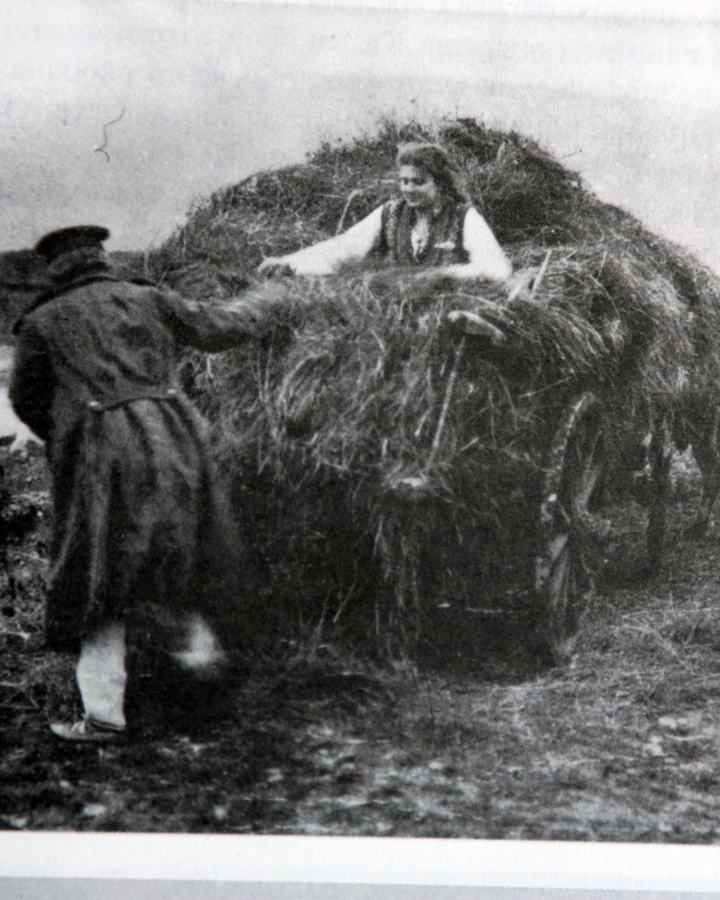
The dawn of Bulgarian cinematography is often viewed through the sepia-toned lens of nationalist fervor, yet Dezata na Balkana (Children of the Balkans) transcends mere propaganda to offer a startlingly intimate portrait of human resilience. Released amidst the actual tremors of early 20th-century geopolitical shifts, the film functions as both a historical document and a romantic epic. It avoids the sterilized artifice of later studio productions, opting instead for a gritty, tactile realism that feels remarkably modern despite its silent-era constraints. This isn't just a story about a war; it is a story about the logistics of love and the physical weight of shells being carried toward a destiny that seems all but certain to end in tragedy.
The opening sequences of the film are a masterclass in establishing a sense of place. We see Dragan and Neda not as archetypes, but as products of the earth. Their relationship is framed against the rolling hills of the Balkan landscape, a visual choice that emphasizes the stakes of the coming conflict. When the mobilization begins, the transition is jarring. The camera lingers on the machinery of war—the heavy carts, the iron wheels, and the stoic faces of the men being sent to the front. This shift from the bucolic to the industrial is handled with more nuance than one might find in Life's Whirlpool, where the drama often feels detached from the setting. Here, the mud and the dust are characters in their own right.
The casting of Krustyo Sarafov as Old Petko provides the film with its moral and physical anchor. Sarafov, a titan of the Bulgarian stage, brings a gravitas to the screen that elevates the role of the supply cart driver from a supporting character to a symbol of the nation’s endurance. His interactions with Neda (Teodorina Stoycheva) are infused with a paternal tenderness that contrasts sharply with the looming violence. Unlike the more whimsical characterizations seen in The Mischief Maker, Sarafov’s Petko is burdened by the knowledge of what war does to the young. His decision to hide Neda in the cart is not an act of whimsy, but a recognition of the indomitable nature of the human spirit.
"The film captures a unique intersection where the romanticism of the 19th century meets the mechanized brutality of the 20th, creating a cinematic friction that is as compelling today as it was in 1913."
When the narrative reaches the front, the cinematography shifts into a more frenetic, urgent register. The depiction of the artillery battery is harrowing. We see the guns not as glorious instruments of victory, but as demanding, hungry beasts that require constant feeding. The sequence where Neda and Petko arrive amidst the carnage is genuinely shocking for its time. The sight of the decimated crew and the smoke-filled horizon evokes a sense of dread that is rarely achieved in contemporary silents like Common Ground. The editing here is sharp, cutting between the frantic loading of the shells and the distant, unseen enemy, creating a claustrophobic tension that peaks when Neda finally takes up the flag.
In comparing Dezata na Balkana to its international contemporaries, one notices a distinct lack of the melodrama that plagued films like Du Barry. While Du Barry focuses on the opulence of the court, the Bulgarian epic remains firmly rooted in the grit of the trenches. There is a thematic kinship with Exile, specifically in the exploration of displacement and the longing for home, but Dezata na Balkana offers a more proactive resolution. Neda is not a passive victim of fate like the characters in The Unforseen; she is an agent of her own destiny, a theme that resonates with the burgeoning feminist undercurrents found in Midinettes, albeit in a much more violent and high-stakes context.
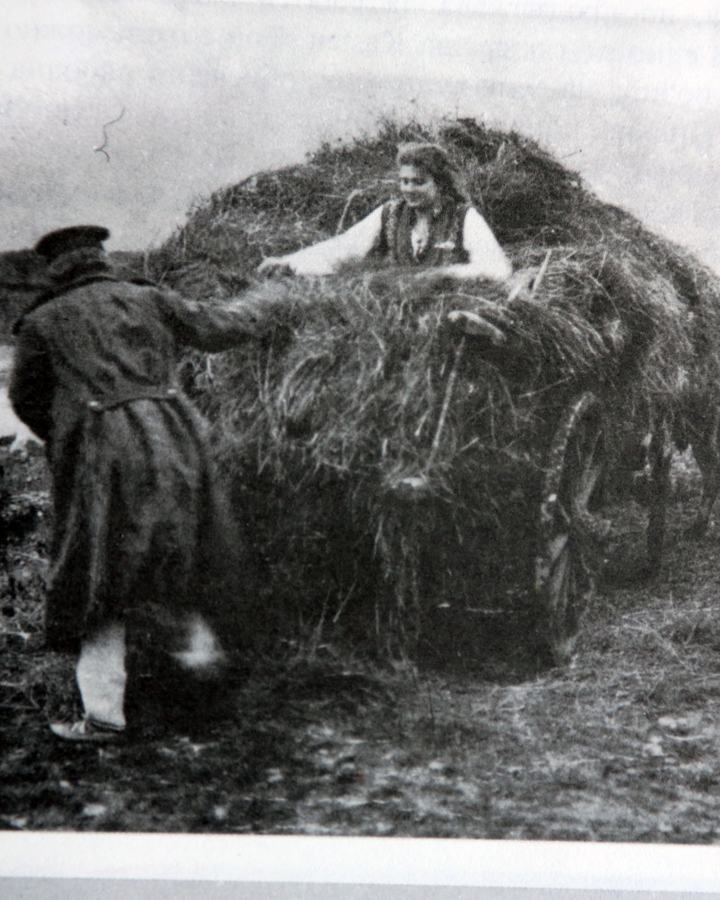
The moment Neda raises the flag over the position is the film's most iconic image. In the hands of a lesser director, this could have felt like a cheap patriotic trope. However, because we have followed her journey from the sheep-grazing fields to the blood-soaked battery, the gesture feels earned. It is an act of reclamation—of her lover, her future, and her land. This visceral connection to the soil is something that Envar sin egen lyckas smed attempts to explore through social mobility, but Dezata na Balkana achieves it through the more primal lens of survival. The flag is not just a piece of cloth; it is the shroud of the old world being lifted to reveal the new.
Watching this film in the modern era, one is struck by the sincerity of the performances. Peter Gjurov as Dragan conveys a stoicism that avoids the over-the-top gesticulation common in the 1910s. His chemistry with Teodorina Stoycheva is palpable, making the stakes of the battle feel personal rather than abstract. This focus on the individual within the collective struggle is a hallmark of great war cinema, standing alongside films like Immediate Lee in its ability to humanize the soldier. While Marvelous Maciste relies on physical spectacle, Dezata na Balkana relies on emotional truth.
The film’s conclusion, with Dragan’s promotion and the quiet image of Petko smoking his pipe, provides a necessary decompression from the intensity of the battle. It acknowledges that while the war may be won, the participants are forever changed. The shadow of the conflict remains, a sentiment echoed in the melancholic undertones of Odin nasladilsya, drugoy rasplatilsya. Yet, there is a hopefulness here that is infectious. The "children" of the title have grown up in the fire of the 1913 conflict, emerging not as victims, but as the architects of a new era.
Ultimately, Dezata na Balkana is a foundational text for anyone interested in the evolution of narrative film. It balances the intimate and the epic with a sophistication that belies its age. It shares the narrative ambition of The Middleman or A Lady's Name, but adds a layer of raw, historical urgency that those films lack. For the contemporary viewer, it offers a window into a world that is long gone, yet the emotions—the fear, the love, and the desperate hope—remain vibrantly alive. It is a testament to the power of cinema to preserve the soul of a nation during its most trying hours. If you seek a film that combines the grit of Mary Jane's Pa with the high-stakes romance of a classic epic, this Bulgarian relic is an essential watch.
Review by the Cine-Philosopher. Special focus on the 1913 Second Balkan War and the works of Krustyo Sarafov.
IMDb 5.4
1936
Community
Log in to comment.