DbcultAccessing Vault...
6.6/10
Senior Film Conservator
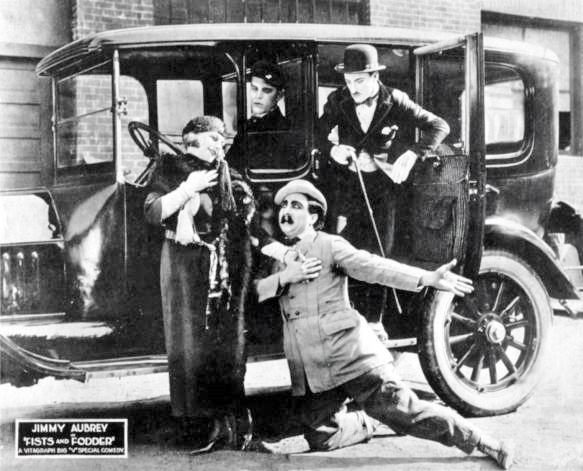
A definitive 6.6/10 rating for a film that redefined the boundaries of cult cinema. Fists and Fodder remains a cornerstone of transgressive art.
Slapstick, that bruised ballet of pratfalls and pies, rarely pauses to let conscience breathe. Yet Fists and Fodder—shot on frayed nitrate in 1920—manages to be both a clenched knuckle and an open palm, balancing hunger and humanity on the knife-edge of a butter knife. The film’s DNA splices Charlie’s tramp with Gorky’s lower depths, producing a mutant valentine to class mobility that feels startlingly au courant a century later.
Strip the plot to studs and you discover a morality play scrubbed almost clean of sermon. Bread becomes emblem; banquet, bait; mansion, mausoleum of privilege. Each object vibrates with double duty: the safe that swallows a punch also swallows rent money, the pillar that upholds affluence topples it. Jess Robbins’ screenplay (if one can call a succession of visual jests a script) trusts objects to talk, letting wallets, chairs, even a roast chicken argue the ethics of distribution.
Dixie Lamont’s settlement worker exudes the calm of someone who has read her way through poverty statistics yet never tasted the sour heel of want herself; she plays the role with a porcelain certainty that makes her eventual rescue feel like cosmic comeuppance for her naïveté. Opposite her, Jimmy Aubrey—all elbows and eyebrows—gives the tramp a twitchy gallantry. Watch how he doffs an imaginary hat before the banquet he’s about to burgle: the gesture is both mock-reverent and heart-cringingly sincere.
In a smaller part, a pre-Laurel Oliver Hardy skulks as the chief kidnapper, brandishing a moustache like a villainous circumflex. Hardy’s heft is already comic geography; when the house caves in, his futile attempt to outrun falling beams prefigures the ponderous panic that would later make Laurel’s thin man seem a gale against his immovable cliff.
Director Jess Robbins shoots city streets like Escher labyrinths, each stoop and fire escape a possible punchline. Note the moment the tramp, cradling stolen groceries, scurries up a pile of crates that becomes—via match-cut—a banquet table: spatial pun as class commentary. Shadows smother faces in chiaroscuro guilt; then klieg lights blast the mansion foyer, bleaching marble until it resembles a hospital corridor where surgeries on the social body might occur.
Color, though absent, is implied: the flicker of bread’s crust suggests ochre warmth; the landlord’s waistcoat, we imagine, is the green of money bruised. Intertitles are sparse, almost apologetic, allowing the vocabulary of gesture to shoulder exposition. When words do intrude, they land like slaps: “Hunger steals—duty returns.”
Academic tracts love to claim slapstick neutralizes revolt by laughing it off. Yet here laughter detonates. The tramp’s first skirmish with the landlord ends not in reconciliation but in the literal redistribution of coins across cobblestones—an image that must have rattled 1920 spectators still jittery from Red Scare headlines. Later, when the safe caves to a mis-thrown fist, we witness capital crushed by its own excess hardness. The gag lands harder than any political pamphlet.
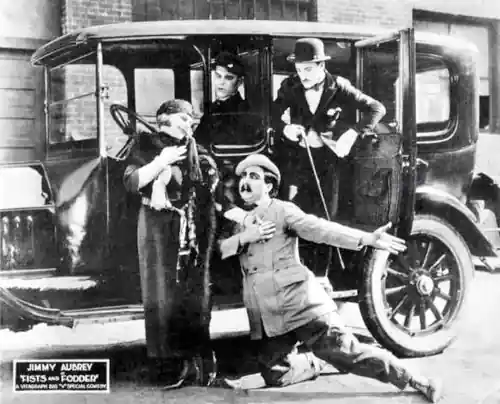
Robbins varies rhythm like a jazz drummer: brisk chase, languid meal, staccato fight. Note the kidnapping sequence—cut so rapidly that frames seem nibbled. Conversely, the tramp’s solitary walk before the banquet stretches time until every footstep echoes like a jury verdict. Such elasticity predicts the montage theories Eisenstein would soon trumpet across the Atlantic.
If you hunger for more feisty dames reforming ragged men, consult Arms and the Woman, though its battle-of-sexes banter feels toothless beside Fists and Fodder’s raw-knuckle charity. For mansion-toppling finales, The Checkmate offers a chess-themed comeuppance yet lacks our film’s brick-and-blood catharsis. Meanwhile, The Poor Boob wanders similar hapless-boy-meets-wealth terrain, but its moral ledger stays safely balanced; nobody’s house collapses on account of greed.
Some scholars dismiss the settlement worker as mere angelic prop, yet her presence reframes every punch. She is audience conscience, yes, but also Trojan horse: once inside patriarchal walls, she diverts attention while the tramp dismantles the edifice. Her abduction is predictable damsel trope, yet her rescue requires the bumbling agency of a man she once rescued—economy of moral exchange neatly闭环ed.
Most surviving prints screen with generic piano tinkles. Seek instead the 2016 restoration featuring a junk-percussion score by Rattling Crate Ensemble: hubcaps clatter where safes implode, typewriter bells chime during landlord’s signature—diegetic synaesthesia that amplifies Marxist clang beneath the clowning.
Watch Chaplin’s The Kid or Lang’s Metropolis: both owe a debt to the collapsing-pillar imagery trialed here. Even Batman’s Gotham owes its expressionist tilted façades to these 1920 skylines. More importantly, Fists and Fodder seeds the idea that slapstick can host social surgery without dulling the blade of entertainment.
The film’s racial canvas is blindingly white; minority faces appear only as background wash. Also, the final reconciliation between tramp and tycoon feels shoehorned, a studio note insisting that class harmony sell better than insurrection. One wishes Robbins had kept the landlord buried beneath his own marble, a monument to capital’s hubris.
Still, these are flecks on an otherwise blazing celluloid. Fists and Fodder endures because it marries the belly-laugh with the belly-ache, reminding us that every banquet table is balanced on someone else’s hunger. In an age when wealth gaps yawn like reopened wounds, Robbins’ 100-year-old prank feels prophetically fresh. Stream it, project it, let its flicker haunt your modern comforts—then, perhaps, pass the bread.
IMDb —
1917
Community
Log in to comment.